Zandra Rhodes Biography: The Extraordinary Journey of Britain’s Queen of Color

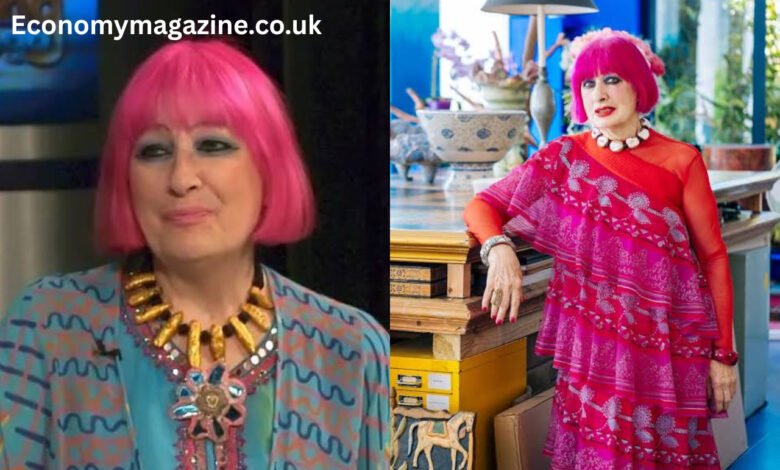
Fashion is often described as a form of self-expression, but few designers have transformed clothing into wearable works of art as brilliantly as Dame Zandra Rhodes. Known around the world for her vibrant prints, bold colors, flowing silhouettes, and unmistakable pink hair, Rhodes has spent more than five decades redefining British fashion. While many designers followed trends, she created her own artistic language, blending fine art with textile design to produce collections that became instantly recognizable. Her fearless creativity helped establish London as one of the world’s leading fashion capitals and inspired generations of designers who followed in her footsteps.
Table of Contents
ToggleFrom dressing royalty and rock legends to founding one of London’s most respected fashion museums, Zandra Rhodes has built a career based on imagination, determination, and originality. Despite facing rejection early in her career because her designs were considered too unconventional, she refused to compromise her artistic vision. Instead, she transformed those very qualities into her greatest strengths, proving that innovation often comes from those willing to challenge tradition.
Today, Rhodes is celebrated not only as an internationally acclaimed fashion designer but also as a textile artist, educator, museum founder, and cultural icon. Her remarkable story continues to inspire aspiring designers, artists, and entrepreneurs who dream of making their own mark on the creative world.
| Quick Facts | Details |
|---|---|
| Full Name | Dame Zandra Lindsey Rhodes |
| Known As | Zandra Rhodes |
| Date of Birth | September 19, 1940 |
| Age | 85 (as of 2026) |
| Birthplace | Chatham, Kent, England |
| Nationality | British |
| Profession | Fashion Designer, Textile Designer, Entrepreneur |
| Parents | Mother: Beatrice Rhodes; Father: Ernest Rhodes |
| Siblings | Beverley Rhodes |
| Education | Medway College of Art; Royal College of Art, London |
| Years Active | 1968–Present |
| Famous For | Bold textile prints, luxury fashion, costume design |
| Partner | Salah Hassanein (long-term partner, deceased 2019) |
| Estimated Net Worth | Approximately $20–30 million (estimated) |
| @officialzandrarhodes | |
| X (Twitter) | Official presence limited |
| Website | zandrarhodes.com |
Early Life and Family Background
Zandra Lindsey Rhodes was born on September 19, 1940, in Chatham, Kent, England. She grew up in a household where creativity was encouraged from an early age. Her mother, Beatrice Rhodes, had worked as a fitter at the famous House of Worth in Paris before becoming a lecturer and later a professor of fashion at Medway College of Art. Her father, Ernest Rhodes, served in the Royal Air Force before later working as a truck driver. This combination of artistic influence and practical values helped shape Zandra’s outlook on life from childhood.
Growing up alongside her younger sister, Beverley, Zandra developed an early fascination with fabrics, colors, and hand-drawn illustrations. Rather than simply admiring fashionable clothing, she became interested in how textiles could tell stories through patterns and artistic expression. Her mother’s professional experience exposed her to the world of couture and design long before she entered the industry herself.
Unlike many children who viewed clothing as something ordinary, Rhodes saw garments as moving canvases. She spent hours sketching, experimenting with patterns, and observing the relationship between art and fashion. These early experiences planted the seeds for a career that would eventually transform international fashion.
Education and Artistic Development
Rhodes studied at Medway College of Art, where she specialized in printed textile design. During her studies, she demonstrated an exceptional talent for creating imaginative prints rather than focusing solely on garment construction. Her tutors recognized her originality and encouraged her to continue developing her artistic voice.
Her education continued at the prestigious Royal College of Art in London, where she earned a master’s degree in printed textiles. This period proved transformative because it refined both her technical abilities and her confidence as a designer. Instead of following conventional fashion rules, Rhodes experimented with abstract shapes, organic forms, calligraphy-inspired motifs, and dramatic color combinations that would later become her signature style.
Although her professors appreciated her creativity, the commercial fashion industry initially struggled to understand her work. Many manufacturers considered her prints too bold and unconventional for mainstream production. Rather than abandoning her vision, Rhodes treated every rejection as motivation to continue developing a style that was unmistakably her own.
Career Beginnings and the Struggle for Recognition
Starting a career in the fashion industry was not easy for Zandra Rhodes. After graduating from the Royal College of Art, she hoped that textile manufacturers would eagerly embrace her imaginative prints. Instead, many companies rejected her work, claiming her designs were far too bold and unconventional for commercial fashion. While these setbacks were disappointing, Rhodes refused to abandon her artistic vision. She believed that fashion should celebrate individuality rather than simply follow existing trends.
In 1968, she entered into a partnership with fellow designer Sylvia Ayton, opening the Fulham Road Clothes Shop in London. This collaboration gave Rhodes an opportunity to see her textile prints transformed into garments. The experience taught her valuable lessons about fashion production, customer preferences, and running a creative business. Although the partnership lasted only a short time, it gave her the confidence to establish her own independent fashion label.
By 1969, Rhodes had opened her own studio in Paddington, West London. Working independently allowed her complete creative freedom. Rather than adapting her designs to suit manufacturers, she designed clothing that showcased her artistic prints exactly as she imagined them. This decision marked the true beginning of the Zandra Rhodes brand and laid the foundation for an international career that would span more than five decades.
Breakthrough in New York and International Success
A defining moment arrived when Rhodes decided to take her first collection to New York. Armed with determination and a letter of introduction, she met the legendary fashion editor Diana Vreeland, then one of the most influential figures in the fashion world. Vreeland immediately recognized Rhodes’ originality and arranged for actress Natalie Wood to wear pieces from her “Knitted Circle” collection in American Vogue. This exposure transformed Rhodes almost overnight from an unknown British designer into an exciting new international talent.
The success of her American debut attracted prestigious retailers including Henri Bendel, Neiman Marcus, Saks Fifth Avenue, and Fortnum & Mason. Buyers were fascinated by her colorful hand-printed fabrics, dramatic silhouettes, and artistic approach to fashion. Instead of following Parisian fashion traditions, Rhodes created garments that celebrated movement, individuality, and creativity, making her collections stand out in luxury department stores around the world.
Throughout the 1970s, Rhodes became one of the leading members of the “New Wave” of British fashion designers who helped establish London as a global fashion capital. Her collections regularly appeared in fashion magazines, runway shows, and celebrity wardrobes, earning her recognition as one of Britain’s most innovative creative minds.
Signature Design Style and Creative Philosophy
Unlike many designers who begin with garment shapes, Zandra Rhodes always starts with the textile itself. Every print is hand drawn before being carefully transformed into silk-screened fabric. She believes the print should influence the shape of the garment rather than the other way around, creating clothing that feels like wearable artwork. This distinctive philosophy has remained unchanged throughout her career and continues to define her collections today.
Her signature style includes vibrant pinks, electric blues, golds, purples, and vivid greens combined with flowing dresses, dramatic capes, pleated fabrics, oversized sleeves, and intricate illustrations. Rhodes draws inspiration from many sources, including flowers, architecture, ancient civilizations, calligraphy, nature, modern art, and global travel. Artists such as Kandinsky, Matisse, and Modigliani also influenced her visual language, allowing her collections to blend fashion with fine art.
One of her boldest collections embraced elements of London’s punk movement during the late 1970s. Instead of simply copying street fashion, Rhodes incorporated ripped fabrics, safety pins, and distressed details into luxurious couture garments. This collection earned her the nickname “The Princess of Punk,” demonstrating her ability to reinterpret cultural movements through high fashion while maintaining her unique artistic identity.
Celebrity Clients, Royal Patrons, and Global Influence
As Zandra Rhodes’ reputation grew throughout the 1970s and 1980s, her designs found admirers among some of the world’s most recognizable personalities. Her flowing gowns, dramatic prints, and artistic creations appealed to women who wanted fashion that expressed confidence and individuality. Over the years, her clients have included Princess Diana, Princess Anne, Jackie Kennedy Onassis, Elizabeth Taylor, Raquel Welch, Lauren Bacall, and many other influential public figures. These women appreciated Rhodes’ ability to create garments that combined elegance with bold artistic expression.
Rhodes also became one of the favorite designers of legendary musicians. She created unforgettable stage costumes for Freddie Mercury of Queen, helping shape his theatrical stage image during the band’s most successful years. Other performers including Elton John, Marc Bolan, Diana Ross, Liza Minnelli, and Donna Summer have also worn her creations. Her work demonstrated that fashion could become an important part of a performer’s identity, enhancing both confidence and stage presence.
What made Rhodes different from many luxury designers was her refusal to compromise her artistic identity simply because her clientele became famous. Whether she was designing for royalty, Hollywood actresses, or rock stars, every garment reflected her distinctive handwriting through hand-drawn prints, vibrant colors, and flowing silhouettes. This consistency helped establish her as one of Britain’s most respected fashion designers and earned her lasting recognition across the international fashion industry.
Awards, Honors, and Professional Recognition
Throughout her remarkable career, Zandra Rhodes has received numerous honors recognizing her extraordinary contribution to fashion, textile design, and British culture. In 1997, she was appointed a Commander of the Order of the British Empire (CBE) for services to fashion and textiles. More than two decades later, her achievements were further celebrated when she was appointed a Dame Commander of the Order of the British Empire (DBE) in the 2020 New Year Honours, one of the highest honors awarded in the United Kingdom.
Her influence extends far beyond fashion awards. Universities, museums, and cultural institutions around the world have honored her achievements through honorary degrees, exhibitions, lectures, and retrospectives celebrating her contribution to textile design. Her work is included in the permanent collections of prestigious museums, ensuring that future generations can study her innovative approach to fashion and printmaking.
Perhaps even more meaningful than formal awards is the respect Rhodes has earned from fellow designers. Many of today’s leading fashion creatives acknowledge her as a pioneer who proved that prints could become the foundation of couture rather than simply decorative elements. Her fearless experimentation continues to inspire both established designers and students entering the fashion industry.
The Fashion and Textile Museum and Preserving Her Legacy
One of Zandra Rhodes’ proudest achievements came in 2003 when she founded the Fashion and Textile Museum in Bermondsey, London. Rather than creating a museum dedicated solely to her own work, Rhodes envisioned a space that would celebrate the history, craftsmanship, and future of fashion and textile design. The striking orange and pink building, designed by renowned Mexican architect Ricardo Legorreta, quickly became one of London’s most distinctive cultural landmarks.
The museum regularly hosts exhibitions featuring both established designers and emerging creative talent. In addition to displaying remarkable garments, it offers educational workshops, lectures, research opportunities, and learning programs that help preserve traditional textile techniques while encouraging innovation within contemporary fashion. Through these initiatives, Rhodes has continued to support young designers long after establishing her own international career.
Even in recent years, Rhodes has remained committed to protecting her artistic legacy. In 2026, the Zandra Rhodes Foundation donated five significant archive garments to the museum’s permanent collection, ensuring that future audiences can study important milestones from her career. This donation reflects her lifelong commitment to education, preservation, and sharing fashion history with generations to come.
Personal Life, Relationships, and Life Beyond Fashion
Despite her larger-than-life public image, Zandra Rhodes has always maintained that creativity is at the center of her personal life. Her bright pink hair, dramatic jewelry, and colorful clothing have become as iconic as her fashion collections, reflecting the philosophy that designers should live as creatively as they design. Rather than separating her professional work from her everyday life, Rhodes has embraced art as a lifestyle, allowing her personality to shine through everything she wears and creates.
For more than four decades, Rhodes shared a close relationship with Salah Hassanein, a former Warner Bros. executive and film producer. Although they never married, Rhodes often described him as the love of her life and credited him with providing constant encouragement throughout her career. His passing in 2019 was a deeply emotional moment for the designer, yet she has continued to celebrate his memory while remaining actively involved in her creative work and charitable projects.
Rhodes has also shown remarkable resilience in overcoming personal challenges. She survived the rare bile duct cancer cholangiocarcinoma, using her experience to raise awareness of the disease. In 2025, she partnered with the AMMF bile duct cancer charity to educate the public and support research, demonstrating that her influence extends well beyond fashion into health advocacy and public awareness.
Net Worth, Business Ventures, and Income Sources
As one of Britain’s most successful fashion designers, Zandra Rhodes has built considerable wealth through decades of creative work. While she has never publicly confirmed her finances, industry estimates place her net worth at approximately $20–30 million. Her success reflects not only her fashion collections but also her ability to expand into multiple creative industries over more than fifty years.
Her income comes from several sources, including haute couture collections, ready-to-wear fashion, textile licensing, interior design collaborations, costume design for opera and theatre, jewelry collections, homeware partnerships, exhibitions, books, public speaking engagements, and educational initiatives. She has also collaborated with internationally recognized brands, including IKEA, bringing her signature prints to home furnishings and introducing her work to a wider audience.
Rather than focusing solely on commercial success, Rhodes has consistently reinvested her knowledge and resources into preserving fashion history and supporting young designers. Through the Fashion and Textile Museum and the Zandra Rhodes Foundation, she continues to contribute to education and cultural preservation, ensuring her impact extends beyond financial achievement.
Social Media Presence and Connection with Fans
Even after decades in the fashion industry, Zandra Rhodes has embraced digital platforms as a way to connect with audiences around the world. Her official Instagram account showcases archival designs, current collections, museum exhibitions, behind-the-scenes moments, interviews, and appearances at fashion events. Instead of using social media simply for promotion, Rhodes shares stories that document the evolution of her extraordinary career and celebrate textile artistry.
Her online presence also highlights collaborations with museums, universities, charities, and fashion organizations. Followers gain insight into the creative process behind her prints, her continuing design work, and the educational projects supported by the Fashion and Textile Museum. This transparency has helped introduce her work to younger generations who may not have experienced the height of her fashion career during the 1970s and 1980s.
Although Rhodes is less active on platforms such as X (formerly Twitter) than many contemporary designers, her influence remains strong through interviews, exhibitions, documentaries, and digital archives. Fashion enthusiasts, students, and historians continue to discover her work online, ensuring her legacy reaches audiences far beyond traditional fashion circles.
Recent Updates and Future Projects
Even in her eighties, Dame Zandra Rhodes remains remarkably active within the fashion and cultural industries. She continues to design, participate in exhibitions, mentor emerging creatives, and support educational initiatives through the Fashion and Textile Museum. Her enthusiasm for innovation has never diminished, proving that creativity has no age limit.
In 2026, the Zandra Rhodes Foundation donated five important garments from her archive to the Fashion and Textile Museum’s permanent collection. These pieces represent key moments in her career and will allow future generations to study her pioneering textile techniques and fashion philosophy firsthand. The donation reflects her long-term commitment to preserving design history and making it accessible to students and researchers.
Looking ahead, Rhodes continues to champion sustainable creativity, textile education, and artistic experimentation. Whether through museum exhibitions, design collaborations, or mentoring young talent, she remains committed to inspiring the next generation of designers to embrace originality rather than follow passing trends.
Legacy and Lasting Influence
Few designers have influenced British fashion as profoundly as Dame Zandra Rhodes. Her fearless use of color, revolutionary textile prints, and unwavering commitment to artistic expression transformed the way people viewed fashion. She proved that clothing could be both functional and deeply expressive, inspiring countless designers to see garments as works of art rather than simply items of clothing.
Her contributions extend far beyond the runway. Through the Fashion and Textile Museum, educational programs, charitable work, and preservation of fashion history, Rhodes has created opportunities for future generations to learn, experiment, and innovate. Her designs continue to appear in museum collections around the world, ensuring that her creative vision remains part of fashion history for decades to come.
As Dame Zandra Rhodes continues to inspire artists, designers, and creative thinkers across the globe, her journey stands as a powerful reminder that originality, resilience, and passion can transform not only a career but an entire industry. From a young textile student with unconventional ideas to one of Britain’s greatest fashion icons, her story proves that success belongs to those who remain true to their vision. Her enduring legacy encourages future generations to embrace creativity without fear, celebrate individuality, and leave the world more colorful than they found it.
Philanthropy, Education, and Lasting Contributions to Fashion
Beyond creating memorable collections, Dame Zandra Rhodes has devoted a significant part of her career to nurturing future generations of designers. She believes that fashion education is essential for preserving craftsmanship while encouraging innovation. Through lectures, mentoring, exhibitions, and educational collaborations, she has shared decades of experience with students and young creatives, encouraging them to develop their own artistic voices rather than simply follow commercial trends.
The Zandra Rhodes Foundation has become another important part of her legacy. Established to preserve her remarkable archive of more than 6,000 garments, original textile prints, sketches, and fashion documents, the foundation works with museums, universities, and researchers to ensure her life’s work remains accessible for study. Rather than allowing her archive to remain hidden, Rhodes has actively supported projects that document her creative process and inspire future designers.
Her commitment to education demonstrates that true success is measured not only by personal achievements but also by the opportunities created for others. By preserving fashion history and supporting young talent, Rhodes has helped ensure that British textile design continues to evolve while honoring the craftsmanship of previous generations.
Interesting Facts About Zandra Rhodes
Many admirers recognize Zandra Rhodes immediately because of her vibrant bright pink hair, which has become one of her most recognizable trademarks. She began coloring her hair decades ago, and it has remained an important part of her public image, symbolizing creativity, confidence, and individuality. Her appearance reflects the same bold artistic philosophy found in her fashion collections.
Some fascinating facts about Dame Zandra Rhodes include:
- She has designed clothing for royalty, Hollywood stars, opera productions, and world-famous musicians.
- She founded London’s Fashion and Textile Museum, the UK’s only museum dedicated exclusively to contemporary fashion and textiles.
- Her original textile archive contains more than 6,000 garments, thousands of sketches, and hundreds of silk screens collected over six decades.
Another remarkable aspect of her career is her willingness to embrace change without abandoning her identity. While fashion trends have shifted dramatically since the late 1960s, Rhodes has remained faithful to her artistic vision, proving that originality can have lasting appeal across generations.
Influence on the Modern Fashion Industry
The impact of Dame Zandra Rhodes extends far beyond her own collections. Today, many leading designers cite her work as an inspiration because she demonstrated that textiles could become the centerpiece of fashion rather than simply decorative materials. Her fearless use of hand-drawn prints, sculptural silhouettes, and vibrant color combinations changed how designers approached creativity within luxury fashion.
Fashion historians often describe Rhodes as one of the pioneers who helped establish London as an international fashion capital alongside other influential British designers. During a period when Paris and Milan dominated the industry, Rhodes proved that British creativity could compete on the global stage through originality, craftsmanship, and artistic freedom. Her success opened doors for many younger designers who followed in her footsteps.
Even today, museums around the world continue to exhibit her garments because they represent important milestones in fashion history. Her designs remain relevant not only because of their beauty but because they tell the story of innovation, cultural change, and artistic courage. Contemporary designers, fashion students, and textile artists continue to study her work to understand how creativity can shape an entire industry.
Memorable Fashion Collections and Creative Milestones
Throughout her career, Dame Zandra Rhodes has produced dozens of collections that pushed the boundaries of fashion while remaining unmistakably her own. Rather than following seasonal trends, she built each collection around original hand-drawn textile prints. Every pattern began as an illustration inspired by architecture, flowers, shells, landscapes, ancient civilizations, music, or abstract art before being transformed into luxurious fabrics through the screen-printing process. This artistic approach distinguished Rhodes from many of her contemporaries and helped establish her reputation as one of the world’s leading textile designers.
Some of her most celebrated collections include The Knitted Circle, The Conceptual Chic Collection, Chinese Squares, Lily and Shell, and the groundbreaking Punk Collection of the late 1970s. While each collection introduced fresh ideas, they all shared common elements: flowing silhouettes, dramatic movement, vivid colors, and expressive prints that transformed garments into wearable works of art. Her punk-inspired designs demonstrated that couture could embrace rebellion without sacrificing elegance, proving that high fashion could evolve alongside changing cultural movements.
Rhodes also expanded beyond the runway by designing costumes for theatre, ballet, and opera productions around the world. Her work for productions such as The Magic Flute, Aida, and The Pearl Fishers showcased her ability to adapt her artistic vision to stage performance, where costumes needed to communicate character, emotion, and spectacle while remaining practical for performers. These projects reinforced her reputation as a designer whose creativity extended well beyond traditional fashion collections.
Why Zandra Rhodes Remains an Icon Today
More than fifty years after launching her label, Dame Zandra Rhodes continues to be regarded as one of Britain’s most influential fashion pioneers. While many designers become associated with a particular decade, Rhodes has remained relevant by staying true to her creative philosophy instead of chasing short-lived trends. Her vibrant prints, fearless experimentation, and unwavering belief in artistic freedom continue to inspire designers, students, collectors, and fashion enthusiasts across the globe.
In recent years, her work has reached new audiences through museum exhibitions, collaborations with lifestyle brands, her memoir ICONIC: My Life in Fashion in 50 Objects, and ongoing projects led by the Zandra Rhodes Foundation. These initiatives preserve not only her extraordinary archive but also the creative methods that made her one of the defining figures of modern British fashion. Even after more than six decades in the industry, Rhodes continues to work from her London studio while supporting educational projects and developing new collaborations.
Her influence extends beyond clothing. She has demonstrated that originality, artistic integrity, and perseverance can create a career that transcends changing fashions. Whether through museum collections, educational programs, or the timeless appeal of her garments, Dame Zandra Rhodes remains a symbol of creativity without compromise. Her remarkable journey reminds aspiring designers that genuine innovation comes from embracing individuality, taking creative risks, and remaining faithful to one’s vision throughout a lifetime.
Books, Media Appearances, and Cultural Influence
In addition to her work as a fashion designer, Dame Zandra Rhodes has shared her experiences through books, documentaries, television appearances, and public lectures. One of her most significant recent achievements is the publication of her memoir, ICONIC: My Life in Fashion in 50 Objects, released in 2024. Instead of presenting a traditional autobiography, the book tells her remarkable life story through fifty meaningful objects, including sketches, garments, photographs, and personal mementos. It offers readers an intimate look at her friendships with celebrities, collaborations with royalty, creative triumphs, personal setbacks, and the determination that shaped her extraordinary career.
Rhodes has also appeared in numerous television documentaries, fashion exhibitions, and educational programs discussing the evolution of British fashion and textile design. She has frequently been invited to speak at universities, museums, and international design conferences, where she encourages young creatives to trust their instincts and embrace originality. Her engaging storytelling and energetic personality have made her one of the fashion industry’s most respected ambassadors.
Beyond fashion, Rhodes has become a recognizable cultural figure. Her signature pink hair, artistic clothing, and fearless personality symbolize creative freedom and self-expression. She has demonstrated that personal style is not simply about following trends but about confidently expressing one’s identity. This philosophy has inspired not only designers but also artists, students, entrepreneurs, and anyone seeking to build a career through originality and passion.
Challenges, Resilience, and Reinvention
Although Dame Zandra Rhodes is widely celebrated today, her journey has not been without significant obstacles. Early in her career, many manufacturers dismissed her textile prints as being too unconventional for commercial success. Rather than changing her artistic style to satisfy industry expectations, she remained committed to her unique vision. Her persistence eventually transformed those once-rejected designs into internationally admired works of fashion, proving that innovation often requires patience and resilience.
Rhodes also experienced difficult periods in her business, including financial pressures during the 1990s and the loss of valuable archive materials due to flooding in one of her storage facilities. More recently, she faced a serious cancer diagnosis during the COVID-19 pandemic. Instead of allowing these setbacks to define her future, she focused on preserving her life’s work by establishing the Zandra Rhodes Foundation, organizing her archive, and continuing to design. Her recovery and return to active creative work have become another inspiring chapter in her remarkable story.
Her ability to reinvent herself while remaining true to her artistic identity is one of the defining characteristics of her career. Even after more than half a century in fashion, Rhodes continues to explore new collaborations, support educational initiatives, and inspire emerging designers. Her resilience serves as a powerful example that creativity, determination, and optimism can overcome even the most difficult personal and professional challenges.
What Aspiring Designers Can Learn from Zandra Rhodes
The journey of Dame Zandra Rhodes offers valuable lessons for anyone pursuing a creative career. She has consistently demonstrated that originality is often more valuable than conformity. By refusing to imitate other designers or compromise her artistic vision, she created a distinctive brand that has remained relevant for more than five decades. Her success shows that authenticity can become a lasting competitive advantage in any creative industry.
Another important lesson from Rhodes’ career is the value of continuous learning. Even after achieving international recognition, she continued experimenting with new materials, artistic techniques, stage costume design, interior textiles, and collaborations with global brands. This willingness to evolve while preserving her core identity has enabled her work to remain fresh and influential across multiple generations.
Finally, Rhodes reminds aspiring artists that true success extends beyond personal achievement. Through the Fashion and Textile Museum, the Zandra Rhodes Foundation, and her educational outreach, she has dedicated herself to preserving fashion history and supporting future talent. Her legacy demonstrates that sharing knowledge and creating opportunities for others can be just as meaningful as professional accomplishments.