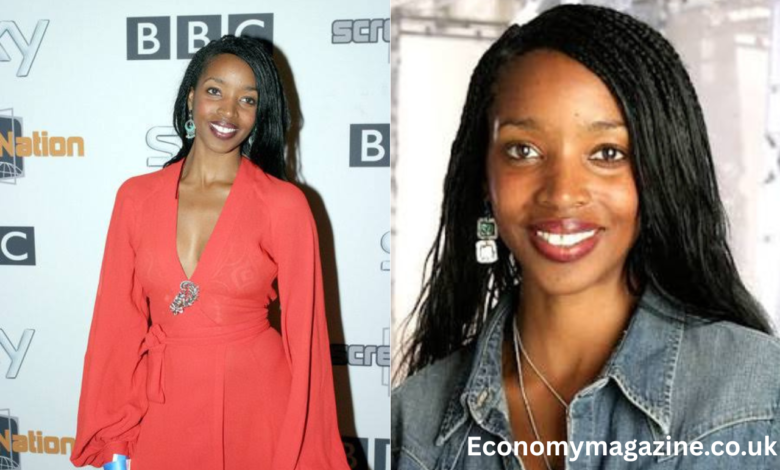
Josie d’Arby is one of those rare British television personalities whose career cannot be neatly placed into a single category. She has been a television presenter, actress, radio broadcaster, writer, director, artist and live concert narrator, building a professional life that has moved comfortably between popular entertainment and the arts. From children’s television and music programming to drama, comedy, documentaries and classical music, she has repeatedly demonstrated an ability to connect with audiences in very different settings. Born and raised in Newport, Wales, d’Arby developed her talents through formal acting training and early broadcasting opportunities, eventually becoming a familiar face on some of Britain’s best-known television networks.
Her name became particularly recognisable during the 1990s and early 2000s, when she moved from children’s broadcasting into mainstream entertainment. She presented programmes including SMart, The Bigger Breakfast and Top of the Pops, while also establishing herself as an actress through the BBC drama Merseybeat and the surreal comedy Look Around You. Her career later expanded into radio, theatre, documentaries, arts programming and live cultural events, giving her a professional range that few television presenters achieve.
What makes Josie d’Arby particularly interesting today is that her career has continued to evolve rather than simply remaining tied to the television work that first made her famous. Her official website now presents her as a presenter, artist, author and filmmaker, with recent work involving orchestras, concert narration, visual art and personal creative projects. She has also spoken openly about how the last fourteen-plus years have transformed her outlook and how faith has become a central part of her life and decision-making.
Josie d’Arby Quick Facts
| Fact | Details |
|---|---|
| Full name | Josephine d’Arby |
| Professional name | Josie d’Arby |
| Born | 3 October 1972 according to several biographical records* |
| Age | 53 as of August 2026* |
| Birthplace | Newport, Wales, United Kingdom |
| Nationality | Welsh/British |
| Profession | Television presenter, actress, writer, director, artist |
| Education | Anna Scher Theatre; Royal Academy of Dramatic Art |
| RADA graduation | 1995 |
| Heritage | Jamaican heritage |
| Parents | Not reliably documented in major public sources |
| Siblings | Not reliably documented in major public sources |
| Spouse/partner | No reliably confirmed current information |
| Children | No reliably confirmed public information |
| Best known for | SMart, The Bigger Breakfast, Top of the Pops, Merseybeat, Look Around You |
| Major recognition | Royal Television Society award |
| Current creative work | Presenting, concert narration, art, writing and filmmaking |
| Net worth | No independently verified public figure |
| Official website | Josie d’Arby official website |
| Social media | No major verified public profile confidently established from authoritative sources |
*There is a discrepancy in publicly available birth information. IMDb lists 3 October 1976, while other biographical records identify her as born on 3 October 1972. RADA confirms that Josephine D’Arby graduated from its acting programme in 1995. For this reason, her exact age should be treated with some caution.
Who Is Josie d’Arby?
Josie d’Arby is a Welsh television presenter and actress who became prominent during a period when British television was producing a new generation of presenters who could move between children’s programming, music, entertainment and factual broadcasting. Her career began while she was still developing her acting skills, giving her the unusual advantage of learning both sides of television performance at the same time. Rather than following a conventional route from drama school directly into scripted acting, she quickly discovered that presenting was another natural outlet for her communication skills.
Her television career eventually crossed several genres. She worked on children’s programmes, mainstream breakfast television, music shows, comedy, drama and factual programming. Her work on Top of the Pops is particularly significant because the BBC music programme was one of the most recognisable television institutions in British popular culture. Archive records show d’Arby presenting episodes in 2001, introducing performances from artists including Jamiroquai, Mary J. Blige, Elton John, Kylie Minogue and others.
Today, however, describing her simply as a former television presenter would miss much of the story. Her current professional identity includes live concert presenting and narration, visual art, writing and filmmaking. Her official website describes her as a stage and screen presenter with decades of experience, while also highlighting her current collaborations with orchestras and venues.
Early Life and Family Background
Josie d’Arby was born and raised in South Wales, with Newport identified as her hometown. Public biographies describe her as being of Jamaican heritage, an aspect of her background that forms part of her wider Welsh and British identity. Although her professional career has been extensively documented, considerably less information is publicly available about her parents, siblings and private childhood circumstances. This makes it important to avoid repeating unsupported claims about her family simply because they appear on low-quality celebrity websites.
Growing up in Wales appears to have remained meaningful to d’Arby throughout her life. Her connection with Newport later influenced one of her creative projects, The Newport Monologues, which she wrote and directed as a theatrical exploration of life in her hometown. That project demonstrated that her relationship with her birthplace was more than a biographical detail; it became material for her own creative storytelling.
Her early interest in performance eventually led her toward London and professional theatrical training. As a teenager, she studied advanced improvisation at the Anna Scher Theatre before earning a place at the Royal Academy of Dramatic Art. This combination of improvisational experience and formal acting education helped prepare her for the demanding mixture of spontaneity and discipline that television presenting would later require.
Education at the Royal Academy of Dramatic Art
The Royal Academy of Dramatic Art, better known as RADA, was a major milestone in Josie d’Arby’s development as a performer. RADA lists Josephine D’Arby among its acting graduates and records her graduation year as 1995. The institution has long been associated with rigorous professional training, and her education there provided a foundation in acting that would later prove valuable across television, theatre and live performance.
What is particularly interesting about d’Arby’s training is how quickly she combined it with practical television work. She did not treat acting and presenting as completely separate careers. Instead, the skills overlapped: voice control, timing, improvisation, audience awareness and the ability to react naturally all became useful in front of a television camera. Her later career suggests that this versatility became one of her greatest professional advantages.
Her RADA background also helps explain why d’Arby was able to transition successfully into scripted drama and comedy. Presenting may have introduced her to large audiences, but acting training gave her the tools to inhabit characters and work within structured productions. Her later roles in Merseybeat and Look Around You showed that she was not simply a presenter trying acting; she had genuine performance training behind her television persona.
The Beginning of Her Television Career
Josie d’Arby began working in television at a remarkably young age. According to biographical material published by 5×15, she had worked in television since the age of 14 and eventually became an award-winning broadcaster who presented programmes across major UK networks. Her early work was particularly connected with children’s television, a demanding environment where presenters have to be energetic, approachable and capable of communicating clearly with younger viewers.
Her association with CBBC and SMart helped establish her as a young television personality. SMart was especially appropriate for someone with an interest in creativity because the programme encouraged children to explore art and making things. D’Arby’s later career as a painter makes that early connection with arts-oriented television particularly interesting in retrospect.
From those early opportunities, her career gradually expanded into mainstream entertainment. She moved beyond children’s programming and took on roles that required her to communicate with older audiences and handle more varied formats. This progression was important because it demonstrated that her appeal was not dependent on a particular age group or programme type.
Her Rise Through Mainstream Television
The next stage of Josie d’Arby’s career saw her move into increasingly prominent mainstream programmes. She became associated with The Bigger Breakfast, a Channel 4 breakfast programme, and later presented major music television. These roles helped establish her as a presenter capable of handling fast-moving live or semi-live formats where confidence and timing were essential.
One of the biggest opportunities came through Top of the Pops. Archive records confirm that d’Arby presented episodes of the BBC programme in 2001. The show featured some of the biggest performers of the era, and presenting it placed her in the middle of British popular music culture at a time when music television remained enormously influential.
Her success during this period reflected more than simply being comfortable on camera. Music television required a presenter to introduce performers, transition between different segments, maintain pace and communicate enthusiasm without distracting from the artists. D’Arby’s earlier children’s television experience, acting training and growing broadcasting confidence all came together in this environment.
Her Own Channel 5 Chat Show
A particularly important milestone came in 1999 when d’Arby presented her own Channel 5 chat show, Josie. Biographical sources describe her as the youngest British woman at the time to have her own chat show. The achievement represented a major step forward from her earlier children’s television work and placed her in a format requiring more sophisticated interviewing and hosting skills.
A chat show presents a very different challenge from children’s television. Instead of simply guiding viewers through a programme, the host must create a relationship with guests, ask questions that produce interesting answers and maintain the rhythm of a conversation. For a young presenter, being trusted with her own show was therefore an important professional vote of confidence.
The programme also helped broaden the public perception of d’Arby. She was no longer simply a familiar face from youth broadcasting. She was becoming an established entertainment presenter capable of carrying a programme under her own name. That period helped lay the foundation for the more varied career that followed.
Acting Success in Merseybeat
While presenting remained central to her career, d’Arby also returned to scripted acting. One of her most prominent dramatic roles came in the BBC police drama Merseybeat, where she played PC Jodie Finn. IMDb credits her with 28 episodes between 2002 and 2004, making the role one of the substantial acting commitments of her career.
The role was significant because it demonstrated that d’Arby could operate within a serious ensemble drama rather than simply appearing as herself. Merseybeat followed the lives and professional challenges of police officers, requiring its cast to work within a dramatic narrative and sustain characters over multiple episodes.
For d’Arby, the role brought her formal acting background back to the forefront. Her RADA training could now be applied to a long-running television drama, while her experience as a presenter gave her confidence in front of cameras. The combination helped make acting another credible part of her professional identity.
Comedy and Look Around You
D’Arby later showed a very different side of her acting ability through comedy. She appeared in the BBC’s surreal science spoof Look Around You, playing Pealy Maghti. IMDb lists the role among her best-known acting credits and records her appearance in six episodes of the programme.
Look Around You required performers to embrace an unusual style of humour built around deadpan delivery and parody. It deliberately imitated the visual language and tone of older educational science programmes while taking the concepts into absurd territory. For an actor, maintaining a straight face and believable presentation within such a strange world is itself a demanding comedic skill.
D’Arby’s involvement in the series showed how far her range had developed. The same performer who had presented children’s programmes and mainstream music television could now participate in highly stylised British comedy. Her later involvement in Channel 4’s Spoons further strengthened her reputation as a versatile comedy performer.
Radio, Theatre and Other Creative Work
Josie d’Arby has also developed a significant body of radio work. Her career includes work with BBC Radio 2 and BBC Radio 4, along with music and documentary broadcasting. She presented a live edition of The Choir for BBC Radio 3 and hosted the BBC Radio 2 Young Choristers of the Year final in 2017. These projects show how naturally her presenting abilities transferred from television to audio broadcasting.
Theatre provided another opportunity for her to move from performer to creator. In 2012, she wrote and directed The Newport Monologues, a project centred on her hometown. She also produced and directed Private View, an arts project featuring actor Michael Sheen. These projects are important because they demonstrate her growing interest in shaping stories rather than simply presenting material created by other people.
Her creative work has therefore expanded in several directions at once. Acting, presenting, directing, writing and broadcasting are not isolated achievements in her career; they are interconnected skills. Each has allowed her to develop another aspect of storytelling and communication.
Awards and Professional Recognition
One of Josie d’Arby’s notable professional achievements is her Royal Television Society award for presenting the BBC West current-affairs programme Inside Out. The recognition is particularly meaningful because it came from a factual broadcasting context rather than entertainment television alone. It demonstrated that she could handle serious subject matter as effectively as she handled music and entertainment.
Her broadcasting résumé also includes major arts and music programmes. 5×15 describes her as a regular presenter of BBC Arts programmes including BBC Young Musician, BBC Choir of the Year, BBC Cardiff Singer of the World and the BBC Proms. These programmes placed her in a very different broadcasting environment from the pop-focused television that helped establish her career.
This range of professional recognition helps explain why d’Arby has remained relevant across multiple generations of British broadcasting. Rather than relying on one successful programme, she repeatedly demonstrated that she could learn a format, understand an audience and communicate complex or entertaining material with confidence.
Charity and Humanitarian Work
D’Arby has also been associated with charitable and humanitarian causes. Older biographical material identifies her as a celebrity ambassador for the British Red Cross and describes work connected with projects in South Africa and Cambodia. It also notes her involvement with SURF, an organisation supporting survivors of the 1994 Rwandan genocide.
These activities demonstrate another dimension of celebrity and broadcasting work: the ability to use public visibility to draw attention to issues beyond entertainment. Her involvement with humanitarian organisations gave her opportunities to communicate subjects involving communities, hardship and social responsibility.
Although charity work represents only one part of her career, it adds context to her public identity. Her professional life has repeatedly involved communication, whether she was speaking to children, interviewing entertainers, presenting artists, narrating concerts or helping bring attention to humanitarian causes.
Josie d’Arby as an Artist and Painter
In recent years, visual art has become a particularly personal part of Josie d’Arby’s creative identity. On her official website, she describes her style as “naive” and says that her approach is spontaneous, humorous and whimsical. She writes about enjoying vivid colours, bold marks and thick applications of paint, while emphasising that she creates primarily for the joy of making something rather than for the art market.
Her attitude toward painting is notably different from the conventional idea of an artist building a commercial career. D’Arby says she has little interest in the art scene or market and does not focus on having her work widely known. Instead, she describes painting as an experimental and personal activity that can make spaces feel more enjoyable and create a connection with people who genuinely appreciate what she makes.
That philosophy makes her artistic work especially revealing. After spending much of her professional life in highly visible media environments, she has chosen a creative outlet that does not depend on mass recognition. Her paintings appear to offer a more private form of expression, allowing her to experiment without the expectations that naturally come with television fame.
Life Drawing Live! and BBC Arts
D’Arby’s artistic interests have also connected directly with her television career. She presented and drew on BBC Four’s Life Drawing Live!, a programme that brought the experience of life drawing to television audiences. 5×15 identifies her as both presenter and artist on the programme, alongside artists including Lachlan Goudie and Daphne Todd.
The programme was a particularly natural fit for d’Arby because it allowed her to combine several of her strengths. She could communicate with viewers as a presenter while participating in the artistic process herself. Instead of simply explaining art from the outside, she was able to engage with drawing as a practitioner.
This combination reflects the broader direction of her career. D’Arby has increasingly gravitated toward projects where she can contribute creatively rather than simply perform a predefined presenting role. Her current website makes a similar point, describing a desire to collaborate on productions where she can make a valuable creative contribution.
Current Career and Recent Projects
Josie d’Arby remains active in the creative industries, although her current work looks different from the television-heavy period that first made her famous. Her official website says she now enjoys working with some of the UK’s finest orchestras and venues as both a presenter and concert narrator. Importantly, she writes her own scripts for presenting work and develops performance and character portrayals when narrating live concerts.
This current direction brings together almost every major skill she has developed throughout her career. Acting contributes character and performance; presenting provides audience communication; writing allows her to shape the material; and her musical and arts broadcasting experience gives her familiarity with cultural programming. Live concert narration therefore appears to be a particularly good fit for her accumulated experience.
Her official biography also describes the last fourteen-plus years as transformative and says that faith has become the cornerstone and priority of her life. She explains that this has influenced the projects she chooses, with an emphasis on meaningful collaboration and productions where she can make a genuine creative contribution.
Personal Life, Relationships and Beliefs
Despite her long public career, Josie d’Arby has generally maintained a relatively private personal life. There is extensive information available about her professional achievements, but far less reliable information about her romantic relationships, family circumstances and day-to-day private routine. This distinction is important because celebrity websites sometimes publish unverified claims that are repeated from one page to another without strong evidence.
What is more clearly documented is the importance of faith in her present outlook. On her official website, d’Arby describes faith as the cornerstone and priority of her life and explains that it has influenced her approach to professional projects. This represents an important change from the image of the energetic young television presenter audiences first encountered decades ago.
Her current creative philosophy also suggests a strong desire for authenticity. Whether she is painting, narrating a concert, writing a story or working on a television production, she appears increasingly interested in projects that feel meaningful rather than simply prestigious. That approach gives her later career a distinctly personal character.
Josie d’Arby Net Worth and Income Sources
There is no reliable, independently verified public figure establishing Josie d’Arby’s exact net worth. Celebrity wealth websites sometimes publish estimates, but these figures generally do not provide audited financial information or reliable documentation of income, property, investments and other assets. As a result, any precise net-worth figure circulating online should be regarded as speculative rather than established fact.
Her professional income has potentially come from a wide range of sources over several decades. Television presenting, acting, radio broadcasting, live event hosting, concert narration, writing, directing, artistic projects and other media work have all formed part of her professional portfolio. Her longevity in British broadcasting is therefore more relevant than any single salary figure when considering her financial career.
The safest conclusion is that d’Arby has built a substantial professional career, but the details of her personal finances remain private. Responsible biography writing should distinguish between publicly documented career achievements and financial estimates that cannot be independently verified.
Social Media and Online Presence
Josie d’Arby does not appear to maintain the kind of heavily promoted social-media celebrity presence that has become common among contemporary television personalities. Instead, her official website acts as an important professional hub, bringing together information about her presenting work, art, personal projects and creative interests. The site is currently described as being under construction, with professional enquiries directed through her representative contact.
Her online presence therefore feels more like a creative portfolio than a conventional influencer platform. Visitors can learn about her current work as a presenter and concert narrator, explore her paintings and discover projects such as Al’s Spectacular Birthday Gift, a short story for adults presented in the style of a children’s book.
For people searching for Josie d’Arby online, this is an important distinction. Because several social-media accounts can carry similar names, the absence of a clearly verified official account means that fans and researchers should avoid automatically assuming that every profile using her name belongs to the television presenter.
What Makes Her Career Stand Out?
The defining feature of Josie d’Arby’s professional story is versatility. She has moved from children’s television to mainstream entertainment, from music television to dramatic acting, from comedy to factual broadcasting, and from radio to theatre and visual art. Each stage has added another layer to her professional identity rather than replacing what came before.
Her career also illustrates the importance of reinvention in the creative industries. Television changes constantly, and presenters who become strongly associated with one era can find it difficult to remain creatively relevant. D’Arby has avoided that trap by developing skills that work across different media, allowing her to move into arts broadcasting, live concert narration, writing and visual art.
Perhaps most importantly, she appears to have become increasingly selective about how she uses those skills. Her current professional statement focuses on collaboration, creative contribution and projects that fit with her values. That suggests that the later stage of her career is less about simply being visible and more about being creatively engaged.
The Legacy of Josie d’Arby
Josie d’Arby’s legacy in British broadcasting is not defined by a single programme. It is the cumulative result of decades spent working across entertainment, children’s television, music, drama, comedy, radio and the arts. For viewers who remember her from SMart, The Bigger Breakfast or Top of the Pops, she represents an important part of British television during the 1990s and early 2000s. For newer audiences, her work with BBC Arts, orchestras and live cultural events reveals another side of her abilities.
Her career is also significant because she has repeatedly crossed boundaries between performer and creator. She has not only appeared in front of cameras but has written, directed, painted, narrated and developed her own creative projects. That broad skill set has allowed her to remain active even as the media environment around her has changed dramatically.
Ultimately, d’Arby’s story is one of continuous growth. Her professional journey began with a young performer from Newport entering the world of television and developed into a much wider creative life encompassing broadcasting, acting, writing, directing, art and live performance. That evolution is perhaps the strongest part of her legacy.
Conclusion
Josie d’Arby’s story demonstrates that a creative career does not have to follow one predictable path. From her early television work and RADA training to Top of the Pops, Merseybeat, Look Around You, BBC Arts programming and live orchestral performances, she has repeatedly found new ways to use the same fundamental strengths: communication, performance, curiosity and creativity.
What makes her journey especially compelling is the way her priorities appear to have changed with time. The young presenter who once stood in front of millions of television viewers has developed into an artist, writer, filmmaker and concert narrator who is increasingly interested in meaningful creative collaboration. Her official biography makes clear that faith, personal growth and purposeful projects now play an important role in how she approaches her work.
As Josie d’Arby continues to explore presenting, narration, art and storytelling, her career stands as a reminder that reinvention can be one of the greatest forms of professional success. Her journey from Newport to some of Britain’s most recognisable television and cultural platforms shows what can happen when talent is combined with adaptability. More than simply a television personality, she has built a varied creative legacy — one shaped by perseverance, experimentation and the courage to keep discovering what comes next.