Siegfried and Roy Biography: The Extraordinary Story of Two Legendary Magicians

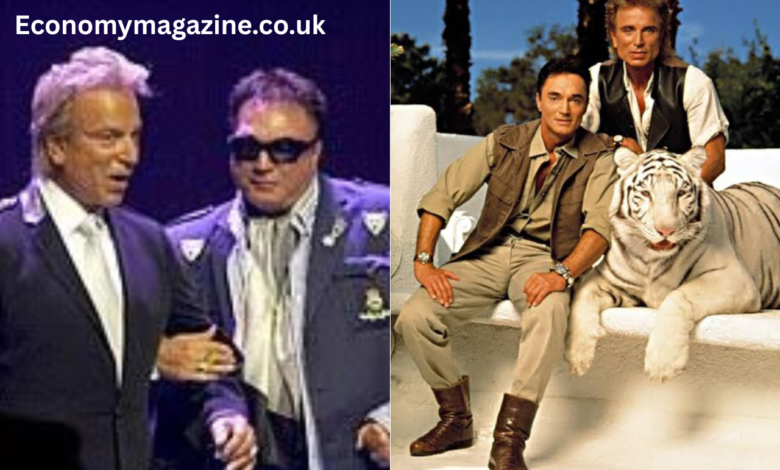
There are entertainers who become famous, and then there are entertainers whose names become permanently connected with an entire city. Siegfried and Roy belonged to the second category. For decades, the German-born illusionists transformed the Las Vegas stage into a world of impossible illusions, magnificent costumes, elaborate theatrical productions, and magnificent white tigers. Their performances were unlike almost anything audiences had seen before, blending traditional magic with animal artistry and large-scale spectacle. At their peak, they were among the highest-profile entertainers in Las Vegas and helped establish the city as a destination for spectacular family entertainment as well as casino culture.
The remarkable story of Siegfried Fischbacher and Roy Horn began far from the neon lights of Nevada. Both men were born in Germany and came from relatively modest backgrounds. Their lives changed when they met aboard a cruise ship and discovered that their very different talents could complement each other. Siegfried had a deep fascination with illusion and stage magic, while Roy possessed an extraordinary connection with animals. Together, they developed a performance style that gradually evolved from a small European act into one of the most famous magic shows in the world. According to Apple, the pair ultimately performed around 30,000 shows for millions of people during their nearly half-century career.
Their journey was also marked by enormous challenges. The 2003 attack involving Roy and a white tiger changed the direction of their lives and brought their celebrated stage career to an unexpected end. Roy survived the incident but never returned to performing in the same way. He died in 2020, while Siegfried died in 2021. Even after their deaths, however, their story continues to attract attention. Their career remains an important part of Las Vegas entertainment history, and a new dramatic television project based on their lives has brought their remarkable partnership back into the public conversation.
Siegfried and Roy Quick Facts
| Fact | Siegfried Fischbacher | Roy Horn |
|---|---|---|
| Full name | Siegfried Fischbacher | Uwe Ludwig Horn |
| Professional name | Siegfried | Roy |
| Born | June 13, 1939 | October 3, 1944 |
| Birthplace | Rosenheim, Germany | Nordenham, Germany |
| Died | January 13, 2021 | May 8, 2020 |
| Age at death | 81 | 75 |
| Profession | Magician, illusionist, entertainer | Magician, illusionist, animal performer |
| Nationality | German-American | German-American |
| Famous for | Magic and animal-based theatrical performances | Magic and white-tiger performances |
| Best-known venue | The Mirage, Las Vegas | The Mirage, Las Vegas |
| Famous slogan | SARMOTI | SARMOTI |
| Major recognition | Hollywood Walk of Fame | Hollywood Walk of Fame |
| Final public performance | 2009 | 2009 |
| Children | None publicly reported | None publicly reported |
| Estimated combined net worth | Widely reported around $120 million | Widely reported around $120 million combined |
| Official social media | No verified active personal accounts | No verified active personal accounts |
The widely circulated figure of approximately $120 million in combined net worth should be treated as an estimate rather than an officially verified financial figure. Siegfried and Roy accumulated wealth through decades of ticket sales, Las Vegas contracts, television appearances, entertainment ventures, real estate, merchandising, and other business interests. Because their private financial records were not publicly available in full, precise individual net-worth figures cannot be established with certainty.
Early Life of Siegfried Fischbacher
Siegfried Fischbacher was born on June 13, 1939, in Rosenheim, Bavaria, Germany. He grew up during a difficult period of European history, with his childhood shaped by the aftermath and disruption of World War II. His father, Martin Fischbacher, was reportedly a professional painter and experienced wartime captivity, while his mother, Maria, cared for the family. The circumstances surrounding his childhood gave him an appreciation for imagination and escapism, qualities that would eventually become central to his career as an illusionist.
Siegfried developed an interest in magic when he was still a child. Rather than treating magic as a casual hobby, he became fascinated by the mechanics and mystery behind illusions. He reportedly obtained a book about magic and began teaching himself tricks, experimenting with ways to entertain others. His early path was not a conventional route toward international stardom. He completed an apprenticeship as a carpet weaver and later moved into hospitality work, but magic remained the passion that continually pulled him toward entertainment.
His early years also taught him persistence. Siegfried did not begin with a major theater, wealthy producer, or famous mentor behind him. He had to develop his skills gradually and find opportunities wherever they appeared. Eventually, he began performing professionally and found work aboard cruise ships. That decision proved to be one of the most important turning points in his life because it placed him in an environment where he would meet the man who would become his lifelong creative partner.
Roy Horn’s Childhood and Fascination With Animals
Roy Horn was born Uwe Ludwig Horn on October 3, 1944, in Nordenham, Germany. His childhood took place during a period of tremendous social and economic uncertainty in Germany. While Siegfried’s fascination was primarily with magic, Roy developed an unusually strong connection with animals. This interest would eventually become the defining feature that separated the duo from other magicians of their era.
Roy’s attraction to animals was not simply about putting exotic creatures on a stage. He developed a reputation for being comfortable around animals and interested in understanding their behavior. Before achieving international fame, he gained experience working around animals and became particularly fascinated by large and exotic species. This relationship eventually gave him a unique role within the partnership: he could create moments involving animals that most traditional magicians could not reproduce.
That combination of personality and ability became crucial when Roy encountered Siegfried. He saw possibilities in the magician’s performances and eventually became involved in the act. Instead of simply serving as another assistant, Roy brought an entirely different dimension to the performance. The partnership began to evolve around the idea that magic and animals could coexist within a larger theatrical fantasy, laying the groundwork for the show that would eventually conquer Las Vegas.
How Siegfried and Roy Met
The meeting between Siegfried and Roy took place aboard a cruise ship in the late 1950s. Siegfried was performing magic while Roy was working on the ship, and the younger Roy became fascinated by what he saw. Their relationship developed gradually, with Roy becoming increasingly involved in the performance. What initially looked like an ordinary professional encounter eventually became the beginning of one of entertainment’s longest-running partnerships.
Their early performances were much smaller than the spectacular productions audiences would later associate with them. They experimented with conventional illusions and began incorporating animals into their act. Roy’s ability to work with animals gave Siegfried’s magic an unusual visual element, while Siegfried’s understanding of illusion provided the theatrical framework that allowed Roy’s animal work to become part of a larger performance.
During the 1960s, their reputation expanded beyond the cruise-ship environment. They performed in Europe and attracted attention from influential figures. Their appearance for Monaco’s Prince Rainier III and Princess Grace became one of the important milestones in their early career. Eventually, the duo turned their attention toward the American entertainment market, where Las Vegas offered an opportunity to build something much larger.
The Rise of Siegfried and Roy in Las Vegas
Las Vegas was the perfect environment for Siegfried and Roy’s ambitions because the city was increasingly investing in extravagant entertainment. The duo understood that audiences were not necessarily looking for another ordinary magic act. They wanted something memorable, dramatic, and visually overwhelming. Siegfried and Roy responded by developing performances that combined illusion, music, lighting, costumes, choreography, animals, and elaborate stage design.
Their reputation grew steadily as they performed in major Las Vegas venues. The act became increasingly sophisticated, and their white tigers became an unmistakable part of their public image. The animals were not simply inserted into the show for novelty; they became part of the mythology surrounding the performers. The sight of Siegfried and Roy standing beside enormous white cats created a visual identity that audiences could immediately recognize.
The pair’s success coincided with the broader transformation of Las Vegas into an entertainment capital. Instead of relying exclusively on gambling, casinos increasingly competed through restaurants, attractions, family entertainment, concerts, and theatrical productions. Siegfried and Roy became one of the most visible examples of that transformation. Their career demonstrated that a specialized form of entertainment could become a major commercial attraction when it was packaged with spectacle and a strong identity.
The Mirage and Their Greatest Success
The Mirage became the defining home of Siegfried and Roy’s Las Vegas career. Their residency there turned their already successful act into a massive theatrical attraction. Audiences did not simply attend a magic performance; they entered an elaborate world designed around illusion, mystery, animals, and fantasy. The scale of the production helped distinguish the duo from conventional stage magicians.
Their success at the Mirage helped turn them into international celebrities. Tourists traveled to Las Vegas specifically to see them, while television appearances and media coverage introduced their personalities to audiences who might never have visited Nevada. Their names became associated with luxury, spectacle, white tigers, and the extravagant style of late twentieth-century Las Vegas.
The Hollywood Chamber of Commerce eventually recognized their contribution to live entertainment. Siegfried and Roy received their Hollywood Walk of Fame star in the live-performance category on September 23, 1999. The official Walk of Fame record describes them as German-American entertainers known for their long-running illusion show in Las Vegas and notes their use of white tigers as a major part of the act.
White Tigers and Their Signature Stage Style
White tigers became perhaps the most recognizable symbol of Siegfried and Roy. Their presence transformed what could have been a conventional illusion show into something that looked almost mythical. The performers presented the animals as magnificent creatures within an elaborate theatrical world, making them an integral part of the audience experience.
The duo’s relationship with white tigers also influenced their business and public image outside the theater. According to the Hollywood Walk of Fame, their dependence on white tigers for the act led them to establish a tiger-breeding program. Their work with exotic animals became one of the most distinctive aspects of their legacy, but it also attracted criticism from animal-welfare advocates who questioned the ethics of keeping and breeding large exotic cats for entertainment.
That controversy is important when examining their legacy honestly. Siegfried and Roy clearly had a deep fascination with animals and spent substantial portions of their lives caring for them, but their approach existed within a wider debate about captive wildlife, animal performance, and conservation. Their story therefore cannot be reduced either to unquestioned celebration or simple condemnation. It is better understood as part of the complicated history of exotic-animal entertainment in the twentieth and early twenty-first centuries.
The 2003 Tiger Attack
October 3, 2003, became the most dramatic and painful date in Siegfried and Roy’s career. During a performance at the Mirage, Roy was attacked and seriously injured by a white tiger named Mantecore. The incident shocked audiences and the entertainment industry because the duo had spent decades building their reputation around their apparent ability to work safely with large exotic animals.
The attack brought their regular stage career to an immediate halt. Roy sustained severe injuries and faced a long recovery. The incident was followed by investigations and extensive public speculation about what had happened during the performance. The exact circumstances became the subject of intense media attention, with competing interpretations of the animal’s behavior and the events leading up to the attack.
The tragedy also changed the way the public viewed the duo. Before 2003, their white tigers were largely presented as symbols of beauty, mystery, and mastery. After the attack, they became part of a much more complicated discussion about risk, animal behavior, captivity, and the boundaries of live entertainment. Apple’s later Wild Things: Siegfried & Roy podcast revisited these questions, examining the official investigation and competing theories surrounding the incident.
Roy Horn’s Life After the Accident
Roy’s recovery after the attack was long and difficult. Although he survived, the injuries permanently changed his physical abilities and prevented him from returning to the demanding stage performances that had defined his career. For someone whose identity had been built around movement, spectacle, and direct interaction with animals, the transition into a quieter life represented a profound change.
Yet Roy did not completely abandon his relationship with Mantecore or his affection for animals. His attitude toward the tiger remained notably different from the simplistic narrative that an animal had merely “turned” against him. He continued to regard Mantecore with affection, adding another emotional layer to an already complicated story.
The duo eventually made a special appearance together in 2009, more than five years after the accident. The appearance was significant because it allowed audiences to see Siegfried and Roy together again, even though the performance did not represent a return to their former full-scale production. The Hollywood Walk of Fame records February 28, 2009, as their final performance.
Retirement and Their Final Years
Following the years of recovery and occasional public appearances, Siegfried and Roy formally stepped away from regular show business. Their retirement marked the end of an era in Las Vegas entertainment. For decades, they had been among the city’s most recognizable performers, but the 2003 accident made their old style of production impossible.
The years after retirement were more private. The two men remained connected to their animals, their Las Vegas property, and the legacy they had built. Instead of performing night after night, they spent more time away from the intense public schedule that had dominated their lives for decades.
Their retirement also gave historians and audiences an opportunity to reconsider their career as a whole. Their success was not simply the result of clever magic tricks. It came from branding, theatrical innovation, risk-taking, animal performance, showmanship, and an understanding of how to create an experience people would remember long after leaving the theater.
Personal Life and Their Unique Partnership
Siegfried and Roy shared one of the most unusual partnerships in entertainment history. Their relationship lasted for decades and extended far beyond professional collaboration. They lived and worked closely together, built a shared business empire, cared for animals together, and developed a public identity that made it difficult to separate the individual performers from the duo.
The pair generally kept many aspects of their private lives away from the public. Their closeness generated considerable speculation throughout their career, but they did not allow every aspect of their personal relationship to become public entertainment. Their decision to maintain boundaries was particularly notable given how intensely the media followed their careers.
Their private world also reflected their theatrical personalities. Their Las Vegas estate, associated with their Little Bavaria and Jungle Palace homes, was not an ordinary celebrity residence. It incorporated elements of their German heritage and provided space for the animals that had played such an important role in their professional lives. Even away from the stage, they had created an environment that reflected the fantasy and spectacle associated with their public identities.
Siegfried and Roy Net Worth and Sources of Income
Siegfried and Roy became extraordinarily wealthy during the height of their success, although an exact accounting of their fortune has never been publicly established. Celebrity wealth estimates have commonly placed their combined net worth at approximately $120 million, but that number should be regarded as an estimate rather than a confirmed financial statement.
Their primary source of income was their extraordinarily successful live entertainment career. A long-running Las Vegas residency allowed them to generate substantial ticket revenue, while television appearances, special performances, merchandise, licensing, business ventures, and real estate provided additional sources of wealth. Their fame also gave them opportunities that would not have been available to ordinary stage performers.
Their financial legacy demonstrates how powerful entertainment branding can become. Siegfried and Roy did not merely sell tickets to individual magic tricks. They created a recognizable world around their names. Their animals, costumes, stage imagery, slogan, personalities, and theatrical productions all contributed to a brand that remained valuable long after their final performance.
Awards, Recognition and Cultural Impact
One of the most important formal recognitions came in 1999, when Siegfried and Roy received their star on the Hollywood Walk of Fame. The honor recognized their work in live performance and confirmed their status as major entertainment figures beyond Las Vegas.
Their broader influence can be seen in the evolution of Las Vegas stage entertainment. The scale of their productions helped establish a model in which performers could become attractions in their own right. Their shows combined elements of magic, theater, animal performance, choreography, music, and visual spectacle, creating a format that influenced how audiences understood large-scale casino entertainment.
Their cultural influence also survived the end of their career. The name “Siegfried and Roy” remains instantly associated with an important period in Las Vegas history. Their story has continued through documentaries, podcasts, archival footage, biographies, and discussions about magic and exotic-animal entertainment. Apple’s Wild Things: Siegfried & Roy podcast, released in 2022, explored their private lives, public image, rise to fame, controversies, and the mystery surrounding their final show.
The Death of Roy Horn
Roy Horn died on May 8, 2020, at the age of 75, after complications from COVID-19. His death came more than sixteen years after the tiger attack that had fundamentally altered his life. By then, he had already spent years away from the stage, but his name remained deeply connected with the entertainment legacy he had created alongside Siegfried.
Roy’s death prompted an outpouring of memories from the entertainment world. People remembered him not only as a magician but also as an entertainer whose relationship with animals had become an essential part of his identity. His career was unusual because very few performers had ever built such a successful mainstream act around exotic-animal performance.
His passing also made the story of Siegfried and Roy even more poignant. The partnership that had survived decades of professional challenges and a devastating accident had entered its final chapter. Yet Siegfried remained determined to preserve the memory of the work they had created together.
The Death of Siegfried Fischbacher
Siegfried Fischbacher died on January 13, 2021, at the age of 81, after battling pancreatic cancer. His death occurred only about eight months after Roy’s passing. The timing meant that within less than a year, both halves of one of the entertainment industry’s most famous partnerships were gone.
Siegfried’s death was particularly emotional because he had spent much of his life building the career with Roy. Their professional partnership had lasted for nearly half a century, and the two names had become inseparable in the public imagination. Losing Siegfried after Roy made the end of their story feel unusually complete.
Even after their deaths, however, their influence remains visible. The Hollywood Walk of Fame still records their contribution to live entertainment, while the continuing interest in their biography demonstrates that their story has not disappeared.
Siegfried and Roy’s Legacy in 2026
The legacy of Siegfried and Roy continues to receive renewed attention in 2026. One of the most significant developments is Apple’s planned limited drama series Wild Things, based on the Apple Original Podcast Wild Things: Siegfried & Roy. Apple announced that Jude Law would portray Siegfried and Andrew Garfield would portray Roy. The eight-episode project is being developed by Apple Studios and Imagine Entertainment, with John Hoffman serving as writer and showrunner and Matt Shakman directing the pilot.
The series is expected to explore the relationship between the two performers, their rise to fame, their role in transforming Las Vegas into a more family-oriented entertainment destination, and the events surrounding their final show. The project demonstrates that the story of Siegfried and Roy remains compelling enough to inspire a major modern television production more than two decades after their stage career ended.
Their renewed appearance in popular culture also creates an opportunity for audiences to look beyond the spectacular costumes and white tigers. The deeper story is about two people who came from postwar Germany, found each other through entertainment, built an extraordinary career together, faced tragedy, and ultimately left a permanent mark on Las Vegas. Their lives contained success and controversy, glamour and danger, ambition and loss, making their biography far more complex than a simple story about famous magicians.
What Made Siegfried and Roy Different?
The greatest strength of Siegfried and Roy was their understanding that successful entertainment requires more than technical ability. Plenty of people can learn a magic trick, but creating a memorable theatrical world requires imagination, discipline, branding, timing, and an understanding of the audience. The duo combined those elements in a way that few performers had achieved before.
Their partnership also worked because their personalities and talents complemented one another. Siegfried was deeply focused on illusion and theatrical construction, while Roy had an extraordinary connection with animals. Instead of competing with each other, they built a show in which each man’s strengths amplified the other’s. The result was an entertainment identity that could not easily be copied.
Their story also demonstrates the importance of evolution. The act changed repeatedly throughout their career, moving from small performances to major European appearances and eventually to an enormous Las Vegas production. They did not remain satisfied with their first version of success. They continually expanded the scale and ambition of their work, which helped them remain relevant for decades.
Final Thoughts on Siegfried and Roy
The story of Siegfried and Roy is ultimately much larger than a biography of two magicians. It is a story about imagination and perseverance, about how two people from very different beginnings discovered that their talents could create something neither could have achieved alone. From a cruise ship in Europe to the brightest stages of Las Vegas, their journey represents one of the most remarkable partnerships in modern entertainment.
Their legacy is complicated, and it should be remembered honestly. Their achievements in magic and live entertainment were extraordinary, but their use of exotic animals also remains part of continuing debates about animal welfare and captivity. The 2003 tiger attack forever changed the way their career was viewed, proving that even the most carefully controlled spectacle can contain unpredictable risks. Apple’s later investigation into their story illustrates how many unanswered questions and competing interpretations remain around their final years as performers.
Yet the enduring fascination with Siegfried and Roy says something important about the power of performance. They convinced audiences to suspend disbelief and enter a world where impossible things appeared possible. They built a career around wonder, took a relatively unconventional path to international fame, and became symbols of a defining era in Las Vegas. As new generations discover their story through documentaries, podcasts, archival performances, and dramatic productions such as Wild Things, their legacy continues to evolve. Their lives remain a reminder that perseverance, creative partnership, ambition, and an unwavering belief in an extraordinary vision can leave a mark long after the curtain falls.