Johnny Adair Biography: Early Life, Rise to Prominence, and the Beginnings of a Controversial Legacy

Introduction
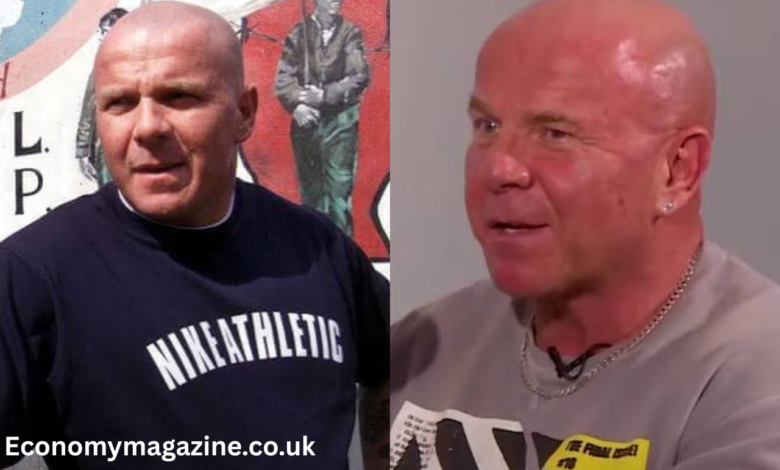
Few figures associated with Northern Ireland’s Troubles remain as controversial as Johnny Adair. Known by the nickname “Mad Dog,” Adair became one of the most recognizable loyalist leaders during one of the darkest chapters in modern British and Irish history. His name has long been connected with the Ulster Defence Association (UDA) and its military wing, the Ulster Freedom Fighters (UFF), organizations deeply involved in the sectarian violence that marked the conflict. While some loyalists viewed him as a committed defender of their community, many others remember him primarily for his role in violent paramilitary activities that left lasting scars across Northern Ireland.
Table of Contents
ToggleJohnny Adair’s life reflects the complexity of growing up in a society divided by political identity, religion, and decades of conflict. His journey from a working-class neighborhood in Belfast to becoming one of the most notorious loyalist figures demonstrates how the environment of the Troubles influenced many young people. His story includes violence, imprisonment, internal feuds, exile, media attention, and continued public interest years after the conflict largely came to an end.
Understanding Johnny Adair requires looking beyond headlines. His biography is not only about one individual but also about the wider historical circumstances that shaped Northern Ireland during the late twentieth century. Examining his life helps explain how political conflict, community tensions, and personal decisions combined to create one of the most talked-about figures of the Troubles.
| Quick Facts | Details |
|---|---|
| Full Name | John Adair |
| Popular Name | Johnny Adair (“Mad Dog”) |
| Date of Birth | 27 October 1963 |
| Age | 62 (as of 2026) |
| Birthplace | Belfast, Northern Ireland |
| Nationality | British |
| Profession | Former loyalist paramilitary leader; later media personality and author |
| Parents | Jimmy Adair and Mabel Adair |
| Siblings | Six older siblings |
| Former Organization | Ulster Defence Association (UDA), Ulster Freedom Fighters (UFF) |
| Former Spouse | Gina Crossan (married 1997, later divorced) |
| Children | Four |
| Estimated Net Worth | Not publicly verified |
| No verified public account | |
| X (Twitter) | No verified public account |
| No verified official page | |
| None |
Early Life and Family Background
Johnny Adair was born on 27 October 1963 in Belfast, a city that would soon become one of the central battlegrounds of the Troubles. He grew up in the Old Lodge Road area, a predominantly Protestant working-class neighborhood situated close to communities where sectarian tensions frequently erupted. His childhood coincided with increasing political unrest, civil rights protests, riots, and the beginning of a conflict that would dominate Northern Ireland for almost three decades.
He was the youngest of seven children, born to Jimmy and Mabel Adair. Interestingly, despite his son’s future reputation, Jimmy Adair was not known as a loyalist activist. Reports suggest he maintained friendships with people from both Protestant and Catholic communities through shared interests such as pigeon racing. This contrast between Johnny’s later choices and his father’s relatively ordinary working-class life has often been highlighted by historians studying the conflict.
Growing up during the Troubles meant that violence, military patrols, riots, and political divisions became part of everyday life for many Belfast children. Streets often served as front lines between communities, and young people were exposed to fear, anger, and competing political narratives from an early age. These circumstances shaped not only Johnny Adair but an entire generation raised amid prolonged instability and mistrust.
Education and Influences During Childhood
Johnny Adair attended Hemsworth Primary School before later studying at Somerdale School. Accounts of his education suggest he was never considered an outstanding student. Several historical sources note that he frequently skipped school, preferring to spend time with friends on Belfast’s streets rather than focusing on academics.
As he entered his teenage years, Adair became involved with a group of loyalist youths who gradually evolved from a neighborhood street gang into individuals increasingly associated with violent crime. The group embraced skinhead culture and became known locally for disorderly behavior, intimidation, and frequent confrontations. These experiences distanced Adair from conventional education and pushed him toward a very different path than many of his peers.
Music also became part of his youth. He reportedly formed a rock band called Offensive Weapon, whose performances reflected far-right political influences that existed among some sections of loyalist youth during that period. Although music itself never became his career, this period demonstrated his growing attraction toward militant ideology and extremist identity, which would later define much of his public life.
Johnny Adair’s Rise Within the UDA and Growing Influence
Johnny Adair officially joined the Ulster Defence Association (UDA) in 1984, becoming a member of the organization’s West Belfast Brigade. He was assigned to C Company, a unit operating mainly around Belfast’s Lower Shankill area. At the time, Northern Ireland remained deeply affected by the Troubles, with loyalist and republican paramilitary groups carrying out frequent attacks. Young recruits such as Adair were quickly drawn into an environment where violence, retaliation, and sectarian division had become tragically common.
Initially, Adair’s responsibilities reportedly involved participating in riots and lower-level paramilitary activities. However, he soon gained a reputation among fellow members for his ambition and willingness to take on leadership responsibilities. During the late 1980s, several senior UDA figures were imprisoned or removed from leadership, creating opportunities for younger members to rise through the ranks. Adair became one of the most prominent members of a new generation of loyalist commanders emerging in West Belfast.
By the early 1990s, Adair had become the leader of C Company, a unit that received significant attention from security forces, journalists, and historians because of its alleged involvement in numerous sectarian attacks. The BBC and multiple historical studies have described him as one of the most high-profile loyalist paramilitary figures of the period. His leadership dramatically increased his public profile, although it also brought greater scrutiny from law enforcement and intelligence agencies.
Leadership During the Troubles
The Troubles, which lasted from the late 1960s until the signing of the Good Friday Agreement in 1998, created an atmosphere in which paramilitary organizations exercised considerable influence within some communities. Johnny Adair became one of the best-known loyalist leaders during this period, representing the militant wing of the UDA in West Belfast. His supporters viewed him as a determined loyalist commander, while critics and victims associated him with sectarian violence and intimidation.
Historical accounts state that under Adair’s leadership, C Company became associated with one of the bloodiest periods of loyalist violence in West Belfast. Security forces linked the unit to numerous attacks on Catholic civilians during the early 1990s, although individual criminal responsibility varies according to court findings and historical investigations. His leadership style was frequently described as aggressive, and he became one of the most recognizable faces of loyalist paramilitarism during the conflict.
Adair also became a regular subject of newspaper coverage. His nickname, “Mad Dog,” appeared frequently in British and Irish media, contributing to a public image that combined notoriety with controversy. His visibility made him one of the most widely recognized loyalist figures, but it also increased pressure from law enforcement agencies seeking evidence against senior paramilitary leaders.
Arrest, Conviction, and Imprisonment
After an extensive investigation, detectives from the Royal Ulster Constabulary (RUC) gathered covert recordings and other evidence that prosecutors said demonstrated Johnny Adair’s leadership role within the UDA. Rather than accusing him of carrying out individual attacks, authorities charged him with directing terrorism, a serious offence intended to prosecute those who organized or supervised paramilitary activity.
In 1995, Adair was convicted and received a 16-year prison sentence. During legal proceedings, he acknowledged that he had served as a senior UDA leader during the early 1990s. Following standard practice within the organization, he stepped down from his position as brigadier after entering prison, although he continued to influence loyalist politics from behind bars. His imprisonment represented one of the most significant convictions of a senior loyalist commander during the Troubles.
While incarcerated in the Maze Prison, Adair remained an influential figure among loyalist prisoners. His importance became particularly evident during discussions surrounding the peace negotiations that ultimately produced the Good Friday Agreement. Government representatives met with loyalist inmates, including Adair, in an effort to maintain support for the developing peace process among imprisoned paramilitary leaders.
Release Under the Good Friday Agreement
The signing of the Good Friday Agreement in April 1998 marked a turning point in Northern Ireland’s history. One of its most controversial provisions was the early release of prisoners belonging to paramilitary organizations that maintained ceasefires. Like many other republican and loyalist prisoners, Johnny Adair became eligible for release despite having received a lengthy prison sentence. His impending release generated widespread public debate, particularly among victims’ families who believed serious offenders should complete their full sentences.
In September 1999, Adair was released from prison after serving only a portion of his 16-year sentence. His return to Belfast attracted considerable media attention, with supporters welcoming him home while political leaders and security officials expressed concern about the influence he could still exert within loyalist circles. Authorities feared that his return might destabilize the fragile peace process, especially given his prominence within the UDA before imprisonment.
Although Adair publicly claimed to support the peace process after his release, tensions within loyalist organizations quickly resurfaced. His growing influence over sections of the UDA, combined with long-standing rivalries among loyalist factions, created an increasingly volatile situation that threatened both community stability and the gains achieved through the peace agreement.
The Loyalist Feud and Return to Prison
The optimism surrounding Adair’s release proved to be short-lived. During 2000, a bitter feud erupted between the Ulster Defence Association (UDA) and the Ulster Volunteer Force (UVF), two of Northern Ireland’s principal loyalist paramilitary organizations. The conflict involved shootings, intimidation, and retaliatory attacks, resulting in multiple deaths and renewed fears that loyalist violence could undermine the peace process. Security agencies believed Adair played an important role in escalating the dispute.
As violence intensified, the British government revoked Adair’s early-release licence. Then Northern Ireland Secretary Peter Mandelson ordered his return to prison after intelligence assessments concluded that he posed a continuing security risk. Adair denied responsibility for many of the allegations, but the decision reflected official concerns that his activities threatened public safety and breached the conditions attached to his release under the Good Friday Agreement.
Adair remained imprisoned until 2005, when he completed the remainder of his sentence and was released. By that stage, however, his position within loyalism had changed dramatically. Former allies had become opponents, and his influence inside the UDA had largely disappeared following years of internal conflict and leadership struggles.
Exile from Northern Ireland
Following his final release, Johnny Adair faced perhaps the most dramatic turning point of his life. In 2003, before completing his sentence, escalating tensions with other UDA leaders had already forced him, his family, and close supporters to leave Belfast after being expelled by rival members of the organization. The expulsion effectively ended his leadership within the UDA and marked the collapse of his once-powerful position inside loyalist paramilitary circles.
After leaving Northern Ireland, Adair eventually settled in Scotland, where he has lived for many years. While he has periodically appeared in media interviews, documentaries, and podcasts discussing his experiences during the Troubles, he has remained outside the mainstream of Northern Irish politics and loyalist leadership. His later public appearances have focused largely on reflecting upon his past rather than returning to an organizational role.
Recent reports indicate that Adair continues to attract public attention because of historical investigations connected to the Troubles. In 2026, he stated that he expected to be contacted by the public inquiry into the 1989 murder of solicitor Pat Finucane and said he was prepared to provide evidence regarding matters surrounding the investigation/
Personal Life, Family, and Life Away from the Spotlight
Johnny Adair’s personal life has often attracted attention alongside his public notoriety. He began a relationship with Gina Crossan when they were teenagers, and the couple married in 1997 while Adair was serving his prison sentence. Their relationship endured years of imprisonment, public controversy, and loyalist feuds, but it also faced significant challenges. The marriage eventually ended in divorce after the family was forced to leave Northern Ireland during the internal UDA conflict.
The couple had four children, and family life became increasingly difficult as Adair’s involvement in loyalist politics brought constant media attention and security concerns. Following the violent feud within the UDA in 2003, the family relocated first to England and later to Scotland. Their move was intended to escape threats from former associates after Adair was expelled from the organization he had once helped lead.
One of the most tragic moments in Adair’s later life came in 2016, when his son Jonathan “Mad Pup” Adair was found dead in Scotland. The death received widespread media coverage and represented a devastating personal loss for the family. Adair has rarely spoken publicly in detail about the tragedy, choosing instead to maintain a relatively private family life despite continued public interest.
Net Worth and Sources of Income
Estimating Johnny Adair’s net worth is difficult because there are no verified financial disclosures available. Unlike entertainers or business leaders, he has never maintained a transparent public record of his income or assets. Various media reports over the years have speculated about his finances, but none provide independently verified figures that can be relied upon.
Since leaving Northern Ireland, Adair has earned income through several legal activities, including media interviews, documentary appearances, speaking engagements, and the publication of his autobiography. In 2006, reports stated that he signed a publishing deal reportedly worth around £100,000 for his memoir, although the precise financial details have never been officially confirmed.
Because reliable financial information is unavailable, any estimate of Johnny Adair’s current wealth would be speculative. A balanced assessment is that his present income has largely come from media-related work and book publishing rather than from any ongoing public career or business enterprise. Readers should therefore treat online net-worth figures with caution unless supported by credible evidence.
Social Media Presence and Public Engagement
Unlike many modern public figures, Johnny Adair maintains a very limited official social media presence. There are no verified Instagram, X (formerly Twitter), Facebook, or LinkedIn accounts that represent him officially. Numerous unofficial pages, videos, and discussion forums exist, but they are generally operated by news organizations, documentary producers, or members of the public rather than Adair himself.
Instead of communicating directly through social platforms, Adair has occasionally appeared in television documentaries, podcasts, newspaper interviews, and online video discussions about the Troubles and his experiences. These appearances generally focus on historical reflection rather than active political campaigning, allowing historians and journalists to examine the conflict through the perspective of a former participant.
Even decades after the height of the Troubles, his name continues to generate discussion among historians, journalists, and those studying Northern Ireland’s conflict. This continued public interest reflects both the lasting impact of the Troubles and the enduring significance of individuals who played prominent roles during that period.
Recent Updates and Current Life
In recent years, Johnny Adair has remained in the public eye only occasionally. He continues to live in Scotland, where he has largely stayed away from leadership roles within loyalist organizations. Most recent media attention has come through interviews discussing historical events rather than involvement in current political activity.
During 2026, Adair again made headlines after a viral online video prompted widespread discussion on social media. He publicly addressed the footage and denied some of the speculation surrounding it, demonstrating that his public profile still attracts considerable media attention despite his withdrawal from active loyalist leadership.
Today, historians generally regard Johnny Adair as one of the most recognizable and controversial loyalist figures of the Troubles. His life continues to be examined in books, documentaries, and academic research as part of the broader effort to understand Northern Ireland’s decades-long conflict, its human consequences, and the difficult process of reconciliation that followed.
Legacy, Historical Significance, and Public Perception
Johnny Adair remains one of the most recognizable figures associated with Northern Ireland’s Troubles, but his legacy is deeply controversial. Historians generally view him as a symbol of the violent loyalist paramilitary movement that emerged during decades of sectarian conflict. While a small number of former supporters have continued to defend his actions as part of what they saw as a loyalist struggle, the overwhelming historical assessment emphasizes the devastating human cost of the violence carried out during that period. Adair’s name is frequently mentioned in studies of the Troubles because of his leadership role within the UDA’s West Belfast Brigade and the influence he exercised during the early 1990s.
His story is also significant because it illustrates how internal divisions weakened loyalist paramilitary organizations. After years of commanding one of the UDA’s most prominent units, Adair was ultimately expelled by fellow loyalists during a bitter power struggle. The internal feud demonstrated that many paramilitary organizations faced conflicts not only with their political opponents but also within their own ranks. Historians often point to his downfall as evidence that violence eventually turned inward, affecting those who had once worked together.
Today, Adair’s life is examined primarily through documentaries, books, podcasts, and academic research rather than political influence. His experiences have become part of broader discussions about conflict, radicalization, organized violence, and post-conflict reconciliation. Researchers continue to study figures like Adair to better understand how communities were affected by decades of unrest and how Northern Ireland has attempted to move toward a more peaceful future.
Books, Documentaries, and Media Coverage
Johnny Adair’s life has inspired numerous books written by journalists and historians seeking to document the history of the Troubles. Among the best-known works is Mad Dog: The Rise and Fall of Johnny Adair and C Company by David Lister and Hugh Jordan, which explores both his personal journey and the wider activities of the UDA during the conflict. Other historical works on loyalist paramilitaries also feature extensive analysis of Adair’s leadership, influence, and eventual expulsion from the organization.
Television has also played a role in documenting his life. Over the years, Adair has appeared in interviews and documentaries discussing his past, prison experiences, and reflections on the Troubles. These productions generally aim to provide historical context rather than celebrate his actions, presenting multiple perspectives from journalists, historians, victims, and former participants in the conflict. More recently, he has also appeared on podcasts discussing his experiences during the Troubles, continuing to attract public interest decades after leaving loyalist leadership.
Media attention has continued into recent years. During 2026, Adair again appeared in news reports after videos shared online generated public discussion and renewed media scrutiny. These incidents demonstrate that, despite living outside Northern Ireland for many years, he remains a figure capable of attracting headlines because of his historical prominence during the Troubles.
Conclusion
Johnny Adair’s biography is inseparable from the history of the Troubles, one of the most complex and painful periods in modern British and Irish history. Rising from a working-class neighborhood in Belfast to become one of the most prominent loyalist paramilitary leaders, his life reflects the profound impact that political conflict, sectarian division, and violence had on individuals and communities alike. His years of leadership, imprisonment, internal feuds, and eventual exile illustrate how deeply the conflict shaped both personal lives and Northern Ireland’s wider society.
Although Johnny Adair remains a controversial historical figure, his story also serves as an important reminder of the long-term consequences of conflict. The lasting impact of the Troubles continues to influence families, communities, and public debate across Northern Ireland. Studying his life within its historical context helps readers better understand the challenges of reconciliation, the importance of peace-building, and the value of resolving political differences through dialogue rather than violence.
As Johnny Adair’s story continues to be examined by historians, journalists, and researchers, it stands as a reminder that the legacies of conflict extend far beyond the individuals involved. His life underscores the importance of learning from history, encouraging future generations to value peace, resilience, and mutual understanding as the foundations of a more stable and hopeful society.