Jimmy Boyle Biography: From Scotland’s Most Feared Gangster to a Respected Artist and Author

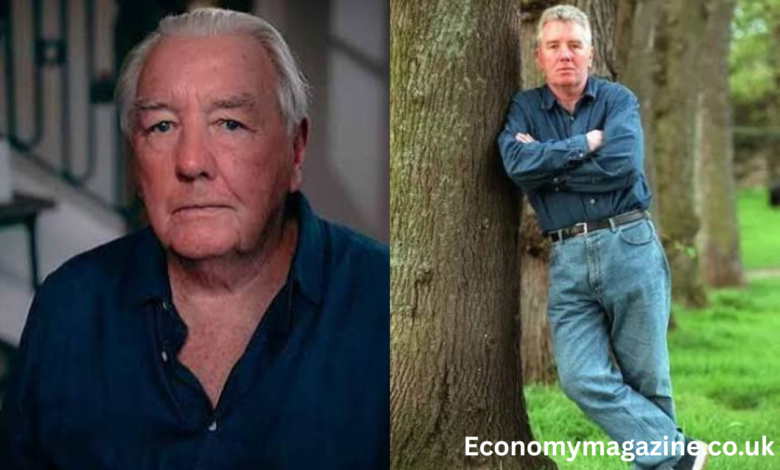
Some life stories seem almost impossible to believe, yet Jimmy Boyle’s journey is one of those rare examples where a person completely transformed their future. Once feared as one of Scotland’s most violent criminals, Boyle later became an internationally respected sculptor, novelist, and advocate for rehabilitation. His life is not simply a story about crime and punishment—it is a remarkable account of redemption, creativity, and the power of second chances.
Table of Contents
ToggleBorn in Glasgow’s notorious Gorbals district, Jimmy Boyle grew up in an environment shaped by poverty, violence, and limited opportunities. As a young man, he became involved in organized crime and eventually received a life sentence for murder in the late 1960s, a conviction he has consistently denied. Years of imprisonment appeared destined to define his life forever, but an innovative rehabilitation program inside prison introduced him to sculpture and art therapy, changing his future forever.
Today, Jimmy Boyle is recognized not for his criminal past but for his inspiring transformation into a successful artist, bestselling author, and public speaker. His autobiography A Sense of Freedom remains one of Scotland’s most influential prison memoirs, while his sculptures and writings continue to inspire discussions about criminal justice, rehabilitation, and the human capacity for change.
| Quick Facts | Information |
|---|---|
| Full Name | James “Jimmy” Boyle |
| Known As | Jimmy Boyle |
| Date of Birth | 17 May 1944 |
| Age | 82 (as of 2026) |
| Birthplace | Gorbals, Glasgow, Scotland |
| Nationality | Scottish |
| Profession | Sculptor, Novelist, Memoirist, Former Gangster |
| Famous For | A Sense of Freedom, Sculpture, Prison Reform |
| Parents | Not publicly documented |
| Siblings | One of four brothers |
| Marital Status | Married |
| Current Wife | Kate Fenwick |
| Former Wife | Sara Trevelyan |
| Children | Two children |
| Net Worth | Estimated around $1–3 million (unofficial estimate) |
| No verified public account | |
| X (Twitter) | No verified public account |
| No verified official page |
Early Life and Childhood in Glasgow
Jimmy Boyle was born on 17 May 1944 in Glasgow’s Gorbals, an area that became famous for overcrowded housing, poverty, gang violence, and difficult living conditions during the mid-twentieth century. The neighborhood produced many hardworking families, but it also exposed children to crime and violence from an early age. Boyle later described how these surroundings greatly influenced his thinking and behavior while growing up.
As one of four brothers, Boyle grew up in a family that struggled with many of the economic challenges common in post-war Glasgow. Opportunities for young people were limited, and many teenagers became involved with local gangs as a way to gain respect, protection, or financial support. Boyle entered this world while still very young, believing violence was simply part of everyday life.
His childhood lacked many of the positive influences that help shape successful careers. Instead, the streets became his classroom. The harsh environment taught him toughness but also pushed him toward criminal activity. Those early experiences would eventually lead to decisions that completely changed the direction of his life.
Key Influences During Childhood
- Growing up in Glasgow’s Gorbals.
- Exposure to gang culture.
- Economic hardship.
- Limited educational and career opportunities.
Entering the Criminal Underworld
As Jimmy Boyle entered adulthood, he became increasingly involved in Glasgow’s criminal underworld. He earned a reputation as a violent debt collector and gangster connected with organized crime. During the 1960s, his name became widely known among both criminals and police, making him one of Scotland’s most feared young men.
His criminal career reached its most dramatic turning point in 1967 when he was convicted of murdering gangland figure William “Babs” Rooney. Boyle has always maintained that he did not commit the murder, yet he was sentenced to life imprisonment. Regardless of his continued denial, the conviction changed his life permanently and sent him into Scotland’s prison system for many years.
Inside prison, Boyle’s violent reputation only intensified. He frequently clashed with prison authorities and became known as one of the country’s most dangerous inmates. His repeated confrontations led to solitary confinement and extremely harsh prison conditions that seemed to remove any hope for a better future.
Life Behind Bars and the Turning Point That Changed Everything
Jimmy Boyle entered prison carrying the reputation of one of Scotland’s most feared criminals, but life behind bars proved even more brutal than the streets he had left behind. After receiving a life sentence in 1967, he was housed in some of Scotland’s toughest prisons, where violence between inmates and prison officers was common. Boyle repeatedly clashed with authorities, spent long periods in solitary confinement, and became known for his rebellious behavior. These years hardened him further and created a cycle of anger and punishment that seemed impossible to escape.
During the early years of his imprisonment, Boyle believed he had nothing left to lose. He openly resisted prison rules and frequently found himself in conflict with officers, resulting in additional punishment. The Scottish prison system of that era relied heavily on strict discipline, but Boyle’s experience showed that punishment alone could not change deeply rooted attitudes. His case became one of the best-known examples of the limitations of a purely punitive prison system.
Everything changed when Boyle was transferred to the revolutionary Special Unit at Barlinnie Prison, an experimental rehabilitation program created for prisoners considered the most difficult to manage. Instead of focusing only on punishment, the unit encouraged trust, responsibility, education, and creativity. It became the place where Jimmy Boyle experienced genuine personal growth for the first time in his life.
The Discovery of Art and Self-Expression
One of the most important people in Jimmy Boyle’s transformation was Joyce Laing, an art therapist who introduced prisoners to sculpture and creative expression. At first, Boyle showed little interest, but as he began working with clay, he discovered a talent he never knew he possessed. Art became far more than a hobby—it became a way to understand himself, control his emotions, and imagine a future beyond prison walls.
Creating sculptures gave Boyle a sense of achievement unlike anything he had experienced before. Rather than earning respect through violence, he discovered that creativity could command admiration in a completely different way. Prison staff also noticed remarkable changes in his behavior as he devoted more time to sculpting and developing his artistic abilities. This marked the beginning of one of the most famous rehabilitation stories in British criminal justice history.
The Special Unit encouraged communication instead of confrontation. Prisoners and officers met regularly to discuss problems, resolve conflicts, and build mutual respect. Boyle later described these experiences as the moment he began seeing both himself and others as human beings again. The trust shown by the prison staff became one of the foundations of his transformation.
Major Turning Points During Imprisonment
- Transfer to Barlinnie’s Special Unit.
- Meeting art therapist Joyce Laing.
- Discovering sculpture as a lifelong passion.
- Learning responsibility through rehabilitation instead of punishment.
A Sense of Freedom and Becoming a Bestselling Author
While still serving his sentence, Jimmy Boyle began writing about his life, his childhood in the Gorbals, his criminal past, and his experiences inside Scotland’s prison system. The result was A Sense of Freedom, first published in 1977. The autobiography quickly became one of Britain’s most influential prison memoirs because it offered an honest, deeply personal account of violence, incarceration, and redemption.
The success of the book surprised both readers and critics. Rather than glorifying crime, Boyle reflected on how poverty, gang culture, and the prison environment shaped his life. His powerful storytelling helped the public better understand the realities of imprisonment and sparked wider discussions about prison reform and rehabilitation across the United Kingdom. The memoir has remained in print for decades and is still regarded as an important work of Scottish literature.
The popularity of A Sense of Freedom eventually led to a film adaptation, bringing Boyle’s remarkable story to an even wider audience. The book established him not only as a talented sculptor but also as a gifted writer capable of examining difficult subjects with honesty and insight. His transformation demonstrated that education, creativity, and opportunity can sometimes succeed where punishment alone fails.
Release from Prison and Building a New Life
After serving around fourteen years in prison, Jimmy Boyle was released in the early 1980s. Rather than returning to his former lifestyle, he committed himself fully to art, literature, and helping others avoid the mistakes he had made. His release marked the beginning of an entirely new chapter built on creativity, responsibility, and public service.
Boyle settled in Edinburgh, where he continued developing his career as a sculptor. His artistic talent earned praise from galleries, collectors, and critics, proving that the skills he discovered in prison could support a successful professional life. His work demonstrated remarkable technical ability while often reflecting themes of humanity, struggle, and hope.
He also helped establish the Gateway Exchange, a charitable organization that used creative arts and therapeutic programs to support former prisoners and people recovering from addiction. Through this work, Boyle hoped to provide others with the same opportunities that had transformed his own life, reinforcing his belief that rehabilitation is both possible and worthwhile.
Net Worth and Sources of Income
Jimmy Boyle’s exact financial position has never been publicly disclosed, and he has generally kept his personal finances private throughout his later life. Because there are no official financial statements or verified reports, any published figures should be treated as estimates rather than confirmed facts. Various online sources suggest his net worth may be in the low millions of dollars, but these estimates cannot be independently verified.
Unlike many public figures, Boyle did not build his wealth through endorsements or celebrity appearances. Instead, his income has primarily come from his long career as a professional sculptor, royalties from his bestselling books, public speaking engagements, and commissioned artwork. His autobiography A Sense of Freedom has remained popular for decades, continuing to generate interest from readers who are inspired by his remarkable personal transformation.
His financial journey reflects the same determination that defined the rest of his life. Rather than seeking fame from his criminal past, Boyle focused on creating lasting artistic work and meaningful literature. His success demonstrates that genuine talent and perseverance can create new opportunities, even after years of hardship and imprisonment.
Primary Sources of Income
- Sculpture commissions and exhibitions.
- Royalties from books and memoirs.
- Public speaking and educational events.
- Film and publishing rights associated with his work.
Social Media Presence and Public Engagement
Jimmy Boyle has chosen to maintain a relatively private life in recent years. Unlike many modern authors and artists, he does not operate verified public accounts on major social media platforms such as Instagram, X (formerly Twitter), Facebook, or LinkedIn. Instead of communicating directly through social media, much of the public engagement surrounding Boyle comes through interviews, documentaries, newspaper features, and discussions of his books and artwork.
Although his online presence is limited, his influence continues through readers, artists, prison reform advocates, and educational institutions. A Sense of Freedom is still widely discussed in schools, universities, and criminal justice courses, where it serves as a case study on rehabilitation and the impact of creative expression. New generations continue discovering his story through libraries, documentaries, and literary recommendations.
Boyle’s decision to remain largely outside social media reflects his personality and lifestyle. Rather than pursuing online popularity, he has preferred to let his sculptures, books, and life story speak for themselves. This quiet approach has not diminished his legacy; instead, it has reinforced his reputation as someone committed to meaningful work rather than public attention.
Recent Life and Ongoing Legacy
Even in his eighties, Jimmy Boyle remains one of Scotland’s most compelling public figures. Although he no longer appears frequently in the media, interest in his life has continued through reprints of A Sense of Freedom, interviews reflecting on his rehabilitation, and ongoing discussions about prison reform. His remarkable transformation is regularly cited by academics, journalists, and criminal justice professionals as an example of how education, trust, and creativity can help change lives.
Boyle’s artistic legacy also continues through his sculptures, many of which remain in public and private collections. His work is admired not only for its craftsmanship but also for the powerful personal story behind it. The journey from violent offender to respected sculptor remains almost unmatched in modern Scottish history, making his life an enduring source of fascination and inspiration.
Although he has largely stepped away from public life, Boyle’s influence extends well beyond Scotland. His experiences continue to shape conversations about rehabilitation, restorative justice, and the importance of offering prisoners meaningful opportunities to rebuild their lives. His story reminds society that transformation is possible when people are given both accountability and hope.
Why Jimmy Boyle’s Story Still Matters
- He became an internationally respected artist after years in prison.
- His autobiography remains one of Britain’s most influential prison memoirs.
- His life is frequently referenced in discussions about prison reform and rehabilitation.
- He demonstrated that creativity and education can become powerful tools for personal change.
Conclusion
Jimmy Boyle’s life is one of the most extraordinary stories of redemption in modern Scotland. From a childhood shaped by poverty and gang culture in Glasgow’s Gorbals to becoming one of the country’s most feared criminals, his early years seemed destined for tragedy. Yet through the opportunity to explore art, education, and self-reflection while in prison, he completely changed the course of his life. His transformation into a respected sculptor, bestselling author, and advocate for rehabilitation stands as powerful evidence that people are capable of profound personal growth.
Today, Boyle is remembered for much more than his criminal past. His sculptures have earned admiration, his books continue to inspire readers around the world, and his experiences have influenced debates about criminal justice and prison reform for decades. Rather than allowing his mistakes to define him forever, he chose to build a new identity based on creativity, responsibility, and service to others.
As Jimmy Boyle continues to inspire readers, artists, and advocates for justice, his story stands as a reminder that resilience, accountability, and purpose can shape a meaningful legacy. His remarkable journey proves that while the past cannot be erased, the future can still be rewritten through determination, compassion, and the courage to embrace change.