Jenny Pitman Biography: The Trailblazing Horse Trainer Who Changed British Racing Forever

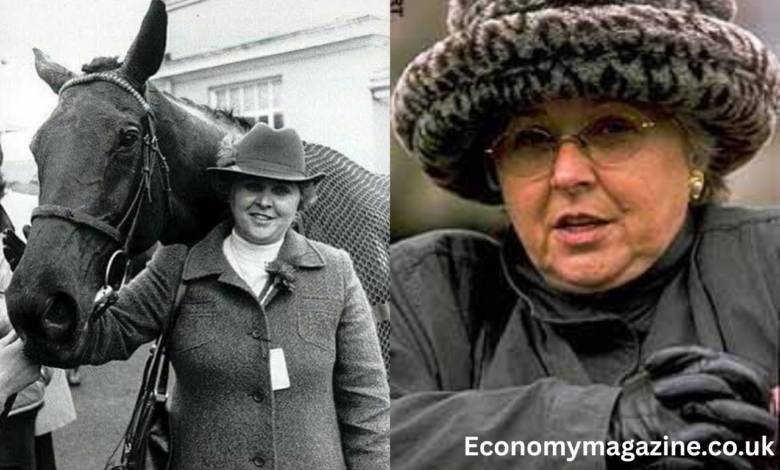
Jenny Pitman is one of the most influential figures in the history of British horse racing. Known for her fearless determination, remarkable horsemanship, and pioneering achievements, she broke through barriers in a sport that had long been dominated by men. Her journey from a young stable girl in rural England to becoming the first woman to train a Grand National winner is an inspiring story of passion, resilience, and hard work. Over the years, Pitman earned the respect of racing fans, fellow trainers, jockeys, and industry leaders through her dedication to National Hunt racing and her extraordinary ability to prepare championship-winning horses.
Table of Contents
ToggleHer success was never built on luck alone. It came from years of learning every aspect of horse care, understanding the personalities of her horses, and refusing to accept limitations placed on women in professional racing. Even after retiring from training, Jenny Pitman continued contributing to the racing industry as an author and a member of the British Horseracing Authority’s disciplinary and licensing committees. Her influence stretches far beyond racecourses, making her one of Britain’s most respected sporting pioneers.
| Quick Facts | Details |
|---|---|
| Full Name | Jennifer Susan Pitman (née Harvey) |
| Popular Name | Jenny Pitman |
| Date of Birth | 11 June 1946 |
| Age | 80 (as of 2026) |
| Birthplace | Hoby, Leicestershire, England |
| Nationality | British |
| Profession | Former Racehorse Trainer, Author |
| Famous For | First woman to train a Grand National winner |
| Parents | George Harvey (father); mother’s name not widely published |
| Siblings | One of seven children |
| Marital Status | Married to David Stait; previously married to Richard Pitman |
| Children | Mark Pitman, Paul Pitman |
| Major Honours | OBE, BBC Helen Rollason Award |
| Estimated Net Worth | Approximately $3–5 million (estimated) |
| No official public account | |
| X (Twitter) | No official public account |
| No official public profile |
Early Life and Family Background
Jenny Pitman was born Jennifer Susan Harvey on 11 June 1946 in the quiet village of Hoby, Leicestershire, England. She grew up on a modest farm in a large family with six siblings, where hard work was simply part of everyday life. Her father managed a small farm, and although the family did not enjoy great wealth, they possessed something far more valuable—a deep appreciation for animals and the countryside. Growing up around horses shaped Jenny’s future long before she imagined becoming one of Britain’s greatest horse trainers.
Life on the farm taught her discipline, patience, and resilience from an early age. Unlike many successful sports personalities who came from privileged backgrounds, Jenny’s childhood involved physical work, responsibility, and learning practical skills. She quickly developed a natural understanding of horses, recognizing their behavior, strengths, and personalities. Those experiences later became one of her greatest advantages as a National Hunt trainer.
Education never became the center of Jenny’s ambitions because her passion clearly lay elsewhere. She left school shortly before turning fifteen and immediately began working as a stable girl. While many considered this an ordinary job, Jenny viewed it as the first important step toward a dream that few women dared pursue. The stable became her classroom, and experienced horsemen became her teachers, giving her an education that no traditional school could provide.
Learning the Racing Industry from the Ground Up
Starting as a stable girl allowed Jenny Pitman to understand every detail involved in caring for racehorses. She cleaned stables, groomed horses, prepared feed, and observed experienced trainers during daily routines. Rather than rushing toward fame, she patiently built knowledge through practical experience. These years taught her that successful racehorse training depends as much on observation and care as on competition.
Her career took an important turn after moving to Bishop’s Cleeve in Gloucestershire. There she continued developing her skills while gaining exposure to professional racing environments. During this period, fate introduced her to jockey Richard Pitman after an unexpected encounter on the gallops. Although their first meeting was less than friendly, the relationship eventually grew into marriage and became an important chapter in both of their careers.
The couple later moved to Lambourn, Berkshire, one of Britain’s most famous horse racing centers. Together they established facilities for rehabilitating injured horses before gradually building a competitive racing stable. Their early years were far from glamorous, with the family living in difficult conditions while investing nearly every available resource into developing their yard. Those sacrifices laid the foundation for Jenny’s future success.
Becoming a Licensed Trainer and Making History
Jenny Pitman’s ambition was never simply to work around horses—she wanted to train champions. After years of learning every aspect of stable management and horse care, she officially obtained her racehorse trainer’s licence in 1975. That same year she celebrated her first winner under racing rules, proving that she belonged among Britain’s professional trainers. Although many within the racing industry still viewed female trainers with skepticism, Pitman allowed her horses to answer every doubt.
The years that followed saw her stable at Weathercock House in Lambourn expand rapidly. What had once been a modest operation eventually became one of the country’s leading National Hunt yards. She invested enormous time studying each horse individually, believing that every racehorse required a different training approach. Her attention to fitness, nutrition, recovery, and mental wellbeing helped develop horses capable of competing at the highest level. Owners increasingly trusted her because she consistently produced results while treating every horse with exceptional care.
Jenny’s rise represented much more than sporting success. At a time when very few women held senior roles in horse racing, she demonstrated that knowledge, determination, and leadership mattered far more than gender. Young women entering British racing suddenly had a role model proving that the biggest races in the country were no longer beyond their reach. Her achievements helped reshape attitudes throughout the racing community and inspired future generations of female trainers and jockeys.
Grand National Glory and Racing Immortality
The defining moment of Jenny Pitman’s career arrived on 9 April 1983 when her horse Corbiere, ridden by Ben de Haan, won the Grand National at Aintree. The victory instantly made history because Pitman became the first woman ever to train a Grand National winner. It was one of the biggest sporting stories of the year and transformed her into an international sporting icon. The Grand National is regarded as one of the world’s most demanding steeplechases, making the achievement even more remarkable.
Rather than becoming satisfied after one historic victory, Pitman continued pushing her stable toward greater success. In 1993, her horse Esha Ness crossed the finishing line first in the famous “Grand National that never was.” Unfortunately, the race was declared void because of a false start, meaning the victory could not officially count despite the outstanding performance. Two years later, fate rewarded her perseverance when Royal Athlete, ridden by Jason Titley, won the 1995 Grand National, giving Jenny her second official triumph in Britain’s greatest horse race.
Her Grand National achievements remain among the greatest milestones in British sporting history. Even decades later, every successful female trainer is measured against the path Jenny Pitman helped create. Her victories changed public perception of women in elite horse racing and proved that excellence knows no gender.
Some of her greatest Grand National moments include:
- 1983 – Corbiere wins the Grand National.
- 1993 – Esha Ness finishes first in the void Grand National.
- 1995 – Royal Athlete secures her second official Grand National victory.
Success Beyond Aintree: Cheltenham and Other Major Victories
Although Jenny Pitman is best remembered for her Grand National victories, her achievements extended far beyond Aintree. She became the first woman to train a Cheltenham Gold Cup winner when Burrough Hill Lad captured the prestigious race in 1984. That victory confirmed her status as one of Britain’s elite National Hunt trainers and demonstrated that her earlier success was no coincidence.
Her remarkable career continued throughout the 1980s and 1990s with victories in many of Britain’s biggest jump races. In 1991, Garrison Savannah, ridden by her son Mark Pitman, delivered another Cheltenham Gold Cup victory. She also won the Welsh Grand National three times, the Irish Grand National, the Scottish National, and numerous Grade 1 contests. These victories established her stable as one of the most respected operations in British horse racing.
By the time she retired, Jenny Pitman had trained 797 winners, finishing only three victories short of the remarkable 800-win milestone. Statistics alone, however, cannot fully capture her influence. Her greatest contribution lay in changing attitudes across the sport and proving that women could compete—and win—at the very highest level of National Hunt racing.
Among her most notable achievements are:
- First woman to train a Grand National winner.
- First woman to train a Cheltenham Gold Cup winner.
- Two Grand National victories.
- Two Cheltenham Gold Cup victories.
- Nearly 800 career winners before retirement.
Retirement from Horse Training and a New Chapter
After more than two decades at the highest level of National Hunt racing, Jenny Pitman decided to retire from professional racehorse training in 1999. By the time she stepped away from the training yard, she had established herself as one of Britain’s greatest trainers, leaving behind an extraordinary record of 797 winners. Rather than waiting for her results to decline, Pitman chose to retire while still respected at the very top of the sport. She handed over the Weathercock House training operation to her son, Mark Pitman, ensuring that the family’s racing tradition continued into the next generation.
Retirement did not mean disappearing from public life. Jenny redirected her energy toward writing, becoming a successful novelist and author. Drawing upon decades of firsthand experience in horse racing, she wrote several novels featuring racing themes alongside her autobiography. Her books gave readers an insider’s view of the excitement, pressure, and emotions surrounding Britain’s racing industry while also showcasing her storytelling abilities. Racing enthusiasts appreciated the authenticity that only someone with her experience could provide.
Her published works include both fiction and non-fiction, such as:
- Jenny Pitman: The Autobiography
- On the Edge
- Double Deal
- The Dilemma
- The Vendetta
- The Inheritance
These books allowed Jenny to remain closely connected with racing fans while introducing new audiences to the fascinating world behind the sport.
Personal Life, Family, and Character
Away from the racecourse, Jenny Pitman’s life has included both joyful achievements and personal challenges. At the age of nineteen, she married champion jockey Richard Pitman, and together they welcomed two sons, Mark and Paul. Their shared passion for horse racing initially strengthened both their personal and professional lives. However, after several years, the marriage ended in divorce in 1977. Jenny later married businessman David Stait, with whom she has enjoyed a more private life away from constant media attention.
One of Jenny’s defining characteristics has always been resilience. She successfully overcame thyroid cancer and later became a patron of the British Thyroid Foundation, using her own experience to raise awareness and support others facing similar health challenges. Her willingness to speak openly about illness reflected the same courage that defined her racing career. Rather than allowing adversity to slow her down, she continued contributing to the sport and charitable causes with determination.
Friends and colleagues often describe Jenny as disciplined, practical, and deeply committed to animal welfare. Throughout her career, she emphasized that winning races should never come at the expense of horse welfare. This philosophy earned admiration from owners, jockeys, stable staff, and veterinary professionals alike. Her leadership style combined high expectations with genuine care, creating an environment where both horses and people could perform at their best.
Honours, Awards, and Lasting Recognition
Jenny Pitman’s extraordinary achievements have been recognized through numerous honours. In 1998, she was appointed an Officer of the Order of the British Empire (OBE) for her outstanding services to horse racing. The honour acknowledged not only her race victories but also her lasting contribution to making British racing more inclusive and respected worldwide.
Following her retirement, Pitman received the inaugural BBC Sports Personality of the Year Helen Rollason Award in 1999. The award celebrates outstanding achievement in the face of adversity and recognizes individuals who have inspired others through sport. Jenny’s groundbreaking career made her a fitting first recipient, highlighting both her sporting excellence and her influence on future generations of women in competitive racing.
Among the honours that define her remarkable legacy are:
- OBE for services to horseracing.
- First woman to train a Grand National winner.
- First woman to train a Cheltenham Gold Cup winner.
- BBC Sports Personality Helen Rollason Award.
- Recognition as one of the greatest National Hunt trainers in British history.
Net Worth and Sources of Income
Jenny Pitman’s financial success reflects a career built over decades rather than overnight fame. Although she has never publicly disclosed her exact wealth, most estimates place her net worth between $3 million and $5 million. As with many retired sporting figures, these figures are unofficial and should be viewed as informed estimates rather than confirmed facts. Her earnings came from multiple professional activities rather than a single source of income.
During her years as one of Britain’s leading National Hunt trainers, Pitman earned income through racehorse training fees, prize money, owner retainers, and bonuses for major victories. Training elite horses such as Corbiere, Royal Athlete, Burrough Hill Lad, and Garrison Savannah brought both financial rewards and an outstanding reputation that attracted more owners to her stable. Winning prestigious races like the Grand National and Cheltenham Gold Cup significantly enhanced the commercial success of her racing operation.
Following retirement, Jenny diversified her income by becoming a successful author, writing racing-themed novels and her autobiography. She has also worked as a motivational and after-dinner speaker, sharing stories about leadership, resilience, teamwork, and succeeding in a male-dominated profession. Her appointments within the British Horseracing Authority further demonstrate that her expertise remains highly valued long after leaving full-time training.
Main Sources of Income
- Professional racehorse training.
- Prize money and training fees.
- Book royalties and publishing.
- Public speaking engagements.
- Advisory and governance roles within British horseracing.
Social Media Presence and Public Engagement
Unlike many modern sporting personalities, Jenny Pitman has never relied heavily on social media. She does not operate verified public accounts on platforms such as Instagram, X (formerly Twitter), Facebook, or LinkedIn. Instead, her public profile has traditionally been maintained through interviews, television appearances, racing publications, and official horseracing organizations. This reflects the generation in which she built her career, long before social media became central to public communication.
Even without an active online presence, Jenny remains a respected and recognizable figure within British racing. Racing fans continue to celebrate her achievements through documentaries, newspaper features, podcasts, and historical coverage of major events such as the Grand National and Cheltenham Festival. Her autobiography and novels also continue introducing new readers to her remarkable story and the world of National Hunt racing.
Today, younger trainers, jockeys, and racing enthusiasts frequently cite Pitman as one of the sport’s greatest pioneers. Her influence is visible not through social media posts but through the many professionals she has inspired. Her legacy continues to grow as more women succeed in horse racing thanks to the barriers she helped break decades ago.
Recent Life and Ongoing Contributions
Although Jenny Pitman retired from racehorse training many years ago, she remains actively connected to British horse racing. She continues to be regarded as one of the sport’s most respected ambassadors and has served on the British Horseracing Authority’s Disciplinary Panel and Licensing Committee, helping uphold professional standards and integrity within the industry. Her experience as a championship-winning trainer provides valuable insight into racing governance and regulation.
In recent years, Pitman has continued participating in racing events, interviews, and special celebrations marking historic Grand National anniversaries. She is regularly invited to share her knowledge with racing organizations, media outlets, and corporate audiences, where she speaks about leadership, overcoming adversity, and the lessons learned from a lifetime spent working with horses. Her story continues to resonate with audiences well beyond the racing community.
Jenny also remains committed to horse welfare and charitable causes. As a thyroid cancer survivor and patron of the British Thyroid Foundation, she has used her own experiences to encourage awareness and support for others facing similar health challenges. Her continued involvement in both racing and charity demonstrates that retirement has simply marked the beginning of a different chapter rather than the end of her contribution to public life.
Jenny Pitman’s Legacy and Influence on Horse Racing
Few individuals have transformed British horse racing as profoundly as Jenny Pitman. Her career proved that talent, determination, and hard work could overcome deeply rooted traditions and stereotypes. By becoming the first woman to train both a Grand National winner and a Cheltenham Gold Cup winner, she forever changed what future generations believed was possible. Today, countless female trainers and jockeys compete at the highest levels thanks in part to the path she helped create.
Beyond the trophies and statistics, Pitman’s greatest achievement may be the respect she earned across one of Britain’s most competitive sports. Owners trusted her judgment, jockeys admired her professionalism, and racing fans celebrated her remarkable ability to prepare horses for the biggest stages. Her dedication to horse welfare, discipline, and excellence ensured that her influence extended far beyond race results. Even decades after her retirement, her name remains synonymous with courage, innovation, and sporting greatness.
As Jenny Pitman continues to inspire horse racing enthusiasts around the world, her remarkable journey serves as a powerful reminder that determination, resilience, and an unwavering belief in one’s abilities can overcome even the toughest obstacles. Her legacy extends far beyond the winners’ enclosure—it lives on in every aspiring trainer who dares to challenge convention, every young woman pursuing a career in racing, and every fan who believes that true greatness is measured not only by victories but by the doors opened for those who follow. Jenny Pitman’s story remains one of the finest examples of perseverance, passion, and lasting influence in the history of British sport.
Books, Media Appearances, and Public Speaking
Jenny Pitman’s knowledge of horse racing did not disappear when she retired from training. Instead, she found new ways to share her experiences with racing enthusiasts and general readers. Her autobiography gives an honest account of the highs and lows of her remarkable career, while her fiction explores the drama, pressure, and excitement surrounding professional horse racing. Because her stories are written by someone who lived the sport every day, they offer a level of realism that racing fans greatly appreciate.
Alongside writing, Pitman has become a sought-after public speaker. She regularly appears at sporting dinners, business conferences, leadership events, and horse racing gatherings, where she speaks about determination, teamwork, overcoming setbacks, and leading under pressure. Her speeches draw on decades of experience managing elite racehorses, working with jockeys, and making difficult decisions in one of Britain’s most competitive sports. Audiences often praise her practical advice and inspiring storytelling.
Jenny has also appeared in numerous television documentaries, racing features, newspaper interviews, and radio programmes reflecting on famous Grand Nationals, Cheltenham Festivals, and the changing landscape of British racing. Her opinions continue to carry considerable weight because she experienced many of the sport’s defining moments firsthand. Even years after retirement, broadcasters frequently seek her expert analysis whenever major jump racing events take place.
Some of her best-known publications include:
- Jenny Pitman: The Autobiography
- On the Edge
- Double Deal
- The Dilemma
- The Vendetta
- The Inheritance
Interesting Facts About Jenny Pitman
Jenny Pitman’s life contains many fascinating stories that demonstrate why she remains one of the most admired figures in British sport. Long before women regularly occupied leadership roles in professional horse racing, she proved that knowledge, preparation, and determination mattered more than tradition. Her achievements continue to inspire aspiring trainers around the world.
Some remarkable facts about Jenny Pitman include:
- She became the first woman to train a Grand National winner.
- She was also the first woman to train a Cheltenham Gold Cup winner.
- She trained 797 winners during her professional career.
- She received the OBE for services to horse racing.
- She survived thyroid cancer and later supported awareness through charity work.
- She retired while still regarded as one of Britain’s leading National Hunt trainers.
- She successfully transitioned from racing into writing bestselling books and motivational speaking.
These accomplishments highlight not only her sporting success but also her adaptability. Jenny demonstrated that retirement does not have to mean the end of achievement. Instead, she embraced new opportunities while remaining closely connected to the industry she helped transform.
Frequently Asked Questions (FAQs)
Who is Jenny Pitman?
Jenny Pitman is a retired British National Hunt racehorse trainer, author, and public speaker. She is best known as the first woman to train a Grand National winner and one of the most successful trainers in British horse racing history.
How old is Jenny Pitman?
Jenny Pitman was born on 11 June 1946 in Hoby, Leicestershire, England. As of 2026, she is 80 years old.
What made Jenny Pitman famous?
She became internationally famous after training Corbiere to victory in the 1983 Grand National, making history as the first female trainer ever to win the race. She later won the Grand National again with Royal Athlete in 1995.
How many winners did Jenny Pitman train?
During her professional career, Jenny Pitman trained 797 race winners, making her one of Britain’s most successful National Hunt trainers.
Has Jenny Pitman written any books?
Yes. She has written her autobiography along with several racing-themed novels, including On the Edge, Double Deal, The Dilemma, The Vendetta, and The Inheritance.
Does Jenny Pitman use social media?
There are no verified official public social media accounts for Jenny Pitman on Instagram, X (formerly Twitter), or LinkedIn. She generally maintains a private public profile and communicates through interviews, books, and racing-related appearances.
Final Thoughts
Jenny Pitman’s story is one of courage, determination, and groundbreaking achievement. From growing up on a small farm in Leicestershire to becoming one of the most celebrated trainers in British horse racing, she consistently proved that passion and perseverance can overcome even the most deeply rooted barriers. Her victories in the Grand National and Cheltenham Gold Cup were not simply sporting milestones—they represented historic moments that reshaped opportunities for women throughout the racing industry.
Her influence extends far beyond statistics and trophies. Through her dedication to horse welfare, her leadership within British racing, her books, charitable work, and public speaking, Jenny Pitman has continued inspiring people long after leaving the training yard. She remains an enduring symbol of excellence, professionalism, and resilience whose achievements continue to be celebrated across the sporting world.
As Jenny Pitman continues to inspire future generations through her remarkable legacy, her life serves as a powerful reminder that true success comes from unwavering determination, continuous learning, and the courage to challenge convention. Her journey proves that with passion, hard work, and belief in oneself, it is possible to rewrite history and leave a lasting mark on an entire industry.