Jacqui Smith Biography: From Britain’s First Female Home Secretary to a Respected Government Minister

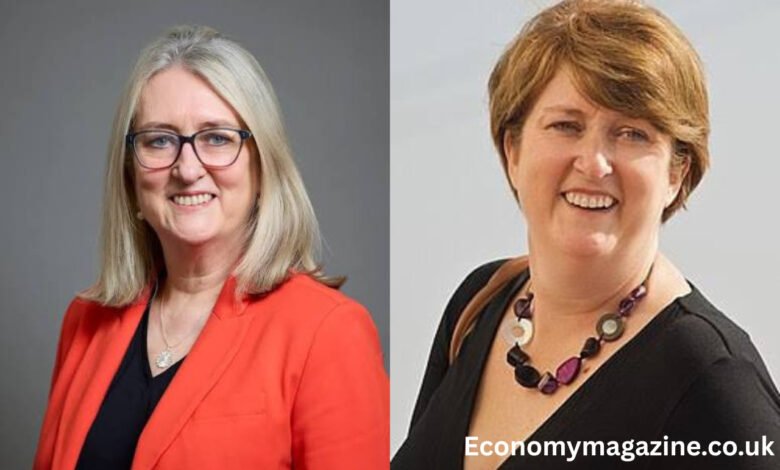
Few politicians have experienced the highs and lows of public life as dramatically as Jacqui Smith. Known for becoming the first woman to serve as the UK’s Home Secretary, she has spent decades shaping British politics through leadership, resilience, and determination. Her journey has included historic achievements, difficult controversies, electoral defeat, and an impressive return to government years later. Rather than allowing setbacks to define her career, Smith has continued to contribute to public service, education, skills development, and equality policies, making her one of the most recognizable figures in modern British politics.
Table of Contents
ToggleHer story is not simply about holding powerful offices. It is about adapting to change, learning from public scrutiny, and finding new ways to serve the country. Over more than three decades, Jacqui Smith has worked as a teacher, Member of Parliament, Cabinet minister, broadcaster, commentator, and government minister. Her willingness to remain active in public life despite criticism has earned respect from supporters and political observers alike.
Today, as Baroness Smith of Malvern, she continues to influence education, employment, and equality policy in the United Kingdom. Her remarkable political comeback demonstrates that leadership is not only measured by victories but also by the ability to recover, evolve, and continue making a meaningful contribution to society.
Early Life, Family Background, and Education
Jacqueline Jill Smith was born on 3 November 1962 in Malvern, Worcestershire, England, into a family where education and public service played a central role. Her parents were both teachers and active in local politics as Labour councillors, exposing her from an early age to discussions about social justice, education, and community responsibility. Growing up in this environment encouraged her to think critically about society and inspired an interest in politics long before she entered public office. Unlike many future politicians who come from legal or financial backgrounds, Smith’s upbringing emphasized practical problem-solving, education, and helping ordinary people improve their lives.
During her school years, Smith attended Dyson Perrins High School in Malvern. Teachers and classmates remembered her as academically capable, confident, and eager to participate in debates. She developed an early fascination with public policy and economics, subjects that would later become central to both her teaching career and political life. While still a teenager, she became increasingly interested in the Labour Party and the ideas of equality, opportunity, and public investment that shaped its policies during that period.
Smith later earned a place at Hertford College, University of Oxford, where she studied Philosophy, Politics and Economics (PPE)—one of Britain’s most respected degrees for future political leaders. After completing her studies, she briefly worked as a researcher for Labour MP Terry Davis before deciding she wanted practical experience outside Westminster. She then obtained a Postgraduate Certificate in Education (PGCE) from Worcester College of Higher Education and chose a career in teaching, believing education was one of the most powerful tools for changing lives.
From Teacher to Rising Labour Politician
Before entering Parliament, Jacqui Smith spent several years teaching economics and business studies in Worcestershire schools. She taught at Arrow Vale High School before moving to Haybridge High School, where she eventually became Head of Economics and coordinated vocational education programs. Working directly with students gave her firsthand knowledge of the challenges facing schools, teachers, and young people. Those experiences later influenced many of her education policies as a government minister.
Alongside teaching, Smith became deeply involved in local politics. She served on Redditch Borough Council from 1991 to 1996, where she chaired the council’s development committee. This role introduced her to issues such as housing, local economic development, planning, and community services. Her work at the local level helped establish a reputation as a hardworking and practical politician who understood everyday concerns rather than focusing only on national political debates.
Although she failed to win a parliamentary seat in the 1992 General Election, Smith remained committed to Labour politics. Her persistence paid off when she was selected as Labour’s candidate for the newly created Redditch constituency through an all-women shortlist. In the landmark 1997 General Election, which brought Tony Blair’s Labour Party to power in a landslide victory, Smith was elected to the House of Commons. Her election marked the beginning of a parliamentary career that would soon take her into some of the most influential positions in British government.
Ministerial Career and Rise Through the Labour Government
Jacqui Smith’s abilities quickly became apparent after entering Parliament in 1997. Within just two years, she joined the government as a Parliamentary Under-Secretary of State in the Department for Education and Employment. Working under Prime Minister Tony Blair, she focused on improving schools, raising educational standards, and expanding opportunities for young people. Her background as a teacher gave her practical insight into classroom challenges, allowing her to contribute policies grounded in real educational experience rather than theory alone.
In 2001, Smith was promoted to Minister of State at the Department of Health, where she helped oversee reforms in the National Health Service (NHS). Two years later, she also became Deputy Minister for Women, playing an important role in advancing gender equality and supporting legislation that led to the introduction of civil partnerships for same-sex couples. These responsibilities showcased her ability to manage complex policy areas while balancing the demands of cabinet-level government. Her growing influence earned the respect of senior Labour figures and established her as one of the party’s leading female politicians.
Smith’s political career continued to gather momentum. In 2005 she became Minister of State for Schools, returning to an area closely connected to her professional background. A year later, Tony Blair appointed her Chief Whip, making her responsible for maintaining party discipline in the House of Commons. The role required exceptional negotiation, communication, and leadership skills, preparing her for one of the most demanding positions in British politics. Her steady rise through successive ministerial posts demonstrated both her administrative competence and her importance within the Labour government.
Becoming Britain’s First Female Home Secretary
On 28 June 2007, following Gordon Brown’s appointment as Prime Minister, Jacqui Smith made history by becoming the first woman ever to serve as the United Kingdom’s Home Secretary. It was a landmark moment not only for her career but also for women in British politics. The Home Office is one of the country’s most powerful departments, responsible for policing, national security, immigration, counter-terrorism, and public safety. Smith’s appointment represented an important step toward greater female representation in the highest levels of government.
Her tenure began under extraordinary pressure. Within days of taking office, Britain faced attempted terrorist attacks in London and Glasgow, placing national security at the forefront of her responsibilities. Smith worked closely with intelligence agencies, police forces, and emergency services to strengthen counter-terrorism measures. She supported legislation designed to improve public safety, enhance police powers, and modernize security operations while balancing civil liberties with the need to protect the public from emerging threats.
Among her policy priorities were tackling violent crime, improving neighbourhood policing, addressing anti-social behaviour, reforming prostitution laws, and expanding the role of Police Community Support Officers (PCSOs). Although some proposals—such as extending the detention period for terrorism suspects—generated significant political debate, Smith consistently argued that public safety required modern legal tools. Her period as Home Secretary remains one of the most closely examined chapters in recent British political history because of both its achievements and its controversies.
Challenges, Controversies, and Leaving the Home Office
Like many senior political leaders, Jacqui Smith’s career included moments of intense public scrutiny. During her time as Home Secretary, she faced criticism over proposals to extend the maximum period that terrorism suspects could be detained without charge. Supporters argued that the changing nature of national security threats required stronger legal powers, while critics believed the proposals placed civil liberties at risk. The debate became one of the defining political issues of her time in office and highlighted the difficult balance between protecting public safety and safeguarding individual rights.
In 2009, Smith became one of the most prominent politicians caught up in the UK parliamentary expenses scandal. Media reports questioned her housing expense claims, including the designation of her main residence for parliamentary allowances. Separate reports also revealed that her husband had claimed reimbursement for television packages that included adult films viewed at the family home. Although Smith apologized, repaid the inappropriate claims, and maintained that some expenses had been submitted following parliamentary guidance, the controversy damaged public confidence and overshadowed many of her policy achievements.
Recognizing the impact the controversy had on both her family and the government, Smith announced that she would leave the Cabinet in June 2009. She was succeeded as Home Secretary by Alan Johnson. Reflecting later on her ministerial career, Smith openly admitted that senior ministers could benefit from better preparation and leadership training before taking on some of the country’s most demanding government positions. Her willingness to acknowledge mistakes and discuss the realities of high office has often been viewed as an example of political honesty and self-reflection.
Key Achievements as Home Secretary
Despite the controversies, historians and political analysts often highlight several important contributions from Smith’s period in office:
- Became the first female Home Secretary in British history.
- Strengthened Britain’s counter-terrorism response following the attempted attacks in London and Glasgow.
- Promoted neighbourhood policing and supported the expansion of Police Community Support Officers (PCSOs).
- Introduced reforms relating to prostitution laws and measures aimed at reducing violent crime.
- Led one of the UK’s most challenging government departments during a period of heightened national security concerns.
Life After Parliament and Return to Public Service
After losing her Redditch parliamentary seat in the 2010 General Election, many expected Jacqui Smith to retire from public life. Instead, she built a second career that combined broadcasting, public policy, healthcare leadership, and business consultancy. She worked as a consultant, became involved with education and employment organizations, chaired University Hospitals Birmingham NHS Foundation Trust, and established herself as a respected political commentator on television and radio. She also co-hosted the popular political podcast For The Many with broadcaster Iain Dale, allowing her to remain closely connected to political debate while sharing insights from her years in government.
Smith’s return to frontline politics surprised many observers. Following Labour’s victory in the 2024 General Election, she was appointed Minister for Skills and was granted a life peerage, becoming Baroness Smith of Malvern in the House of Lords. The appointment marked an extraordinary political comeback more than a decade after leaving Parliament. Her responsibilities focused on apprenticeships, further education, higher education, workforce development, and helping people gain the skills needed in a rapidly changing economy.
Her responsibilities have continued to expand. Alongside her work on skills and education, she has also served as Minister for Women and Equalities, helping shape government policy on gender equality and equal opportunities. In July 2026, she was reappointed to continue her joint role across the Department for Education and the Department for Work and Pensions, reflecting continued confidence in her experience and leadership. Her return to ministerial office demonstrates one of the most notable political comebacks in recent British politics.
Personal Life, Family, and Interests
Away from Westminster, Jacqui Smith has always presented herself as someone deeply committed to family life and public service. In 1987, she married Richard Timney, who later worked as her parliamentary assistant during her years as an MP. The couple have two sons, and throughout much of her political career Smith often spoke about the challenges of balancing the demanding responsibilities of government with raising a family. Like many senior politicians, she found that public life frequently placed her personal relationships under intense media scrutiny.
After more than three decades of marriage, Smith and Timney announced in 2020 that they had separated. Although the news attracted media attention, Smith chose to handle the situation with dignity and privacy. Rather than allowing personal events to dominate her public image, she continued focusing on her professional responsibilities, broadcasting work, and later her return to frontline politics. Her experience reflects the reality that public figures often face the same personal challenges as anyone else, but under much greater public observation.
Outside politics, Smith enjoys discussing public policy, education, leadership, and social issues. She has frequently appeared on television and radio programs, participated in political debates, and written about current affairs. Her willingness to reflect openly on both her successes and mistakes has distinguished her from many political figures, helping audiences see a more personal and relatable side of her character. Even after decades in public life, she continues to advocate for education, skills development, women’s opportunities, and stronger public services.
Net Worth, Income Sources, and Public Profile
Jacqui Smith has never been known primarily as a businesswoman or entrepreneur. Her financial standing has largely come from a long career in public service, ministerial salaries, parliamentary roles, broadcasting, consultancy work, speaking engagements, and appointments to public organizations. Since returning to government as a minister and life peer, she has continued earning a public salary associated with her ministerial responsibilities and House of Lords service. While no official figure has been confirmed, various media estimates generally place her net worth in the low millions of pounds, although these figures remain speculative and should be treated with caution because Smith has not publicly disclosed her personal wealth.
Following her departure from Parliament in 2010, Smith diversified her professional activities. She worked as a political commentator, chaired University Hospitals Birmingham NHS Foundation Trust, participated in leadership and governance roles, and co-hosted the popular For The Many political podcast. These roles allowed her to remain influential in British public life while developing expertise beyond Westminster. Her career illustrates how experienced politicians often continue contributing through media, education, healthcare, and advisory positions after leaving elected office.
Unlike celebrities who generate income through endorsements or commercial partnerships, Smith’s career has remained firmly rooted in public policy, governance, and education. Her reputation continues to be based on political leadership, ministerial experience, and her knowledge of government rather than commercial ventures, making her one of Britain’s more experienced public servants.
Social Media Presence and Public Engagement
Jacqui Smith uses social media primarily as a professional communication tool rather than for sharing personal lifestyle content. Through platforms such as X (formerly Twitter) and LinkedIn, she discusses government announcements, education reforms, skills policy, equality initiatives, parliamentary debates, and other matters of public interest. Her online presence reflects the responsibilities of a senior government minister, with posts focused on informing citizens rather than seeking personal publicity.
Her communication style is generally measured, informative, and policy-focused. Instead of relying on sensational headlines or viral trends, Smith uses social media to explain legislation, highlight government initiatives, congratulate organizations and individuals, and encourage discussion on education, employment, and equality. This approach has helped maintain her credibility among colleagues, educators, and policy professionals.
Although she is not among Britain’s most active politicians on social media, Smith remains accessible through interviews, podcasts, conferences, parliamentary debates, and official government communications. Her combination of traditional media appearances and digital engagement enables her to reach both experienced political audiences and younger citizens interested in public affairs.
Recent Updates and Current Work
Jacqui Smith’s political journey entered a remarkable new chapter when she returned to frontline government after Labour’s victory in the 2024 General Election. Elevated to the House of Lords as Baroness Smith of Malvern, she was appointed Minister for Skills, taking responsibility for apprenticeships, further education, technical training, higher education, and workforce development. The appointment marked one of the most notable political comebacks in recent British history, demonstrating the confidence that Prime Minister Keir Starmer’s government placed in her experience and expertise.
In March 2025, Smith’s responsibilities expanded further when she became Minister for Women and Equalities, while continuing her work as Skills Minister. Her role involves promoting equality, improving educational opportunities, supporting lifelong learning, and helping develop a skilled workforce capable of meeting the needs of a modern economy. Throughout 2025 and 2026, she has represented the government at conferences, parliamentary debates, and education forums, consistently emphasizing the importance of technical education, apprenticeships, and international collaboration.
Recent speeches have highlighted her commitment to strengthening Britain’s education system and expanding opportunities for learners of all ages. She has argued that education is not only an economic investment but also a means of improving social mobility and strengthening communities. Her work continues to focus on ensuring that businesses have access to skilled workers while helping individuals gain qualifications that improve career prospects.
Career Highlights
Some of the defining milestones in Jacqui Smith’s career include:
- Becoming the first female Home Secretary in the history of the United Kingdom.
- Serving as Chief Whip, responsible for managing government business in Parliament.
- Holding ministerial positions in Education, Health, Industry, Skills, and Equalities.
- Returning to government in 2024 after more than a decade outside Parliament.
- Being appointed a Life Peer as Baroness Smith of Malvern.
- Contributing to healthcare, broadcasting, education, and public policy beyond elected politics.
Legacy and Lasting Influence
Jacqui Smith’s legacy is both historic and deeply human. She broke one of the highest political glass ceilings by becoming Britain’s first female Home Secretary, opening the door for future generations of women to occupy one of the country’s most powerful offices. Her career demonstrates that political leadership involves making difficult decisions under immense pressure, often in circumstances where there are no perfect solutions. Whether dealing with national security, education reform, healthcare, or equality, Smith consistently accepted responsibilities that required courage, resilience, and public accountability.
Her story also illustrates that setbacks do not have to define a person’s entire career. After leaving frontline politics in 2010, Smith rebuilt her professional life through broadcasting, healthcare leadership, public speaking, and education before returning to government in a senior ministerial role. This ability to adapt and continue serving the public has become one of the most inspiring aspects of her journey. Many political observers now view her career as an example of perseverance and the possibility of professional renewal after adversity.
As Baroness Jacqui Smith continues to shape education, skills, and equality policy, her influence extends far beyond the offices she has held. Her journey reminds readers that meaningful leadership is built not only on success but also on resilience, integrity, and the willingness to keep learning from every experience. From the classroom to the Cabinet, from Parliament to the House of Lords, Jacqui Smith’s life reflects a lasting commitment to public service. As she continues to pave the way for future generations, her story stands as a reminder that determination, growth, and purpose can create a legacy that inspires others to make a positive difference in society.
Awards, Recognition, and Public Influence
Throughout her career, Jacqui Smith has received recognition not only for the offices she has held but also for the barriers she helped break in British politics. Her appointment as the United Kingdom’s first female Home Secretary in 2007 remains one of the most significant milestones in the history of British government. The achievement paved the way for more women to take on senior positions within the Cabinet and demonstrated that some of the country’s most demanding leadership roles were no longer reserved for men. Her name continues to be included in discussions of influential women who have shaped modern British politics.
In 2003, Smith was appointed to the Privy Council, entitling her to the honorific “The Right Honourable.” A decade later, in 2013, she was named among the BBC’s 100 Women, a global initiative recognizing women who have made important contributions in politics, education, public service, and society. These recognitions reflect the lasting impact of her work beyond the controversies that occasionally dominated headlines.
Her influence also extends into education and workforce development. Since returning to government, Smith has become one of the leading voices behind reforms designed to improve apprenticeships, lifelong learning, technical education, and international education partnerships. She has repeatedly argued that skills development is essential for economic growth, social mobility, and ensuring that people of all ages can adapt to changing employment opportunities.
Interesting Facts About Jacqui Smith
Here are a few fascinating facts that readers may not know:
- She was the first woman ever appointed as the UK’s Home Secretary.
- Before entering politics, she worked as an economics and business studies teacher.
- She studied Philosophy, Politics and Economics (PPE) at the University of Oxford.
- After leaving Parliament, she became a broadcaster, political commentator, NHS chair, and podcast host.
- She competed on the BBC television show Strictly Come Dancing in 2020, introducing herself to a completely new audience beyond politics.
- In 2024, she returned to frontline government after fourteen years, becoming Baroness Smith of Malvern and Minister for Skills.
These experiences illustrate the breadth of her career, showing that her contributions have gone well beyond elected office.
Why Jacqui Smith’s Story Still Matters
Jacqui Smith’s career reflects the complexity of modern political life. She has experienced historic achievements, public criticism, electoral defeat, and an unexpected return to senior government. Few British politicians have undergone such dramatic shifts while continuing to contribute meaningfully to public service. Her willingness to discuss mistakes openly, rebuild her career, and return to leadership demonstrates resilience that resonates beyond politics.
For aspiring leaders, educators, and public servants, Smith’s journey offers valuable lessons about perseverance, accountability, and lifelong learning. Her continued work on education, skills, equality, and employment policy shows that experience gained through both success and failure can remain valuable in shaping national policy. As Britain continues to invest in future generations through education and workforce development, Baroness Smith remains an influential figure helping guide that progress.
Frequently Asked Questions (FAQs) About Jacqui Smith
1. Who is Jacqui Smith?
Jacqui Smith, officially Baroness Smith of Malvern, is a British Labour politician, broadcaster, and life peer. She is best known for becoming the first woman to serve as the United Kingdom’s Home Secretary in 2007. Over her career, she has also served as Chief Whip, Minister for Schools, Minister for Skills, and Minister for Women and Equalities. Following Labour’s return to government in 2024, she re-entered frontline politics and now serves as a Minister of State jointly in the Department for Education and the Department for Work and Pensions.
2. How old is Jacqui Smith?
Jacqui Smith was born on 3 November 1962 in Malvern, Worcestershire, England. As of 2026, she is 63 years old. Throughout more than three decades in public life, she has remained active in politics, education, and public policy while continuing to influence government decision-making.
3. Why is Jacqui Smith famous?
Smith is widely recognized for making history as Britain’s first female Home Secretary. During her tenure, she oversaw national security, policing, immigration, and counter-terrorism policies during a particularly challenging period. She is also known for her later return to government after more than a decade outside Parliament, an uncommon political comeback in modern British politics.
4. What does Jacqui Smith do now?
Today, Baroness Smith continues to play an important role in the UK government. Since July 2026, she has served as Minister of State jointly in the Department for Education and the Department for Work and Pensions, focusing on skills, employment, education, and workforce development. She also remains an influential voice on equality, apprenticeships, and lifelong learning.
5. What can people learn from Jacqui Smith’s journey?
Jacqui Smith’s career demonstrates that leadership involves both success and adversity. She achieved historic milestones, faced intense public criticism, rebuilt her professional life, and ultimately returned to senior government. Her story highlights the importance of resilience, accountability, lifelong learning, and a continued commitment to public service. Rather than allowing setbacks to define her future, she used her experience to continue contributing to British society and government.
Final Thoughts
Jacqui Smith’s biography is a story of ambition, service, resilience, and reinvention. From her early days as a classroom teacher to becoming Britain’s first female Home Secretary, she has repeatedly taken on roles that demanded courage, sound judgment, and the ability to make difficult decisions. Her career has included remarkable achievements as well as significant public challenges, making her journey one of the most compelling in modern British politics.
What makes her story particularly distinctive is her ability to rebuild after adversity. Instead of stepping away from public life following electoral defeat, she continued contributing through healthcare leadership, political commentary, education, and eventually returned to government in a senior ministerial position. Her experience demonstrates that leadership is not defined solely by moments of success but also by how individuals respond to setbacks and continue serving others.
As Baroness Jacqui Smith continues shaping education, skills, employment, and equality policy in the United Kingdom, her legacy continues to evolve. Her life reminds readers that determination, adaptability, and a commitment to public service can leave a lasting impact. As Jacqui Smith continues to pave the way for future generations, her story stands as a reminder that resilience, lifelong learning, and purpose can shape a meaningful legacy that extends far beyond politics.