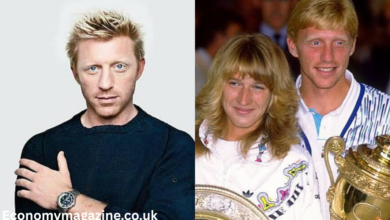
Fazer, born Richard Rawson, is a British rapper, songwriter, record producer and DJ whose story is closely connected with the rise of one of the UK’s most recognizable urban music groups, N-Dubz. Born on February 5, 1987, in London and raised in Camden Town, Fazer discovered his passion for music while still young, eventually transforming a teenage friendship with Dappy and Tulisa into a career that would take him from London’s underground music culture to major stages across Britain. His career has been particularly interesting because he has never relied solely on performing. Alongside rapping, he developed into a producer, songwriter and entrepreneur, building a reputation for understanding what happens behind the microphone as well as in front of it.
For many fans, Fazer will always be remembered as the quieter but musically important third member of N-Dubz. The trio’s combination of hip-hop, grime, R&B and pop helped bring a distinctly London sound into the mainstream during the late 2000s. N-Dubz released successful albums, achieved numerous UK chart hits and won major industry recognition, including MOBO Awards. Fazer’s contribution, however, extended beyond his role as a rapper. He was deeply involved in production and songwriting, skills that later allowed him to establish himself independently after the group’s first hiatus.
Today, Fazer’s career represents much more than the nostalgia surrounding N-Dubz. He has continued making music, working with other performers, developing production projects and exploring ambitions outside conventional recording. His personal life has also changed dramatically since his early days in the group, with Fazer becoming a father of four. From his Camden upbringing and school friendships to his N-Dubz success, solo work, production career and continuing connection with fans, his journey offers a fascinating look at how an artist can evolve without abandoning the musical identity that made him famous.
Fazer Quick Facts
| Fact | Details |
|---|---|
| Full Name | Richard Rawson |
| Professional Name | Fazer |
| Date of Birth | February 5, 1987 |
| Age | 39 years old in 2026 |
| Birthplace | London, England |
| Raised In | Camden Town, London |
| Nationality | British |
| Profession | Rapper, singer, songwriter, record producer and DJ |
| Genres | Hip-hop, grime and dance |
| Best Known For | N-Dubz |
| N-Dubz Members | Fazer, Dappy and Tulisa |
| Parents | English father and Jamaican mother |
| Siblings | No reliably documented public information |
| Partner | Ashley Havelin |
| Children | Four |
| Solo Chart Highlight | “Killer” |
| “Killer” Peak | No. 17 on the UK Singles Chart |
| Production Company | Sky’s the Limit Entertainment |
| Active Since | Around 2000 |
| Estimated Net Worth | No independently verified current figure |
| Main Income Sources | Music, production, songwriting, royalties, DJ work and live performances |
| Associated Act | N-Dubz |
Early Life and Camden Town Background
Richard Rawson was born in London on February 5, 1987, and grew up in Camden Town, an area with a strong connection to London’s music, nightlife and youth culture. His father was English and his mother Jamaican, giving Fazer a mixed family heritage that formed part of the background from which he developed his identity. Although detailed information about his parents and extended family has remained largely private, his childhood surroundings are an important part of understanding the artist he eventually became.
Fazer’s teenage years were particularly important because music became intertwined with his friendships. He met Dappy through a karate class, and the two eventually became close friends at school. Tulisa, Dappy’s cousin, was also part of the same circle. Their relationship was not initially a carefully planned music-industry partnership; instead, it grew organically from friendship, shared interests and a love of creating music. The three eventually attended Haverstock School and began developing the act that would later become N-Dubz.
The environment around the young musicians also influenced their artistic identity. N-Dubz came from a working-class London background and later spoke openly about experiencing difficult circumstances while growing up, including exposure to violence, drugs, bullying, financial hardship and gang culture. Those experiences helped shape the direct and often emotionally raw style that became central to the group’s music. Rather than presenting a polished image disconnected from everyday life, N-Dubz frequently drew on the realities of their surroundings, giving their early songs an authenticity that resonated with young British listeners.
Education and the Birth of N-Dubz
Fazer attended Haverstock School, where his friendship with Dappy and connection with Tulisa developed into a creative partnership. Music became increasingly important during their teenage years, and the trio began performing and recording together. Fazer has recalled that his first serious musical steps happened during secondary school with Dappy, with the pair writing their first song in Dappy’s father’s studio. That early access to recording equipment gave the teenagers an opportunity to experiment and learn the fundamentals of songwriting and production.
Before they were known as N-Dubz, the group performed under the name Lickle Rinsers Crew. They released underground material designed for the pirate-radio environment and London’s emerging urban music scene. Their early work was raw compared with the polished records that would later reach the charts, but it allowed them to develop their own sound and understand how audiences responded to their music. According to AllMusic, the group initially built its reputation through underground releases before their independently released singles began attracting wider attention.
Those early years also gave Fazer a foundation that would prove valuable throughout his career. He was not simply learning how to rap; he was learning how songs were constructed. His growing interest in beats, recording and production eventually became one of his defining strengths. In an interview with Interview Magazine, Fazer described production as an area in which he was constantly learning and trying to progress. That mindset would later help him transition naturally from performing artist to producer and songwriter.
N-Dubz and the Breakthrough to Mainstream Success
N-Dubz gradually moved from London’s underground scene toward mainstream recognition. Their early singles created a loyal following, and in 2007 the trio won the MOBO Award for Best Newcomer. This was an important turning point because it showed that the group had moved beyond being simply a local urban act. Their sound had begun attracting attention from a much larger British audience and from the established music industry.
The group’s debut studio album, Uncle B, arrived in 2008 and became a major commercial success. N-Dubz followed it with Against All Odds in 2009 and Love.Live.Life in 2010. Their music combined rap verses, melodic hooks, electronic production and R&B influences, producing a sound that was accessible without completely losing its urban roots. Their success helped establish N-Dubz as one of the most commercially important UK urban acts of their era.
Fazer’s role within the trio was particularly significant because he was involved in the technical and creative side of the records. N-Dubz eventually accumulated numerous UK Top 40 singles, with “Number 1,” their collaboration with Tinchy Stryder, becoming their biggest chart success. The group also earned multiple MOBO Awards and built a reputation as a powerful live act. For Fazer, the period transformed him from a Camden teenager experimenting with music into a professional musician working at the highest level of the British commercial music industry.
Fazer’s Role and Musical Style in N-Dubz
Although Dappy was often the most outspoken and visually recognizable member of N-Dubz and Tulisa later became a major television personality, Fazer occupied a different position within the group. He was frequently regarded as the quieter member, but his understated personality concealed a strong interest in production. His musical contribution was therefore not limited to his vocal performances; he also understood the construction and technical side of the records.
This combination of rapper and producer gave Fazer a valuable perspective. He could understand a song from the viewpoint of the performer while simultaneously considering its beat, arrangement, rhythm and overall sonic identity. That versatility became increasingly apparent as N-Dubz matured. The group’s later music became more polished and commercially ambitious, while still retaining elements of the urban sound that had defined their earliest releases.
The N-Dubz experience also taught Fazer how quickly the music industry could change. Their success arrived during a period when British grime, hip-hop, R&B and electronic music were increasingly crossing into the mainstream. The group became part of that transformation, helping demonstrate that artists from London’s urban scene could sell albums, headline arenas and earn mainstream awards without abandoning their distinctive identity.
N-Dubz Hiatus and Fazer’s Solo Career
In 2011, N-Dubz entered a hiatus as the three members pursued individual ambitions. For Fazer, the break represented both a challenge and an opportunity. He had spent much of his formative life inside the group, so establishing an independent identity meant proving that audiences would recognize him as an artist in his own right rather than only as one-third of N-Dubz.
His solo breakthrough came with “Killer,” released in 2012. The song moved Fazer toward a more electronic and dance-oriented sound while retaining elements of his hip-hop background. It reached No. 17 on the UK Singles Chart, giving him a respectable solo chart achievement and demonstrating that he could make music outside the established N-Dubz formula. His solo performances during this period included appearances at major events, further establishing his credibility as an independent performer.
Fazer later announced that he would release music under his birth name, Richard Rawson. His 2014 single “Fireflies,” featuring Tom Parker of The Wanted, was presented as a song about his musical journey, hope and the pursuit of dreams. He continued releasing music in later years, including “I Woke Up” in 2017 and other singles such as “Bad in Real Life,” “Ufo,” “Give It Away,” “You Wanna Ride” and “Tears.”
Fazer as a Producer and Songwriter
One of the most important developments in Fazer’s career occurred behind the scenes. After N-Dubz’s hiatus, he increasingly concentrated on music production and songwriting, allowing him to work with artists beyond his own group. In 2013, Fazer and production partner Peter Ibsen announced the creation of Sky’s the Limit Entertainment, a production company designed to expand their work in the studio and provide a platform for further creative projects.
The production work connected Fazer with established names in British and international pop music. Sources have credited the production partnership with work involving artists including Tulisa, Rihanna, Rita Ora and Jessie J. This was a significant development because it demonstrated that Fazer’s skills were valuable outside the N-Dubz brand. He was able to contribute to the careers of other artists while continuing to develop his own sound.
His production ambitions also extended into live musical projects. In 2013, the production company was involved in the first Urban Classics BBC Prom at the Royal Albert Hall, bringing major urban performers together with orchestral musicians. The event illustrated the breadth of Fazer’s musical interests: rather than seeing hip-hop as a genre restricted to clubs or conventional rap performances, he was interested in combining urban music with larger-scale arrangements and new production ideas.
N-Dubz Reunion and the Next Chapter
After more than a decade away from the group, N-Dubz officially reunited in 2022. The comeback was a major moment for Fazer because it demonstrated the extraordinary longevity of the group’s connection with its original audience. Fans who had discovered N-Dubz during the late 2000s were now adults, yet the demand for the trio remained strong enough to support a major UK arena return.
The reunion also showed that Fazer’s place within N-Dubz had not disappeared during his years as a solo artist and producer. The group continued to perform together, and its comeback eventually developed into new music and further touring. The renewed activity allowed Fazer to combine his established production abilities with the chemistry he had developed with Dappy and Tulisa since childhood.
The N-Dubz story is therefore an unusual example of a group that survived a lengthy separation without losing its cultural relevance. The members had each developed individual identities, but the original partnership remained powerful enough to bring them back together. For Fazer, the reunion created an opportunity to revisit the music that established his career while continuing to pursue the creative interests he had developed during the years apart.
Personal Life, Partner and Children
Fazer’s personal life has attracted attention over the years, particularly because of his relationship with Tulisa. The two had known one another since their teenage years and eventually became romantically involved. Their relationship began around 2010 and ended in 2012, but their history continued to be part of the public story surrounding N-Dubz.
In 2013, Fazer began a relationship with model Ashley Havelin. The couple welcomed their daughter Ava Rose Rawson in February 2013. Their relationship has continued for more than a decade, and they have expanded their family considerably. In 2023, Ashley gave birth to twins, and in 2024 the couple welcomed another baby boy.
Fazer has spoken positively about being a hands-on father. In comments reported after the birth of his fourth child, he described changing nappies and being closely involved in parenting as important ways of building a bond with his children. This side of his life provides a striking contrast with the young rapper audiences first encountered in the N-Dubz era: the performer who once spent his teenage years chasing a record deal is now balancing music with the responsibilities of raising a family.
Fazer’s Personality, Interests and Ambitions
Fazer has traditionally maintained a lower public profile than some of his N-Dubz counterparts. That reserved image has sometimes made him appear mysterious compared with Dappy’s outspoken personality or Tulisa’s highly visible television career. Yet interviews reveal someone deeply focused on music and interested in constantly improving his craft. His early experiences taught him the value of learning production, and that desire to develop has remained visible throughout his career.
One of Fazer’s most interesting ambitions is his desire to move into film scoring and movie soundtracks. He has spoken about wanting to create music for major films and has expressed admiration for composers such as Hans Zimmer. Rather than treating a career in film music as a distant fantasy, he has described it as a genuine creative goal. The ambition makes sense for a producer who has already spent years experimenting with atmosphere, rhythm, electronic sound and orchestration.
His ambitions demonstrate an important characteristic of his personality: he does not appear interested in repeating one achievement indefinitely. N-Dubz gave him fame, but he subsequently explored solo music, production, DJing, songwriting and entrepreneurial projects. His interest in film composition could therefore become another stage in a career defined by creative expansion rather than a simple attempt to recreate the past.
Fazer’s Net Worth and Sources of Income
There is no independently audited or officially confirmed figure for Fazer’s current net worth. Various celebrity-finance websites publish estimates, including one source that has placed his wealth at around $900,000, but such figures should not be treated as verified financial statements. Celebrity net-worth websites often rely on estimates, publicly available career information and assumptions about earnings, and they generally do not have access to private contracts, taxes, investments or personal assets.
A more useful way to understand Fazer’s financial position is to consider the range of professional activities that have generated income during his career. His potential revenue sources include record sales and streaming royalties, songwriting and publishing, music production, DJ performances, live appearances, collaborations and work connected with N-Dubz. His production-company activities provide another business dimension that separates his career from that of an artist who relies exclusively on touring or recording.
His long experience in music also means that some of his work can potentially continue generating royalties after its original release. Songs he helped create may produce publishing or performance income when streamed, purchased, performed or licensed. Nevertheless, without access to private financial records, it would be misleading to present a precise current fortune as fact. The most accurate conclusion is that Fazer has built a diversified music career with several potential income streams, but his exact net worth remains publicly unverified.
Social Media and Relationship With Fans
Fazer’s connection with audiences has evolved alongside the music industry. During the early N-Dubz years, radio, television, music videos and live performances were the dominant ways for fans to follow the group. Today, streaming platforms and social media allow listeners to access his solo work and follow developments in his career much more directly. His music continues to be available through major digital platforms, helping maintain a connection with both longtime fans and newer listeners.
Social media has also provided occasional glimpses into Fazer’s personal world. His family life, N-Dubz activities and professional updates have appeared in public coverage, while his association with the group gives him an established audience that extends beyond his individual solo releases. However, because social-media accounts can change and unofficial profiles frequently use celebrity names, an unverified Instagram or X account should not automatically be presented as his official account.
The broader digital presence surrounding Fazer reflects the unusual longevity of N-Dubz. Fans who discovered the trio through early music videos can now stream their catalog instantly, follow reunion announcements online and discover Fazer’s solo or production work independently. His online identity therefore sits at the intersection of nostalgia and contemporary music culture, connecting the artist’s early career with his continuing creative activities.
Awards, Achievements and Career Recognition
Fazer’s most significant awards came during the N-Dubz era. The group won the MOBO Award for Best Newcomer in 2007, helping establish them as one of the UK’s most promising urban acts. They went on to receive further MOBO recognition as their commercial success grew, demonstrating that the trio had achieved both popular appeal and industry credibility.
Commercially, N-Dubz achieved multiple Top 40 singles and successful albums. Uncle B became a major breakthrough, while Against All Odds reached No. 6 on the UK album chart. Their collaboration with Tinchy Stryder, “Number 1,” became their first UK No. 1 single. These achievements established Fazer as part of a group that helped change the commercial possibilities for British urban music during the late 2000s.
Fazer’s individual accomplishments are broader than awards alone. His No. 17 UK chart position with “Killer,” his production work for other artists, his live performances and the establishment of Sky’s the Limit Entertainment all represent important stages of his career. His achievements show that professional success in music is not always measured by trophies; production credits, creative independence, industry relationships and longevity can be equally significant.
Recent Career and Future Plans
Fazer’s continuing connection with N-Dubz remains one of the most important parts of his public career. The group returned in 2022 after a lengthy hiatus and continued performing for their established audience. Coverage in the following years has indicated that further N-Dubz activity has been discussed, although future plans should be treated carefully because entertainment schedules can change and individual members’ commitments can affect a group’s plans.
Outside the group, Fazer’s longer-term ambition of working on movie soundtracks remains particularly intriguing. His desire to move toward film composition would represent a natural extension of his production career and could introduce his music to a completely different audience. His admiration for Hans Zimmer and interest in creating cinematic soundtracks suggest that he sees production as a long-term craft rather than simply a phase between recording projects.
There have also been reports that Fazer was in discussions about appearing on Celebrity SAS: Who Dares Wins. Those reports should be distinguished from confirmed casting, but they illustrate the continued public interest in his career beyond music. Whether his next major chapter is another N-Dubz project, solo music, production work, television or film composition, Fazer has already demonstrated a willingness to explore unfamiliar territory rather than remain tied to one definition of success.
Fazer’s Legacy in British Hip-Hop
Fazer’s legacy is inseparable from N-Dubz, but reducing his career to the group would overlook one of its most interesting dimensions. N-Dubz helped bring a raw Camden perspective into mainstream British music, combining rap, grime, R&B and pop at a time when the boundaries between those genres were becoming increasingly fluid. Fazer was part of that cultural shift from the very beginning, developing as both a performer and a producer.
His story is also valuable because it demonstrates the importance of versatility. Many artists struggle to establish an identity after leaving a successful group, but Fazer used his N-Dubz experience as a foundation rather than a limitation. He moved into solo music, production, songwriting and DJing, while continuing to develop his technical understanding of sound. His work with other artists showed that his talents could operate independently of the N-Dubz name.
Perhaps most importantly, Fazer’s career illustrates the difference between fame and longevity. Fame can arrive quickly, but maintaining a creative career for decades requires adaptation. From a teenager recording songs with friends to a charting artist, producer, father and aspiring film composer, Fazer has repeatedly entered new stages of life without abandoning the musical foundation that shaped him.
Conclusion: The Journey of Fazer
Fazer’s journey from Richard Rawson, a young musician growing up in Camden Town, to one of the central figures behind N-Dubz is a story of friendship, persistence and creative evolution. He and his childhood friends began making music before they had the resources or recognition that would eventually come their way. Years of underground work ultimately led to chart success, awards, platinum-selling albums and some of the biggest stages in British music.
What makes his story especially compelling is what happened after N-Dubz first stepped away. Instead of relying entirely on the group’s past success, Fazer developed himself as a solo artist, producer, songwriter and DJ. He created a production company, worked with established names and continued releasing his own music. At the same time, his personal life moved into a new chapter as he built a family and became a father of four.
As Fazer continues to explore music, production and his ambition to create film soundtracks, his career offers a broader lesson about perseverance. Success is not necessarily about reaching one destination and staying there; it can mean continuing to learn, taking new opportunities and allowing your ambitions to grow. From Camden’s underground music scene to N-Dubz’s mainstream breakthrough and beyond, Fazer’s story remains a reminder that passion can evolve into many different forms. His legacy is not simply the records he helped create, but the example of an artist who continues to look forward while carrying the lessons of his past with him.