Julia Ormond Biography: Age, Early Life, Movies, Career, Net Worth and Personal Life

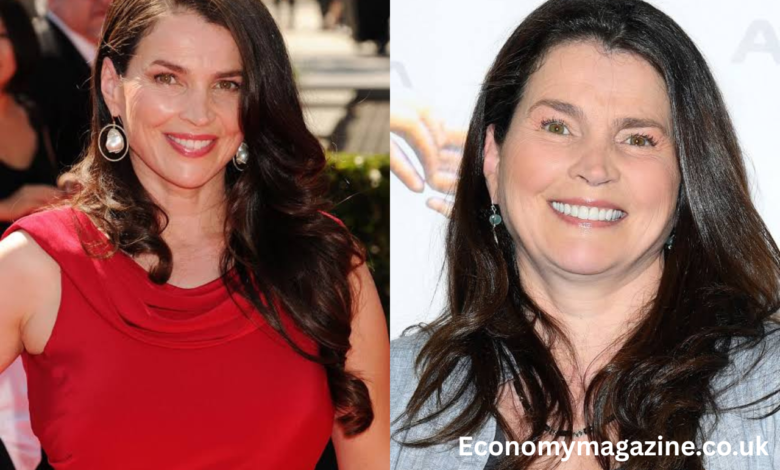
There was a moment in the 1990s when Julia Ormond seemed destined to become one of Hollywood’s defining movie stars. With her distinctive British elegance, classical acting training, and performances opposite Brad Pitt, Richard Gere, Sean Connery, and Harrison Ford, she quickly moved from British television and theater into some of the decade’s most visible films. Yet the most interesting part of Julia Ormond’s story is what happened after that period of fame. Rather than allowing herself to be permanently defined as a 1990s romantic leading lady, she gradually built a broader career across television, independent film, theater, production, and humanitarian activism.
Born Julia Karin Ormond on January 4, 1965, in Epsom, Surrey, England, she developed an interest in performance while still at school and eventually trained at London’s Webber Douglas Academy of Dramatic Art. Her early stage work established her as a serious performer before international cinema transformed her public profile. Decades later, her Emmy-winning performance in Temple Grandin, her work in Mad Men, My Week with Marilyn, The Curious Case of Benjamin Button, and The Walking Dead: World Beyond demonstrated that her career was much larger than the glamorous roles that first made her famous.
Today, Julia Ormond remains an intriguing figure because her professional journey combines classic movie-star success with artistic reinvention and social activism. Her recent work, including the 2024 independent film Here’s Yianni!, shows that she has continued to embrace character-driven storytelling rather than simply relying on the fame of her earlier Hollywood years.
Julia Ormond Facts at a Glance
| Category | Details |
|---|---|
| Full name | Julia Karin Ormond |
| Date of birth | January 4, 1965 |
| Age | 61 years old |
| Birthplace | Epsom, Surrey, England |
| Nationality | British |
| Profession | Actress, producer, activist |
| Parents | Josephine Ormond and John Ormond |
| Siblings | She grew up as the second of five children |
| Education | Guildford High School, Cranleigh School, Webber Douglas Academy of Dramatic Art |
| Acting career | 1989–present |
| Children | One daughter |
| Best-known films | Legends of the Fall, First Knight, Sabrina, Smilla’s Sense of Snow, The Barber of Siberia, The Curious Case of Benjamin Button |
| Notable television work | Temple Grandin, Mad Men, Witches of East End, The Walking Dead: World Beyond |
| Major award | Primetime Emmy Award for Temple Grandin |
| Estimated net worth | Approximately $5 million according to widely circulated celebrity-finance estimates; not independently verified |
| Current social media | No clearly verified major official Instagram or X account was identified in the sources reviewed |
| Recent film | Here’s Yianni! (2024) |
| Known for | Acting, producing, humanitarian and anti-human-trafficking advocacy |
Early Life and Family Background
Julia Karin Ormond was born into a family environment that gave her access to education and encouraged her early interests. Her mother, Josephine Ormond, worked as a laboratory technician, while her father, John Ormond, is described in biographical sources as working in business and software. Her parents divorced when she was young, and Ormond was raised primarily by her mother. She grew up as the second of five children, an experience that placed her within a busy family environment rather than an isolated childhood.
Her early interests were not exclusively theatrical. Ormond initially wanted to become an artist, influenced in part by her family’s artistic background. She spent time studying art before recognizing that acting offered a more compelling way to combine creativity, storytelling, and human observation. That change of direction is significant because it suggests that her artistic identity existed before she entered professional theater or became associated with Hollywood.
At school, Ormond became involved in theater and appeared in productions including Guys and Dolls and My Fair Lady. She attended Guildford High School and later Cranleigh School in Surrey before moving toward professional drama training. Her early participation in school theater gave her practical experience, but her decision to attend the Webber Douglas Academy of Dramatic Art marked the point at which acting became a serious professional ambition.
Education and Training as an Actress
Ormond’s education at the Webber Douglas Academy of Dramatic Art in London was a major foundation for her later career. She graduated in 1988, entering professional acting at a time when traditional theatrical training remained an important route into British television and film. Her background therefore differed from that of performers who entered Hollywood without extensive stage experience.
Her formal training helped prepare her for the demands of both classical and contemporary performance. Stage acting requires control over voice, movement, timing, and emotional projection, while film demands a more restrained style because the camera can capture tiny changes in expression. Ormond later explained that moving between theater, television, and film involves adjusting the scale of performance and movement to the medium.
That versatility became one of her greatest professional strengths. Instead of developing solely as a film actress, she built experience in theater, television films, major studio productions, independent cinema, and later prestige television. Her early theatrical background also gave her a professional identity that went beyond celebrity appeal, something that became increasingly apparent as her career matured.
Julia Ormond’s First Acting Roles
After graduating from drama school, Ormond began working professionally on the British stage. Her early theater credits included The Rehearsal, Wuthering Heights, The Crucible, and Christopher Hampton’s Faith, Hope and Charity. Her work in Faith, Hope and Charity earned her the London Drama Critics’ Award for Best Newcomer, giving her an important early recognition within British theater.
Her screen career began developing at roughly the same time. In 1989, she appeared in the British television serial Traffik, a drama dealing with the international heroin trade. The production was an important early opportunity because it placed Ormond in serious dramatic material rather than lightweight entertainment. Her performance attracted positive attention and helped establish her as a promising young British actress.
She subsequently appeared in television productions such as Young Catherine and Stalin. These projects allowed her to play historical and dramatic characters, giving her experience in roles that required research, emotional discipline, and period authenticity. By the early 1990s, Ormond had developed a résumé that combined theater and television before Hollywood offered her a much larger international platform.
The Baby of Mâcon and Her Film Debut
Julia Ormond made her feature-film debut in Peter Greenaway’s The Baby of Mâcon in 1993. The film was an unconventional and visually challenging production, and appearing in it gave Ormond an opportunity to demonstrate that she was comfortable with filmmakers who approached cinema as an artistic medium rather than simply commercial entertainment.
The role was particularly valuable because it arrived before her Hollywood breakthrough. Ormond was still establishing herself internationally, yet she had already begun working with distinctive filmmakers. That early experience helped create a foundation for the more commercially visible roles that followed.
Her film career changed dramatically the following year. Legends of the Fall, released in 1994, placed Ormond opposite Brad Pitt, Anthony Hopkins, and Aidan Quinn. She played Susannah Fincannon, a woman whose relationships become central to the film’s sweeping family drama. The movie became one of the signature productions of her early career and transformed her into an internationally recognizable actress.
Legends of the Fall and Hollywood Stardom
Legends of the Fall was the turning point that introduced Julia Ormond to a huge international audience. The film combined romance, family conflict, historical drama, and spectacular landscapes, while its cast included several major Hollywood performers. Ormond’s role required her to balance vulnerability, emotional conflict, and romantic complexity, making her a major part of the film’s dramatic structure.
The success of the movie created a new perception of Ormond. Instead of being known primarily as a British television and theater actress, she was suddenly being discussed as a Hollywood leading woman. Her association with Brad Pitt also ensured that the film received enormous attention from audiences interested in both its romantic storyline and its star power.
Yet the sudden attention brought its own complications. Hollywood in the 1990s frequently placed strong emphasis on the appearance and marketability of young actresses, and Ormond found herself increasingly discussed in terms of her beauty and screen image. Her classical training and previous theater achievements could easily become secondary to the celebrity narrative surrounding her.
First Knight and Sabrina
In 1995, Ormond appeared as Guinevere in First Knight, opposite Richard Gere and Sean Connery. The film presented her in a lavish romantic adventure built around the Arthurian legend, giving her another large-scale production soon after Legends of the Fall. Her casting confirmed that Hollywood viewed her as an actress capable of carrying prominent roles in expensive international productions.
The same year brought an even more difficult challenge when Ormond starred in Sydney Pollack’s Sabrina. She played the title character opposite Harrison Ford and Greg Kinnear in a remake of Billy Wilder’s celebrated 1954 film. Because Audrey Hepburn’s performance had become iconic, Ormond faced inevitable comparisons with one of cinema’s most admired actresses.
Rather than treating Sabrina as simply another romantic comedy, Ormond had to approach a character already deeply embedded in film history. The experience demonstrated both the opportunities and pressures associated with sudden Hollywood prominence. She was working with major directors and stars, but she was also being measured against previous performances and expectations that were difficult for any actress to satisfy.
Smilla’s Sense of Snow and International Cinema
After her major Hollywood films, Ormond continued to work internationally. In 1997, she starred in Smilla’s Sense of Snow, based on Peter Høeg’s bestselling novel. The film moved her away from the conventional romantic-star territory associated with her earlier work and into a colder, more mysterious thriller environment.
She followed that with the Russian historical drama The Barber of Siberia in 1998. The production further demonstrated her willingness to work across national film industries and different cinematic traditions. Her career during this period was therefore more diverse than a simple Hollywood résumé might suggest.
These choices also began establishing a pattern that would become increasingly important. Ormond did not spend the rest of her career trying to reproduce the exact success of Legends of the Fall. Instead, she expanded into projects that offered different creative challenges, gradually moving toward the character-based work that later became one of her greatest strengths.
A New Chapter in Film and Television
By the 2000s, Ormond’s career had moved into a different phase. She continued appearing in films but increasingly accepted supporting and character roles. Her credits included projects such as Iron Jawed Angels, The Curious Case of Benjamin Button, Che: Part One, Albatross, and My Week with Marilyn.
Her appearance in David Fincher’s The Curious Case of Benjamin Button was particularly notable because it brought her back into a major production featuring Brad Pitt. However, her role was no longer built around the romantic leading-lady image of the 1990s. Instead, she was part of a large ensemble supporting a complex, nonlinear story.
That evolution reflected a broader shift in Ormond’s career. She became increasingly interested in roles where the character’s importance came from emotional or narrative significance rather than simply screen time. Her later work would show that stepping away from conventional leading roles did not mean stepping away from serious acting.
Temple Grandin and Her Emmy-Winning Performance
One of Julia Ormond’s most important career achievements arrived in 2010 with HBO’s Temple Grandin. The film starred Claire Danes as Temple Grandin and explored the life of the autistic scientist, author, and animal-behavior expert. Ormond played Eustacia Cutler, Temple’s mother, portraying a woman determined to help her daughter develop her abilities despite the limitations and prejudices surrounding autism at the time.
The performance earned Ormond the Primetime Emmy Award for Outstanding Supporting Actress in a Miniseries or Movie. The Television Academy records one Emmy win and two nominations for Ormond, with the second nomination coming for her guest performance as Marie Calvet in Mad Men.
The significance of the Emmy extended beyond the trophy itself. It represented recognition for a performance that depended heavily on emotional subtlety rather than glamorous presentation. Temple Grandin itself won seven Emmys, and its success helped introduce Grandin’s life and work to an even broader audience.
Mad Men and Prestige Television
Ormond joined Mad Men in 2012 as Marie Calvet, the French-speaking mother of Megan Draper. The acclaimed AMC drama was known for its carefully constructed characters and period detail, and Ormond’s performance gave the series another complicated adult personality capable of shifting the atmosphere of a scene.
Her performance earned another Primetime Emmy nomination, this time for Outstanding Guest Actress in a Drama Series. The nomination reinforced the idea that Ormond had successfully transitioned from a major 1990s film star into a respected character performer in the era of prestige television.
This phase of her career also illustrates why television became so valuable for established actors. Long-form storytelling can provide opportunities to explore personalities and relationships with greater complexity than a conventional supporting role in a feature film. Ormond used that environment to demonstrate that her abilities extended well beyond the image associated with her earliest Hollywood successes.
Witches of East End and The Walking Dead: World Beyond
From 2013 to 2014, Ormond starred in Lifetime’s Witches of East End, playing Joanna Beauchamp. The fantasy series offered her another opportunity to lead an ensemble television production while moving into a genre far removed from the historical dramas and romantic films of her early career.
She later joined The Walking Dead: World Beyond, playing Elizabeth Kublek. The character was a significant antagonist in the AMC universe and allowed Ormond to explore a darker, more commanding presence. Her participation in the franchise also introduced her to a younger television audience familiar with the expanding Walking Dead universe.
These projects reveal the range of Ormond’s television career. She moved from biographical drama to prestige period drama, fantasy television, and post-apocalyptic storytelling. Instead of limiting herself to one genre, she continued experimenting with different kinds of characters.
Julia Ormond as a Producer and Humanitarian
Acting has never been the only dimension of Julia Ormond’s professional life. She established an independent production company, Indican Productions, and became involved in documentary filmmaking. One significant project associated with her production work was Calling the Ghosts: A Story About Rape, War and Women, a documentary that dealt with sexual violence and the experiences of women affected by war.
Her humanitarian interests became particularly focused on human trafficking and modern slavery. In 2007, she established the Alliance to Stop Slavery and End Trafficking, known as ASSET. Her advocacy work has included engagement with international organizations and efforts to bring greater public attention to exploitation and trafficking.
This part of Ormond’s biography adds considerable depth to her public identity. Her celebrity could have been used exclusively for entertainment promotion, but she instead devoted significant energy to subjects that receive far less glamorous attention. Her advocacy demonstrates a belief that public visibility can be used to support social causes and encourage institutional change.
Julia Ormond’s Personal Life
Julia Ormond has generally maintained a relatively private personal life. She was previously married to actor Rory Edwards, whom she met through theater, and the couple later divorced. She subsequently married political activist Jon Rubin, and they have one daughter.
Compared with many contemporary celebrities, Ormond has not built her public identity around constant exposure of her private relationships. Her interviews and public appearances tend to focus more heavily on acting, creative work, humanitarian concerns, and professional issues than on celebrity lifestyle coverage.
That privacy fits naturally with the trajectory of her career. As the entertainment industry has become increasingly dependent on personal branding and social-media visibility, Ormond has remained more associated with her body of work than with a carefully maintained online persona. Her reputation has consequently been shaped primarily by performances and public-interest work.
Julia Ormond, Social Media and Public Presence
There does not appear to be a clearly verified major official Instagram or X account for Julia Ormond in the sources reviewed. This is worth emphasizing because searches for her name produce numerous profiles belonging to other people, and it would be misleading to present an unrelated account as the actress’s official social-media page.
Her relatively low-profile online presence is consistent with a career built before social media became central to celebrity culture. Ormond established her international reputation through theater, film, television interviews, festivals, and humanitarian work rather than through daily online updates.
For fans, this means that official festival pages, reputable entertainment publications, the Television Academy, and verified production information are generally more reliable places to follow her professional activities than unverified social-media accounts. Her public profile remains centered on her work rather than constant personal broadcasting.
Julia Ormond’s Net Worth and Sources of Income
Julia Ormond’s net worth is widely estimated at around $5 million, although this figure should be treated cautiously because celebrity-net-worth figures are not audited financial disclosures. Her long career in film and television, combined with producing and other professional activities, provides the foundation for such estimates.
Her income has likely come primarily from acting roles across feature films, television productions, and independent projects. Her peak Hollywood period in the 1990s would have represented a particularly important stage of her commercial career, while later television and film work continued to provide professional income over the following decades.
It is also important not to equate celebrity wealth estimates with annual salary. An actress who has worked consistently for decades can have income spread across many productions, while compensation can vary enormously depending on whether a project is a major studio movie, television series, independent film, or smaller production. For that reason, the approximately $5 million figure is best understood as an estimate rather than a precise statement of Julia Ormond’s finances.
Julia Ormond’s Recent Work and Career Today
Ormond has continued to work in film and television well beyond the era that first made her famous. One of her recent projects is Here’s Yianni!, a 2024 independent dramedy directed by Christina Eliopoulos. Ormond stars alongside Joe Cortese, Kevin Pollak, Rosanna Arquette, Eric Roberts, and Sofia Vassilieva.
The film centers on a longtime married couple who own a family diner, with the story exploring dementia, caregiving, memory, grief, and the effort to find joy in difficult circumstances. Ormond plays Plousia, a character whose emotional journey becomes central as her husband faces cognitive decline. The project is particularly interesting because it is a deeply human character story rather than a conventional star vehicle.
In a 2024 interview about Here’s Yianni!, Ormond discussed the differences between acting for theater, television, and film, explaining that performance has to adapt to the physical scale and visual language of each medium. Her comments offer a useful insight into why she has been able to sustain such a varied career: she understands acting as a craft that must respond to the demands of each story and format.
Julia Ormond’s Legal Case and Recent Public Attention
Another major recent chapter in Ormond’s life concerns her 2023 lawsuit against Harvey Weinstein. Ormond alleged that Weinstein sexually assaulted her in 1995 and that the professional consequences affected her career. Her lawsuit also named Creative Artists Agency, Disney, and Miramax, alleging that they failed to protect her. Weinstein has denied the allegations, while the companies have disputed aspects of her claims.
The case has received considerable attention because it involves not only allegations of sexual assault but also questions about power, representation, and responsibility within Hollywood. Ormond’s case has therefore been discussed as part of the wider reckoning over how influential figures operated within the entertainment industry and how institutional systems responded to complaints about misconduct.
It is important to distinguish allegations from established facts when discussing an ongoing legal dispute. The lawsuit represents Ormond’s claims and legal arguments, while the defendants have contested aspects of them. Regardless of the eventual legal outcome, the case has given Ormond an opportunity to publicly address an experience that she says had profound consequences for both her personal life and professional career.
Julia Ormond’s Awards and Recognition
Julia Ormond’s awards history demonstrates the range of her career. Early recognition came from the London Drama Critics’ Award for Best Newcomer, while later achievements included the Krzysztof Kieslowski Award at Camerimage and a Primetime Emmy for Temple Grandin.
Her Emmy victory is unquestionably the centerpiece of her acting awards. In 2010, the Television Academy named Ormond the winner for Outstanding Supporting Actress in a Miniseries or Movie for playing Eustacia Grandin. Two years later, she received another Emmy nomination for her role in Mad Men.
Her recognition extends beyond individual acting awards. Temple Grandin itself received seven Emmys and won a Peabody Award, demonstrating the cultural and critical importance of the project. Ormond’s contribution to that production placed her within one of the strongest television ensembles of its era.
The Lasting Legacy of Julia Ormond
Julia Ormond’s career is compelling precisely because it refuses to fit into one simple Hollywood narrative. She began as a classically trained British actress, developed through theater and television, became an international film star through Legends of the Fall, First Knight, and Sabrina, and then successfully transformed herself into a respected character actress across film and prestige television.
Her Emmy-winning work in Temple Grandin remains an especially powerful example of that transformation. The performance demonstrated that her value as an actress was not dependent on the glamorous leading-lady image associated with her 1990s fame. Instead, she could bring emotional complexity and authority to supporting roles that gave important stories their human dimension.
Perhaps the most inspiring part of Julia Ormond’s story is her willingness to evolve. She has continued acting, explored production, supported documentary filmmaking, advocated against human trafficking, and taken public positions on difficult issues. Her journey shows that a career does not have to follow a straight line to become meaningful. Sometimes the most lasting professional legacy is created by adapting, taking risks, choosing substance over image, and continuing to pursue work with purpose. As Julia Ormond moves forward, her story remains a powerful reminder that resilience can turn changing circumstances into new opportunities—and that true longevity comes not simply from staying famous, but from continuing to grow.