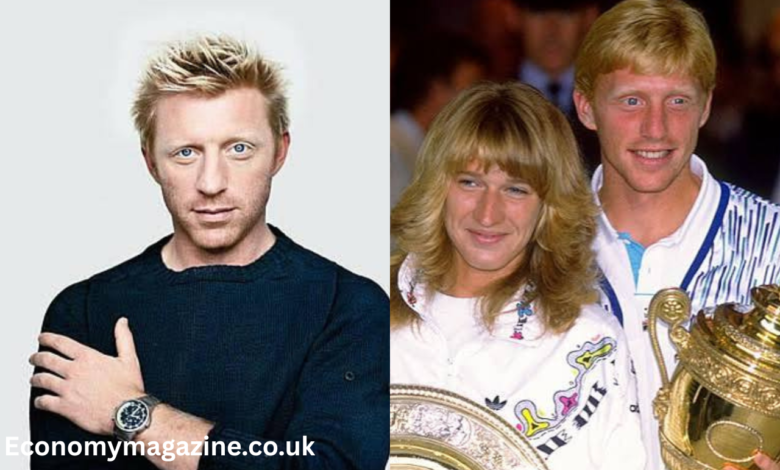
When the name Boris Becker young appears in searches, it often brings to mind one unforgettable image: a red-haired teenager diving across the grass at Wimbledon, serving with extraordinary power and playing with the confidence of someone far older than his years. In 1985, Becker was only 17 when he walked onto Centre Court as an unseeded German teenager and walked away as Wimbledon champion. His victory was not simply a sporting upset; it announced the arrival of a new international tennis personality whose career would help define an entire generation.
What made young Boris Becker so fascinating was the combination of physical power, fearless attacking tennis and youthful spontaneity. He played with booming serves, aggressive volleys and spectacular dives that made even routine points look dramatic. The International Tennis Hall of Fame describes his style as a mixture of power, balance, agility, precision and mobility, while the ATP remembers him as a player who became a worldwide phenomenon after his breakthrough at Wimbledon.
Yet the Wimbledon champion did not appear from nowhere. Becker’s story began in Leimen, Germany, where his family environment, early introduction to tennis and demanding training helped shape a boy who was already showing unusual sporting ability. His journey from local courts to the top of professional tennis is a story of talent, discipline, opportunity and enormous pressure—and it explains why Boris Becker remains such an important figure in tennis history.
Boris Becker Young: Early Life and Family Background
Boris Franz Becker was born on November 22, 1967, in Leimen, Germany, a town near Heidelberg. His early years were spent in an environment where tennis was already familiar because his father, Karl-Heinz Becker, was an architect and an enthusiastic tennis player. Rather than discovering tennis accidentally as a teenager, Boris encountered the sport while he was still a child, giving him years to develop his coordination, instincts and competitive personality. The International Tennis Hall of Fame records that Becker began playing tennis at the age of eight.
Young Becker’s development was also influenced by the broader tennis culture of Germany during the period. He eventually trained with the West German Tennis Federation, where his potential became increasingly obvious. His physical presence was unusual for such a young player, and his powerful right-handed serve and attacking instincts eventually became the foundations of his professional game. His progress was rapid enough that conventional education was eventually pushed aside in favor of intensive tennis training.
Family remained an important part of Becker’s early story. He grew up with his parents and older sister, Sabine, while his father’s connection to tennis helped give him access to the sport from an early age. Becker’s youth was therefore not simply about natural ability; it was about being introduced to a competitive environment, receiving serious coaching and gradually realizing that tennis could become more than a childhood pastime.
Young Boris Becker and His Education
Becker’s education took a different path from that of most children his age because his tennis career developed unusually quickly. He attended school in Heidelberg but eventually left during the tenth grade so he could train with the West German Tennis Federation. The decision reflected the seriousness of his ambitions: by his mid-teens, tennis was no longer an extracurricular activity but the central focus of his life.
Leaving school so young was obviously a major decision. Professional sport offered no guarantee of success, and Becker was choosing an uncertain career at an age when many teenagers were still deciding what subjects they wanted to study. His choice also meant entering a demanding professional environment where physical preparation, travel, competition and psychological resilience would become part of everyday life.
In retrospect, the decision worked spectacularly from a sporting perspective. Becker began his professional career in 1984 at only 16, immediately placing himself among the youngest players attempting to compete at the highest level. His rapid development showed how exceptional his talent was, but it also meant that he had to mature publicly while millions of people watched his every move.
Boris Becker’s First Steps Toward Professional Tennis
Becker turned professional in 1984, and initially he was far from the global superstar he would become. He entered the professional circuit as a talented young German player supported by important figures including coach Günther Bosch and manager Ion Țiriac. The combination of coaching, management and natural ability created an unusually strong foundation for a teenager attempting to break into elite tennis.
The crucial breakthrough arrived in 1985. Before Wimbledon, Becker won his first ATP Tour title at Queen’s Club in London, defeating established players including Pat Cash and Johan Kriek. That victory pushed him into the world’s Top 20 and gave him valuable confidence on grass just weeks before Wimbledon. The ATP describes the Queen’s Club triumph as the beginning of a sequence that would change his life.
The timing could hardly have been better. Grass suited Becker’s aggressive style, allowing his serve and net game to become even more dangerous. He arrived at Wimbledon ranked No. 20 but was unseeded because only the top 16 players received seeds. Few people could have predicted what would happen next.
The Historic Wimbledon Victory in 1985
At the 1985 Wimbledon Championships, Becker immediately demonstrated that he was not intimidated by the biggest stage in tennis. His path to the final was remarkably difficult, including consecutive five-set victories over Joakim Nyström and Tim Mayotte. He then defeated Henri Leconte and Anders Järryd to reach the championship match against Kevin Curren.
The final became one of the defining matches in Wimbledon history. Becker defeated Curren 6–3, 6–7, 7–6, 6–4 after three hours and 18 minutes. His huge serve produced 21 aces, while his athletic movement and willingness to throw himself around the court made him an instant crowd favorite. Wimbledon records that he was 17 years and 227 days old, making him the youngest men’s singles champion at the time.
The victory established several historic firsts. Becker became the first German man to win the Wimbledon singles championship and the first unseeded player to capture the men’s title. He was also the youngest male Grand Slam champion at that point, although Michael Chang later surpassed the age record at the 1989 French Open. Suddenly, the teenage player from Leimen was no longer simply a promising athlete—he was an international sporting sensation.
Why Young Boris Becker Was So Special
One of the biggest reasons Becker attracted such attention was his playing style. At approximately 6 feet 3 inches tall, he possessed the physical frame needed to generate enormous power from his serve. But his game was not based on strength alone. He combined his serve with quick reactions, powerful groundstrokes, aggressive returns and extraordinary movement around the net.
His diving volleys became particularly famous. Becker regularly launched himself horizontally toward difficult shots, sometimes landing heavily on the grass after attempting a spectacular save. Those moments made him visually unforgettable and helped distinguish him from more methodical players of his era. The Hall of Fame describes his movement as almost gymnastic, emphasizing the balance between athleticism and precision in his game.
There was also an emotional quality to his tennis. Becker wore his feelings openly, celebrated points enthusiastically and often encouraged himself during intense matches. Rather than appearing detached, he looked completely invested in every rally. That emotional intensity helped make him relatable to spectators and contributed to the phenomenon that became known as “Becker-mania.”
Wimbledon, Stefan Edberg and the Golden Era
Becker’s first Wimbledon championship was only the beginning. In 1986, he returned to Centre Court and successfully defended his title by defeating world No. 1 Ivan Lendl in straight sets. The result was especially important because it confirmed that his first championship had not been a lucky run. Becker was now an established force in professional tennis.
His rivalry with Stefan Edberg became one of the defining stories of late-1980s tennis. Becker and Edberg played three consecutive Wimbledon finals between 1988 and 1990. Becker won the 1989 final, while Edberg won the 1988 and 1990 championships. Their rivalry represented a fascinating contrast between Becker’s explosive power and Edberg’s elegant serve-and-volley technique.
Becker ultimately reached seven Wimbledon finals during his career and won three of them, in 1985, 1986 and 1989. His final Wimbledon record was 71 wins and only 12 losses. Those numbers demonstrate why the tournament became almost synonymous with his name and why the teenage champion of 1985 remained one of Wimbledon’s most recognizable figures long after his playing career ended.
Boris Becker’s Grand Slam Career Beyond Wimbledon
Although Wimbledon created Becker’s international identity, his career was far broader than his achievements on grass. In 1989, he won the US Open by defeating world No. 1 Ivan Lendl in a four-set final. It was Becker’s first major singles title outside Wimbledon and another demonstration that his game could succeed against elite opposition on different surfaces.
Becker’s fifth Grand Slam title came at the 1991 Australian Open, where he defeated Lendl. That championship was especially significant because it helped propel him to the world No. 1 ranking. He later won the Australian Open again in 1996, defeating Michael Chang and completing a remarkable comeback to Grand Slam-winning form.
His six Grand Slam singles championships ultimately consisted of three Wimbledon titles, two Australian Open titles and one US Open title. He also reached the French Open semifinals three times. While Roland Garros proved more difficult for his fast-court style, Becker still demonstrated that he belonged among the most complete players of his generation.
Reaching World No. 1
Reaching the world No. 1 ranking in January 1991 was another defining moment in Becker’s career. He had spent years near the top of men’s tennis, but becoming No. 1 officially placed him at the summit of the sport. His rise was the result of sustained success rather than one spectacular tournament, and it confirmed his status as one of the world’s leading players.
Becker’s consistency was impressive. Across his 16-year professional career, he finished inside the Top 10 in 11 different seasons. His rivalry with Edberg was especially important, but he also faced major challenges from players such as Lendl, Andre Agassi and Pete Sampras. These rivalries helped create one of the most competitive periods in men’s tennis history.
By the conclusion of his career, Becker had won 49 singles titles from 77 finals and accumulated more than $25 million in official tour prize money. He also won 15 doubles titles and became an Olympic gold medalist in men’s doubles with Michael Stich at the 1992 Barcelona Games.
Boris Becker and German Tennis
Becker’s influence was particularly significant in Germany. His Wimbledon victory arrived at a time when the country was searching for internationally recognizable tennis heroes. His success helped create enormous interest in the sport and contributed to Germany’s emergence as one of the strongest tennis nations of the era.
His Davis Cup career further strengthened his reputation at home. Becker helped Germany win the Davis Cup in 1988 and 1989 and developed an exceptional singles record in the competition. According to the International Tennis Hall of Fame, he finished with a 38–3 singles record in Davis Cup play.
Becker’s success also coincided with that of Steffi Graf, another German tennis superstar. Together, their achievements created an extraordinary period for German tennis. For many young German athletes, Becker represented proof that international sporting greatness could emerge from their own country.
Boris Becker’s Retirement and Life After Tennis
Becker’s professional career eventually came to an end after 16 seasons. His final Wimbledon appearance came in 1999, when he lost to Patrick Rafter in the fourth round. He finished with an outstanding Wimbledon record of 71–12 and a career that had included six Grand Slam championships.
Retirement did not mean disappearing from tennis. Becker moved into several roles connected with the sport, including television analysis, public appearances and coaching. His experience as a former world No. 1 gave him a unique ability to explain the tactical and psychological aspects of elite competition. Over time, his voice became familiar to tennis audiences not only as a former champion but also as an experienced analyst.
One of his most important post-playing roles came when he became coach of Novak Djokovic. Becker worked with Djokovic from 2013 through 2016, a partnership that produced major success. During their collaboration, Djokovic won six Grand Slam titles and numerous other tournaments, demonstrating that Becker’s understanding of elite tennis could remain valuable even after his own playing days were over.
Boris Becker as Novak Djokovic’s Coach
The partnership between Becker and Djokovic attracted enormous attention because both men understood the psychological demands of competing at the very top. Becker had experienced the pressure of being world No. 1 and winning Grand Slam titles as a young man, while Djokovic was attempting to establish himself as one of the dominant players of his era.
Their coaching relationship proved highly productive. The ATP records that Djokovic won 25 tour-level titles during the Becker coaching period, including six Grand Slam championships and 14 Masters 1000 titles. Becker’s role involved helping Djokovic sharpen aspects of his game and maintain the mental intensity required for the biggest tournaments.
The experience also gave Becker a new perspective on professional tennis. As a player, he had been responsible primarily for his own performance. As a coach, he had to analyze another champion, communicate effectively and understand when technical advice mattered less than psychological support. That transition demonstrated another side of his knowledge of the sport.
Personal Life and the Person Behind the Tennis Legend
Becker’s personal life has attracted considerable media attention throughout the years. His relationships, marriages and family have frequently appeared in the international press, creating a public narrative that sometimes competed with his sporting achievements. As with many athletes who become famous very young, the transition from private teenager to international celebrity brought an unusual level of public scrutiny.
His later life has also involved significant challenges, including financial difficulties and legal problems. Those events became an important part of the public record surrounding Becker and demonstrated that sporting success does not automatically guarantee stability in every area of life. His financial story in particular is complicated, and online claims about his present net worth vary significantly, making precise estimates difficult to verify.
At the same time, Becker has continued to rebuild his professional identity. He remains connected to tennis through media work, analysis and public appearances, while his family has become increasingly important in his priorities. His life after tennis therefore offers a much more complicated picture than the carefree teenage champion seen celebrating on Centre Court in 1985.
Boris Becker’s Legacy in Tennis
Becker’s influence can be measured through statistics, but his true legacy is broader. He helped popularize an explosive form of attacking tennis in which a powerful serve could immediately become a platform for aggressive net play. His willingness to dive, chase and attack helped make men’s tennis especially compelling to television audiences during the 1980s and 1990s.
His six Grand Slam titles, 49 singles championships, Olympic doubles gold medal and world No. 1 ranking place him firmly among the great players of his generation. His induction into the International Tennis Hall of Fame in 2003 formally recognized that contribution.
But perhaps his greatest legacy is the image of possibility he created for young athletes. Becker was only 17 when he became a global champion, proving that age did not necessarily determine readiness for the biggest stage. His career subsequently demonstrated the other side of that lesson: extraordinary early success also brings extraordinary expectations, and sustaining greatness requires adaptation, resilience and maturity.
Conclusion: What Young Boris Becker’s Story Teaches Us
The story of Boris Becker young is ultimately much more than the story of a teenage Wimbledon champion. It is the story of a boy from Leimen who discovered tennis early, developed exceptional physical and mental abilities, made a difficult commitment to professional sport and then achieved something that seemed almost impossible. His 1985 Wimbledon victory changed German tennis and transformed Becker himself into an international sporting icon.
His career also proves that greatness cannot be measured by one moment. Becker won Wimbledon again in 1986 and 1989, conquered the US Open, captured two Australian Open titles, reached world No. 1 and remained among the world’s elite for more than a decade. His seven Wimbledon finals and 71–12 record at the tournament illustrate just how consistently extraordinary he was on the game’s most famous grass court.
Perhaps the most lasting lesson is that a person’s journey continues long after the spotlight moves elsewhere. Young Boris Becker became famous because of his fearless tennis, but the older Becker’s story has involved reinvention, setbacks, coaching, family and a continuing connection with the sport. From a teenager diving across Wimbledon’s grass to a former champion sharing his experience with later generations, his life remains a powerful reminder that talent can open the door, but resilience, learning and the courage to begin again help determine what comes next.