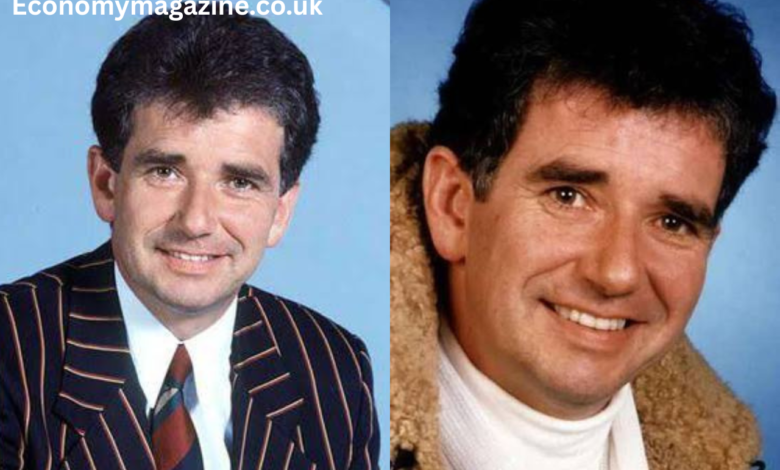
There are sports broadcasters who simply present a match, and then there are broadcasters who become part of the memory of an era. Elton Welsby belongs firmly in the second category. For football viewers who grew up watching ITV during the 1980s and early 1990s, his face became closely associated with some of English football’s most dramatic afternoons and evenings. Long before football became a 24-hour television product, Welsby was one of the familiar voices and faces bringing the sport into British homes, interviewing managers, talking to players and setting the stage for matches that would later become part of football folklore.
What makes Welsby’s story especially interesting is that his route into television was anything but conventional. He did not begin as a famous sports personality or walk straight into a major broadcasting job. His early working life included a period as a hospital porter, and it was an ordinary newspaper discovered during a shift at Broadgreen Hospital that helped him recognize journalism as the career he wanted. From there, he worked for the Liverpool Weekly News, moved into radio with Radio City and eventually joined Granada Television in 1978. That gradual progression gave him something invaluable: years of experience on the sporting beat before national television turned him into a recognizable personality.
Welsby’s career would eventually place him at the centre of ITV’s live football coverage, including the unforgettable 1989 First Division title decider between Liverpool and Arsenal. He also covered international tournaments, the Seoul Olympics and countless domestic sporting events while developing relationships with legendary figures such as Bob Paisley, Bill Shankly, Jack Charlton and Brian Clough. Decades later, his autobiography Game For A Laugh gave him another opportunity to tell those stories in his own words, preserving memories of a very different era of football broadcasting.
Elton Welsby Facts at a Glance
| Fact | Details |
|---|---|
| Full name | Elton Welsby |
| Date of birth | May 28, 1951 |
| Age | 75 years old in 2026 |
| Birthplace | St Helens, Lancashire, England |
| Nationality | British |
| Profession | Sports presenter, journalist and broadcaster |
| Known for | ITV football coverage and The Match |
| Early journalism | Liverpool Weekly News |
| Radio career | Radio City |
| Television career | Granada Television and ITV |
| Major football programme | The Match |
| International events | World Cups, European Championship and Seoul Olympics |
| Football allegiance | Everton |
| Autobiography | Game For A Laugh |
| Co-author | Gary Cook |
| Children | Publicly reported, but detailed family information is private |
| Parents | Not reliably documented in major public sources |
| Siblings | Not reliably documented in major public sources |
| Spouse | Private |
| Net worth | Not officially disclosed |
| X/Twitter | Publicly associated with @WelsbyElton |
| No reliably verified public account located | |
| No reliably verified public account located |
Who Is Elton Welsby?
Elton Welsby is a British sports broadcaster and journalist whose professional career became particularly associated with football coverage on Granada Television and ITV. During the 1980s, he became one of the most recognizable sports presenters in the north-west of England and eventually took on a national role when ITV obtained exclusive live rights to top-flight football. His presenting style was rooted in journalism rather than pure entertainment, reflecting a period when sports broadcasters were expected to understand the personalities, clubs and stories behind the matches.
His television career is perhaps best remembered for The Match, ITV’s live top-flight football programme that ran during the period when the network held exclusive Football League rights. Welsby was the main presenter between 1988 and 1992, a period that included several major matches and culminated in one of the most famous title-deciding games in English football history. His role was not limited to reading introductions; he connected viewers with the atmosphere surrounding the fixture and worked alongside some of the leading commentators and football journalists of the period.
Although football became the defining part of his public identity, Welsby’s broadcasting career was broader than a single programme. His work included international football, other sports, regional television, radio and major sporting events. ITV itself has described him as the face of football and many other sports in the North West for more than two decades. His longevity is particularly notable because he remained connected to the sporting world even as broadcasting changed dramatically from the relatively limited television landscape of the 1970s and 1980s into today’s highly fragmented digital environment.
Early Life and the Unexpected Route Into Journalism
Elton Welsby was born in St Helens on May 28, 1951. The north-west of England would become central to both his personal identity and professional life, particularly because of the region’s intense sporting culture. Football was deeply embedded in the communities around Liverpool, St Helens and Manchester, and Welsby grew up during a period when the game was dominated by powerful local personalities and strong club identities. He later became known as a lifelong Everton supporter, creating an interesting contrast with the amount of professional time he spent covering Liverpool.
His first job after leaving school was with Royal Insurance in Liverpool, but the work did not suit him. Welsby later explained that he disliked the office environment and wanted to find a career that felt more meaningful. He subsequently took a position as a porter at Broadgreen Hospital. It was not an obvious stepping stone toward television, but that job ultimately became an unexpected turning point. While moving a patient through the hospital, he noticed an issue of the Liverpool Weekly News and discovered that the paper contained a substantial sports section.
The newspaper sparked an idea. Welsby purchased a copy, studied the sports pages and decided that journalism could offer the vocation he was searching for. He wrote to the publication’s managing editor, Ron Carrington, and was invited for an interview. His application succeeded, and in 1970 he began working for the Liverpool Weekly News. Four years there gave him practical experience of reporting before he made the move that would take him closer to broadcasting: joining the newly established Radio City in Liverpool in 1974.
Radio City and the Development of a Broadcaster
Radio City was an important stage in Welsby’s development because radio forced him to communicate with immediacy. Unlike newspaper journalism, where an article could be edited before publication, broadcasting required a reporter to gather information, understand the significance of an event and explain it clearly to an audience in real time. His years at Radio City helped him develop the confidence and interviewing ability that later became essential to his television career.
The radio years also brought him unusually close to some of the most important football figures in England. Welsby developed a particularly strong relationship with Liverpool manager Bob Paisley. In an era before mobile phones and constant digital communication, journalists could sometimes contact players and managers directly at home, and personal trust was crucial. Welsby became sufficiently trusted by Paisley that he was occasionally invited to travel with the Liverpool team, giving him an inside view of a club that was enjoying extraordinary success.
One of the stories Welsby has repeatedly recalled illustrates just how much Paisley trusted him. During a journey following a match against Middlesbrough, Welsby mentioned Graeme Souness, and Paisley reportedly responded by saying Liverpool were going to sign him. That information could have been a major scoop, but Welsby chose not to reveal it because doing so would have betrayed the manager’s confidence. That decision says much about the kind of journalist he wanted to be. For Welsby, maintaining a trusted relationship was more important than winning a single headline.
Granada Television and the Move to National Broadcasting
In January 1978, Welsby joined Granada Television after his work at Radio City attracted the attention of Granada executives. The move transformed his career because he now had the opportunity to combine his journalistic knowledge with the visual demands of television. He became associated with Granada’s football programming, including Kick Off, and increasingly became a familiar face to viewers across the North West.
The Granada years also placed Welsby alongside experienced commentators, former players and journalists. Football television at the time was considerably different from today’s coverage. There were fewer live matches, fewer dedicated channels and much less opportunity for fans to follow every development around their clubs. A presenter therefore had to make the available coverage count. Welsby’s ability to tell the story surrounding a fixture became as important as the match itself.
His career expanded beyond regional football as ITV increasingly used him for national sporting assignments. He worked on major international football events and also became involved in coverage of the 1988 Seoul Olympics. These experiences broadened his reputation and established him as a versatile sports broadcaster capable of handling more than domestic league football. By the late 1980s, Welsby was ready for the most famous phase of his television career.
Elton Welsby and ITV’s The Match
In 1988, ITV secured exclusive live rights to top-flight Football League matches, and a new programme called The Match was created for the coverage. Welsby became its principal presenter. The programme represented an important moment in British sports television because live league football was still relatively unusual compared with today’s constant schedule of televised matches.
The first live game under the new The Match format was Everton against Manchester United on October 30, 1988, which ended in a 1–1 draw. Welsby was therefore involved from the very beginning of an important chapter in ITV football coverage. Over the following seasons, he presented major matches involving many of England’s leading clubs and became one of the defining television personalities of the period.
His most famous assignment came on May 26, 1989, when Liverpool faced Arsenal at Anfield in a match that would decide the First Division championship. Arsenal needed to win by two clear goals, and the match remained tense until the closing stages. Arsenal eventually won 2–0, with Michael Thomas scoring the decisive goal in stoppage time. Welsby presented the coverage with England manager Bobby Robson as his studio guest, before the broadcast handed over to Brian Moore for the unforgettable commentary.
The 1989 Liverpool vs Arsenal Title Decider
The Liverpool-Arsenal match has become one of the defining moments in English football history. Liverpool were the reigning champions and had been expected to secure another title, while Arsenal arrived at Anfield knowing that only a two-goal victory would give them the championship. The combination of the circumstances, the location and the late drama produced a match that remains famous decades later.
Welsby’s role was crucial because the presenter had to establish the stakes for viewers before the match and then guide the television audience through the occasion. His job was not to compete with the action but to frame it, introduce the personalities involved and allow the match commentators to take over when the football began. That balance was an important part of live sports presentation in the pre-digital era.
The significance of the broadcast has lasted far beyond Welsby’s own career. Brian Moore’s commentary on Michael Thomas’s winning goal became legendary, while the match itself has repeatedly appeared in documentaries, anniversary features and football retrospectives. Welsby therefore occupies a small but permanent place in the history of one of English football’s most dramatic title finishes.
Everton, Howard Kendall and a Career-Defining Personal Memory
For Welsby, however, the most meaningful football memory may not have been the famous Liverpool-Arsenal title decider. As a lifelong Everton supporter, he regarded Everton’s 1985 European Cup Winners’ Cup triumph as an extraordinary personal and professional experience. He was close enough to the club during the final in Rotterdam to sit beside manager Howard Kendall on the bench.
When Everton defeated Rapid Vienna to win the trophy, Welsby conducted the immediate post-match interview with Kendall. For a broadcaster who supported Everton, the experience represented an extraordinary collision between childhood loyalty and professional opportunity. He was not simply reporting on an important event; he was standing alongside the manager of his beloved club as Everton celebrated a major European trophy.
Welsby has described that evening as the best night of his life and said that nothing could eclipse it either as an Evertonian or as a professional. The memory also reveals an important side of his personality. Despite decades spent reporting on football from a professional distance, he never lost the emotional connection that had attracted him to the sport in the first place.
World Cups, Olympics and International Football
Welsby’s broadcasting résumé extended well beyond English domestic football. His career took him to major international sporting events, including World Cups and the European Championship. He has spoken about covering several international tournaments and working at the 1988 Seoul Olympics, demonstrating the scale of the opportunities that developed after his early years in local journalism and radio.
International assignments presented a different challenge from regional football coverage. The presenter had to communicate with audiences who were following a national team while also understanding the broader atmosphere of a global tournament. Travel, long working hours, unfamiliar locations and rapidly changing stories were all part of the job. Welsby’s experience in live broadcasting made him well suited to that environment.
His international work also reinforced his reputation as a broadcaster rather than simply a club-focused football reporter. By travelling to World Cups and other major events, he witnessed some of the defining sporting stories of the 1980s and 1990s from close range. Those experiences later became valuable material for his autobiography, where the emphasis is often as much on the personalities and behind-the-scenes moments as on the results themselves.
The Football Legends He Knew
One of the strongest themes running through Welsby’s career is his relationships with football personalities. His professional life overlapped with figures such as Bill Shankly, Bob Paisley, George Best, Denis Law, Brian Clough, Jack Charlton and Sir Alex Ferguson. These were not simply names he interviewed once for television; several became people whose personalities and private sides he encountered repeatedly over many years.
Welsby has spoken particularly warmly about Jack Charlton, describing him as the person he enjoyed working with most. Their personalities were very different, yet they developed an easy relationship. His stories about Brian Clough are also revealing. Clough was famously confrontational with journalists and broadcasters, but Welsby managed to maintain a productive relationship with him over numerous encounters.
Bob Paisley stands out for a different reason. Paisley’s trust allowed Welsby access that many journalists would have considered priceless, yet Welsby believed that confidentiality mattered. That philosophy became one of the most important lessons of his career: journalism is built not only on finding information but also on knowing when information should remain private. In an age of instant leaks and social media, that old-fashioned approach has become increasingly rare.
Life After ITV’s Live Football Coverage
ITV’s exclusive top-flight football rights eventually ended in 1992, when the broadcasting landscape changed dramatically with the arrival of the Premier League era and new rights arrangements. For Welsby, the change meant losing his regular Sunday role presenting The Match, but it did not mean the end of his broadcasting career. Granada retained him, allowing him to continue working in regional television.
This period illustrates the adaptability that had characterized his career from the beginning. Welsby had already moved from insurance to hospital work, from newspaper journalism to radio and from radio into television. When national football coverage changed, he adjusted again rather than disappearing from broadcasting. His subsequent work included radio and other sports coverage, including a period with Sky Sports.
He also continued to be associated with football-related media and public appearances. His career was no longer defined by being the weekly face of ITV’s biggest live football match, but his experience remained valuable. In many ways, this second phase allowed him to become a custodian of football memories, sharing stories from an era that younger supporters had only experienced through archive footage.
Elton Welsby’s Personal Life and Family
Welsby has generally kept his private family life away from the same level of public attention that surrounded his professional career. This means that reliable information about his parents, siblings and detailed family history is limited. Rather than filling those gaps with unsupported claims, it is more accurate to acknowledge that much of this information has never been extensively documented in reputable public sources.
Historical interviews have indicated that Welsby has a wife and children, and his family has occasionally appeared indirectly in stories connected with his career. His son Chris has also been associated with sports broadcasting, continuing a connection with the industry that shaped much of Welsby’s own professional life. However, detailed personal information about his family remains relatively private.
That privacy is consistent with Welsby’s broader approach to celebrity. Although he spent decades on television, his public identity was primarily professional. He became known for football, broadcasting and relationships with sporting figures rather than for turning his private life into entertainment. In an era when public figures are often expected to share almost everything online, his comparatively private approach stands out.
Elton Welsby’s Net Worth and Sources of Income
There is no authoritative public figure for Elton Welsby’s current net worth. His income over the decades would have come from a range of professional activities, including television presenting, journalism, radio broadcasting, sports reporting, public appearances and later book-related work. However, there is no reliable financial disclosure that allows his assets or lifetime earnings to be calculated accurately.
Some celebrity-wealth websites publish estimated figures for Welsby, but these should be treated with considerable caution. Such websites generally use algorithms or indirect online signals rather than verified information about property, investments, pensions, savings or contracts. Presenting one of those estimates as an established net worth would create a false sense of precision.
The more responsible conclusion is therefore that Elton Welsby’s net worth remains undisclosed. What can be established is that he enjoyed a long and successful career across several forms of sports media. His professional longevity, national television exposure and work at major sporting events would have provided multiple income streams, but the exact financial results of that career remain private.
Game For A Laugh and His Return to Football Storytelling
One of the most significant developments in Welsby’s later life has been the publication of his autobiography, Game For A Laugh, written with Gary Cook. The book emerged after Welsby appeared on a retro football podcast hosted by Cook. Their conversation lasted for more than an hour, and Cook reportedly encouraged Welsby to preserve his stories in book form.
The idea made sense because Welsby’s career gave him access to a generation of football personalities who are now remembered almost entirely through archive footage and biographies. His book provides an opportunity to tell stories about people such as Shankly, Paisley, George Best, Denis Law and Ferguson from the perspective of someone who actually encountered them during his working life.
The autobiography also represents a continuation of his original role as a storyteller. Newspaper journalism taught him how to find a story, radio taught him how to communicate it quickly and television taught him how to make it engaging for a mass audience. Game For A Laugh brings those skills together in a longer format, allowing Welsby to reflect on the people and experiences that shaped his career.
Elton Welsby on Social Media and With Modern Football Fans
Although Welsby’s main television career belongs to another era, he has not completely disappeared from the modern football conversation. His presence on X, associated with the handle @WelsbyElton, has allowed him to communicate directly with supporters and comment on football without the traditional television structure that once defined his work.
Social media provides a very different relationship between broadcaster and audience. During Welsby’s television years, viewers could watch him but could not immediately respond to him. Today, former presenters can speak directly to supporters, answer questions and participate in football discussions. Welsby’s continued interest in Everton and football gives him an obvious connection with supporters who remember his ITV work.
His digital presence also demonstrates how broadcasting personalities can develop a second life in the internet era. Archive clips may introduce younger viewers to his television career, while podcasts and social platforms allow him to explain the stories behind those clips. In that sense, Welsby has become both a participant in football media and a living link to its broadcasting history.
Elton Welsby’s Legacy in British Sports Broadcasting
Welsby’s legacy cannot be separated from the transformation of football television. He began working when sports journalism relied heavily on newspapers and radio and reached national prominence just before the Premier League and satellite television changed the economics of the game. His career therefore spans two very different eras of sports broadcasting.
His greatest strength was arguably the combination of journalism and personal relationships. He understood that football was not simply about ninety minutes of action. It was about managers, dressing rooms, supporters, personalities, rivalries, triumphs and disappointments. His friendships with figures such as Paisley and Charlton gave him access to the human side of football that statistics alone could never capture.
The fact that his stories remain interesting decades later is evidence of the enduring appeal of that approach. Modern football coverage has more cameras, more statistics, more punditry and more ways to follow a match, but the basic fascination remains the same: supporters want to know what happened and why it mattered. Welsby’s career was built around that fundamental idea.
Lessons From Elton Welsby’s Journey
Perhaps the most valuable lesson in Welsby’s story is that careers can begin in unexpected places. He was not initially working in a glamorous media environment. He was a hospital porter when a local newspaper caught his attention. Instead of dismissing the idea as unrealistic, he acted on it, contacted an editor and pursued the opportunity.
His journey also demonstrates the importance of patience. Welsby spent years in local journalism and radio before becoming a national television presenter. Those early experiences were not wasted time; they were the foundation that allowed him to handle major broadcasts later. His story is a reminder that expertise is often built quietly before it becomes visible.
Perhaps most importantly, his career shows the value of maintaining genuine relationships. Welsby’s decision to protect Bob Paisley’s confidence, even when doing so meant sacrificing a potentially valuable exclusive, illustrates the long-term value of trust. Professional success can come from talent, but reputation is often built through the choices made when nobody is watching.
Conclusion
Elton Welsby’s story is more than the biography of a familiar television presenter. It is the story of a man who discovered journalism almost by accident and gradually built a career that placed him alongside some of the most influential figures in British football. From the Liverpool Weekly News to Radio City, Granada Television and ITV’s The Match, each stage added another layer to his professional identity.
His place in football broadcasting history is particularly secure because he was present for moments that still resonate with supporters. The 1989 Liverpool-Arsenal title decider remains one of the most dramatic finishes in English football, while Everton’s 1985 European Cup Winners’ Cup triumph holds a special place in Welsby’s personal memories. His work at World Cups and the Seoul Olympics further demonstrates the extraordinary range of his career.
Today, through Game For A Laugh, podcasts, interviews and his continued connection with football supporters, Welsby is helping preserve the stories of a football era that has largely disappeared. His journey reminds us that success does not always arrive through a perfectly planned route. Sometimes it begins with a newspaper found during an ordinary working day, followed by the courage to write a letter and ask for an opportunity. As Elton Welsby continues to share the memories of his remarkable career, his story remains a powerful reminder that perseverance, trust, adaptability and genuine passion can turn an unexpected beginning into a lasting legacy.